
Build a no-internet communication stack with written contacts, SMS, an out-of-area relay, official alerts, local radios, backup power, and an optional satellite layer.
Alerts, check-ins, and offline fallbacks
Keep in touch when internet or cell service is unreliable.
Start with the people, message, meeting place, and check-in time. Then give paper, official alerts, phones, radio, home internet, and optional satellite equipment one clear job each, with a next step when that channel fails.
Is this the right starting point for you?
- Who this is for
- Households that may be separated by work, school, care, travel, evacuation, or an outage and need a plan that still works when ordinary accounts or networks are unavailable.
- First decision
- Who must check in, what short message should they send, and what does each person do when the first communication channel fails?
- People and messages before devices
- Independent communication paths
- Offline contacts and power fallbacks
Recommended starting guide
Emergency Communication Plan: Phone, Radio, and Paper Backups
Write the household protocol first: contacts, two meeting places, a relay person, official alerts, a short message, device power, and a practice session.
Continue in this order
After the starting guide, use only the steps that match the household decision in front of you.
-
Prepare for no internet
Choose independent channels and keep critical contacts and instructions available offline.
Read this guide -
Keep essential electronics powered
Prioritize phones, radios, accessibility equipment, network devices, and charging methods.
Read this guide -
Decide whether satellite closes a gap
Compare a broadband terminal with lower-power messaging options by service, sky view, power, setup, account access, and fallback.
Read this guide
6 published guides
More Communications guides
Check the updated date, sources, assumptions, and safety limits inside each guide before acting.

Plan backup power for phones, a modem and router, laptops, radios, and other essential electronics using measured loads, runtime estimates, and safe fallbacks.

Create a practical remote-work continuity plan for power loss, internet failure, data access, team communication, safe shutdown, and relocation.
Equipment research
Use these guides after you know the household requirement. Specifications, prices, and availability change, so verify dated details with the manufacturer or seller before buying.

Choose and place a mesh Wi-Fi system by floor plan, wall materials, wired backhaul, security support, outage power, and a repeatable home survey.
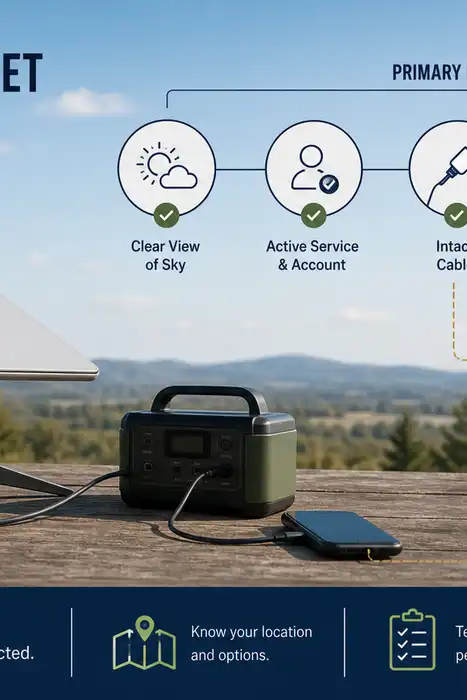
Decide whether portable satellite internet fits an outage or evacuation plan by checking coverage, sky view, current service terms, power, setup, and lower-power alternatives.
Before you begin
What is the most reliable emergency communication method?
There is no universally reliable method. Use multiple paths such as local alerts, radio, text, an out-of-area contact, written meeting points, and power reserves based on local risks.
Will home internet work during a power outage?
Battery power may keep your local equipment on, but the provider's upstream network can still fail. Test modem, router, and mesh power needs and keep non-internet fallbacks.
Should emergency information be stored offline?
Yes. Keep essential contacts, medication details, meeting points, maps, and instructions in a form the household can reach without a cloud account or network connection.