
Decide whether extinguisher use is appropriate, read class and listing labels, check the exact unit, learn PASS, and know when to leave.
Layered home protection
Fix the physical and response gaps before adding devices
Start with doors, windows, lighting, key control, visibility, and what the household will do after an alert. Cameras and alarms can add useful layers only when their privacy, power, subscription, maintenance, and outage behavior fit the plan.
Is this the right starting point for you?
- Who this is for
- Homeowners and renters reviewing everyday entry security, household response habits, privacy-aware cameras or alarms, and what changes when power or internet service fails.
- First decision
- Which physical gap or response failure matters most during a room-by-room walk-through, and can the household fix or practice it before buying another device?
- Physical basics before subscriptions
- Privacy and access reviewed by default
- Outage and response plans rehearsed
Recommended starting guide
Home Security Basics: A Practical 7-Layer Plan
Walk through entry points, visibility, lighting, detection, response, maintenance, and outage behavior as one household plan.
Continue in this order
After the starting guide, use only the steps that match the household decision in front of you.
-
Use a room-by-room checklist
Review entries, windows, lighting, keys, visibility, and household response habits.
Read this guide -
Plan for a power outage
Identify which locks, cameras, alarms, lights, and communications still work without grid power.
Read this guide -
Compare a system only after the audit
Evaluate offline behavior, local storage, privacy, subscriptions, maintenance, replacement support, and installation limits.
Read this guide
8 published guides
More Home security guides
Check the updated date, sources, assumptions, and safety limits inside each guide before acting.
Plan safe manual fallbacks for locks, garage access, cameras, alarms, lighting, communications, and household check-ins during a power outage.

Map usable exits, choose a meeting place, assign help, adapt for apartments and access needs, and practice a calm household fire drill.

Choose, place, test, maintain, and replace smoke and carbon monoxide alarms using the exact labels, manuals, local requirements, and household alert needs.
More guides in this topic
1 more household decisions
Equipment research
Use these guides after you know the household requirement. Specifications, prices, and availability change, so verify dated details with the manufacturer or seller before buying.
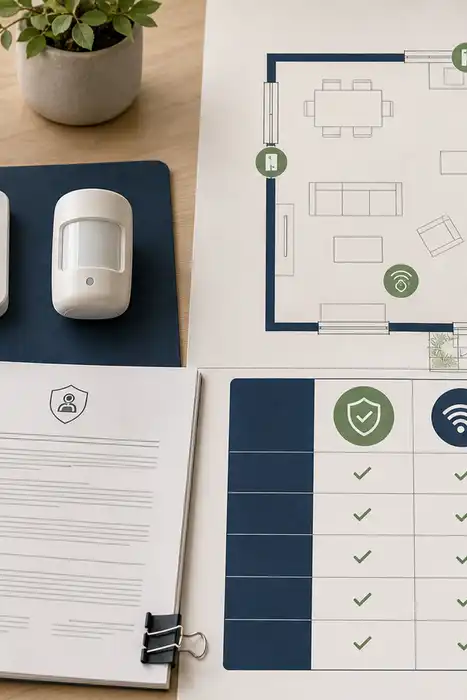
Compare DIY alarm systems by sensors, monitoring, ownership, contracts, privacy, accessibility, and power and internet outage behavior.

Choose a home security camera by placement, power, storage, privacy, notification, support, and offline behavior instead of temporary rankings.
Before you begin
Should I start with cameras or door and window security?
Start with physical entry points, exterior visibility, lighting, key control, and household routines. A camera can document or alert, but it does not physically reinforce an entry.
Will a security system work during an outage?
It depends on battery backup, network and cellular availability, device configuration, and the monitoring service. Test each layer, record expected runtime, and keep non-connected fallbacks.
How should I evaluate camera privacy?
Review where video is captured, who can access it, retention settings, account security, local recording options, vendor updates, and applicable laws before installation.