About 2 minutes
How much water should I store?
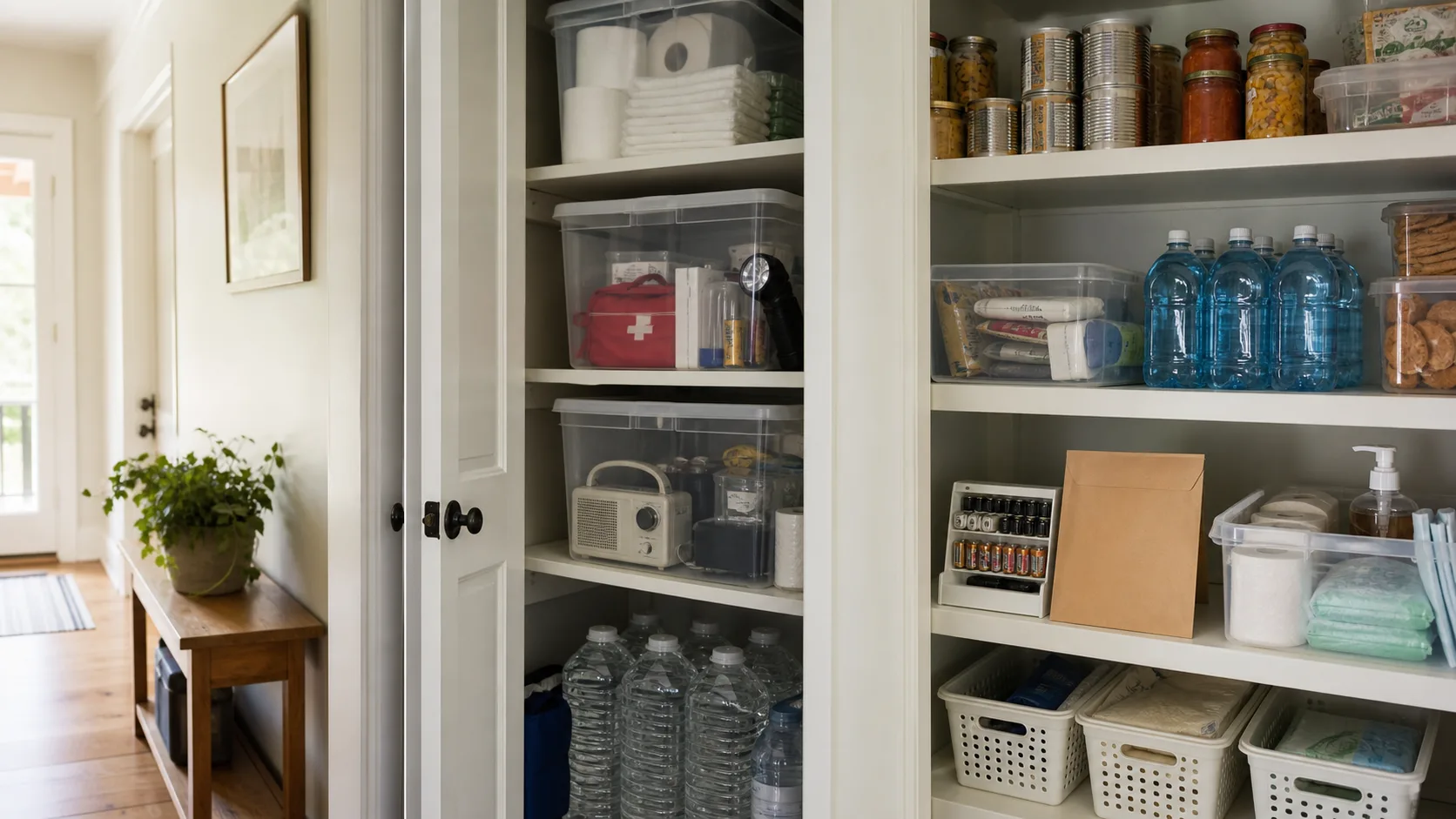
A drinking and cooking baseline, confirmed extra water, container capacity, and filled weight.
Water storagePractical household preparedness
Know what to protect when the power goes out. Make a plan for your household’s water, food, and essential systems, one decision at a time.
Free planning tools No account needed
These are planning estimates, not exact equipment sizing or emergency instructions. Use them as a starting point, then check the assumptions, safety limits, and local guidance.
A drinking and cooking baseline, confirmed extra water, container capacity, and filled weight.
Water storageA refrigerator/freezer timeline that hands off from elapsed time to temperature evidence.
Outage food safetyRuntime from constant watts or measured 24-hour energy, with a separate running-output check.
Battery runtimeContinue on this device without creating an account.
Start with your situation
Focus on the disruption you’re planning for. Find the checks, decisions, and household actions that matter.
Explore all situationsPrioritize essential loads, lighting, communication, food safety, and safe backup power.
Plan for power outagePrepare heat, water, food, travel decisions, and outage fallbacks before conditions worsen.
Plan for winter stormReduce home exposure, keep official alerts available, and make early evacuation decisions.
Plan for wildfireWork through alerts, home protection, water, outage planning, and evacuation timing.
Plan for hurricanePlan by household system
Minimums, storage, and treatment limits
Plan waterFamiliar meals, cooking, and rotation
Plan foodEssential loads, runtime, and safe backup
Plan powerAlerts, contacts, and offline fallback
Plan communicationsHousehold needs, weight, and practice
Plan emergency kitAlarms, lighting, access, and shutoffs
Plan home safetyManufacturer-documented records
Start with what you already own. When a gap remains, inspect our 12 model guides and side-by-side specification comparisons before checking a seller.
1 kWh LFP Comparison
Compare 1,024 Wh capacity, 1,800 W AC output, 500 W vs 1,000 W solar input, and weight.
Output vs Weight
Compare 1,500 W vs 2,000 W continuous output, 23.8 lb carrying weight, and UPS specs.
Water Storage
Food-grade BPA-free container specs, flow-control valve notes, and ~41.7 lb water weight.
Weather Alerts
NOAA Weather Radio bands, AA backup cells, rechargeable battery notes, and limitations.
Plan for conditions where you live
These are planning prompts, not local alerts. Follow your local emergency-management and weather services for current instructions.
If wildfire or smoke affects your area, review evacuation routes, alerts, and indoor-air plans.
Review wildfire planningIf tropical weather affects your area, review official alerts, evacuation guidance, and outage supplies.
Review hurricane planningContinue learning
Use only the charger supplied or explicitly approved by the bike/battery manufacturer, remain present and awake while charging, and keep exits clear. Do not charge a damaged, modified or recalled pack or use an unapproved universal charger. Verify the exact bike's current recall status and electrical system certification; damaged lithium-ion packs require special professional and disposal guidance.
A traditional UPS is designed to keep compatible equipment running through a short power interruption; some portable power stations also advertise UPS or EPS modes, but their exact transfer specifications vary. Verify device tolerance, output waveform, continuous watts, runtime and supported test procedure. Never assume a larger Wh rating guarantees seamless switching or connect either device to household wiring by backfeeding.
A fiber ONT needs local power, but an ONT battery marketed for phone service may not power home internet, Wi-Fi or cordless phones. Map every powered box from the fiber entry to your device, confirm which outputs the provider backs up, then size a maker-approved backup for the complete permitted path. A charged ONT cannot fix a failed upstream provider network.