Long-Term Food Storage Methods: Bulk Storage, Mylar Bags & Oxygen Absorbers
Seasonal Content: This guide is most relevant during fall months.

Long-Term Food Storage Methods: Bulk Storage, Mylar Bags & Oxygen Absorbers
By the Home Resilience Hub Expert Team - Certified Emergency Management Specialists and Infrastructure Engineers
The Reality of Long-Term Food Storage

Bulk food storage can look excessive until a major disruption empties grocery shelves for days or weeks. The 2021 Texas freeze and pandemic-era supply shocks both showed how quickly just-in-time supply chains can fail. Properly stored rice, beans, and staples are inexpensive insurance.
Successful long-term food storage is not about building a bunker full of freeze-dried meals at $8-12 per serving. It is about reliable, economical methods that preserve nutritious calories for roughly $0.50-1.00 per day.
Emergency-management guidance consistently treats stored food as part of household resilience. The difference between just surviving and maintaining normal routines often comes down to having calories stored before the crisis hits.
🏠 Complete Storage System: This guide covers the long-term layer of our Emergency Food & Water Storage approach. For immediate storm preparation, see our Winter Storm Grocery List.
The storage hierarchy: Short-term pantry (weeks), medium-term supplies (months), and long-term reserves (years). This article focuses on that final category - foods stored for 5-30 years that form the backbone of serious emergency preparedness.
Field Experience
During the 2021 Texas freeze, families with proper long-term storage weren’t just surviving - they were sharing food with neighbors. When supply chains fail for weeks, bulk storage becomes community insurance. The methods in this guide prioritize storage approaches that tolerate years of storage, household moves, and real outage conditions.
Understanding Long-Term Storage Goals
Why Store Food for Years?
Economic disruption preparedness:
- Supply chain interruptions lasting months (pandemic-style)
- Regional crop failures affecting food prices
- Personal financial hardship requiring food security
- Inflation hedge - food purchased today at current prices
Natural disaster response:
- Extended recovery periods (Hurricane Katrina = 6+ months)
- Cascading infrastructure failures
- Regional evacuation with limited resources
- Community mutual aid when government assistance is inadequate
Storage efficiency:
- Cost per serving drops dramatically with bulk purchases
- $0.50-$1.00 per person per day vs $8-12 commercial emergency food
- Shelf stability eliminates constant rotation stress
- Volume efficiency for limited storage space
The 5-Layer Storage Strategy
Layer 1: Daily staples (rice, beans, oats, wheat) - 10-30 year storage Layer 2: Cooking essentials (salt, oil, spices) - 2-10 year storage
Layer 3: Comfort proteins (canned meats, protein powder) - 2-5 year storage Layer 4: Variety foods (pasta, dried fruits, nuts) - 1-3 year storage Layer 5: Fresh rotation (canned goods, familiar foods) - 6-24 month storage
Foundation Foods for Long-Term Storage
Calculate Your Exact Needs
Not sure about sizing? Use our Interactive Calculator to determine your exact requirements based on your specific situation. Takes 2 minutes and prevents costly mistakes.
Food Storage Calculator
Calculate a practical non-perishable food plan for your household.
Ready.gov recommends at least a several-day supply of foods your family will eat. This calculator uses planning estimates of 2,000 calories per adult and 1,500 calories per child per day, adjusted for activity.
Primary Calorie Sources (30-year potential)
White rice (the storage gold standard):
- Calories: 1,650 per pound dry
- Storage life: 4-6 years sealed, 25-30 years with oxygen absorbers
- Why white over brown: Oils in brown rice go rancid, white rice stores indefinitely
- Quantity planning: 300 pounds per person per year for staple carbohydrate
- Storage cost: $0.50-0.75 per pound bulk, feeds family for pennies per day
- Professional insight: During extended emergencies, rice provides psychological comfort and familiar nutrition. Properly sealed white rice can remain usable for many years when protected from moisture, pests, oxygen, and heat.
Hard white wheat berries:
- Calories: 1,540 per pound, complete protein when combined with legumes
- Storage advantage: 30+ year shelf life properly stored
- Processing requirement: Requires grain mill for flour production
- Nutritional benefit: Whole grain nutrition, B vitamins, fiber
- Cost efficiency: $0.40-0.60 per pound, makes bread, pasta, cereal
Rolled oats:
- Calories: 1,510 per pound, quick cooking, familiar comfort food
- Storage challenge: 2-3 years maximum due to oil content
- Practical use: Hot breakfast, thickener for stews, energy bars
- Family acceptance: Most children will eat oatmeal readily
Protein Building Blocks (10-20 year potential)
Dried beans (navy, pinto, black, kidney):
- Complete protein: When combined with grains, provides all essential amino acids
- Storage life: 10+ years in sealed containers with oxygen absorbers
- Cooking consideration: Requires extended cooking time and water
- Variety planning: Mix types to prevent flavor fatigue
- Quantity: 75-100 pounds per person per year for adequate protein
Lentils (red, green, black):
- Cooking advantage: Much faster cooking than beans (20-30 minutes)
- Nutritional density: High protein, iron, folate, fiber
- Storage life: 10+ years properly stored
- Preparedness value: Can be cooked with minimal fuel
Textured vegetable protein (TVP):
- Protein concentration: 50% protein by weight
- Storage benefit: Lightweight, compact, 8-10 year shelf life
- Cooking method: Rehydrates with hot water, meat substitute
- Acceptance factor: Takes on flavor of seasonings added
Essential Fats and Flavor (2-10 years)
Coconut oil:
- Storage advantage: Saturated fat = longer shelf life (2-3 years)
- High smoke point: Suitable for various cooking methods
- Nutritional benefit: Medium-chain triglycerides for quick energy
- Quantity: 1 gallon per person per year minimum
Salt (indefinite storage):
- Storage life: Indefinite if kept dry
- Multiple uses: Food preservation, electrolyte replacement, food safety
- Type recommendation: Plain salt, avoid iodized for long-term storage
- Quantity: 10 pounds per person for food and preservation use
Spices and seasonings (2-5 years):
- Palatability necessity: Makes repetitive foods acceptable long-term
- Storage method: Vacuum-sealed or in airtight containers
- Priority spices: Garlic powder, onion powder, chili powder, cumin, oregano
- Rotation strategy: Replace every 2-3 years for best flavor
Professional Storage Methods
Mylar Bags with Oxygen Absorbers (Recommended Method)
Why this method works:
- Light barrier: Mylar blocks UV light that degrades nutrients
- Moisture barrier: Prevents humidity that causes spoilage
- Oxygen elimination: Oxygen absorbers remove oxygen that causes rancidity
- Pest control: Sealed environment prevents insect infestation
Material specifications:
- Mylar thickness: 5-7 mil minimum for durability
- Oxygen absorber sizing: 100cc for quart bags, 300cc for gallon bags, 500cc for 5-gallon buckets
- Bag sizes: Gallon bags for family portions, 5-gallon bags for bulk storage
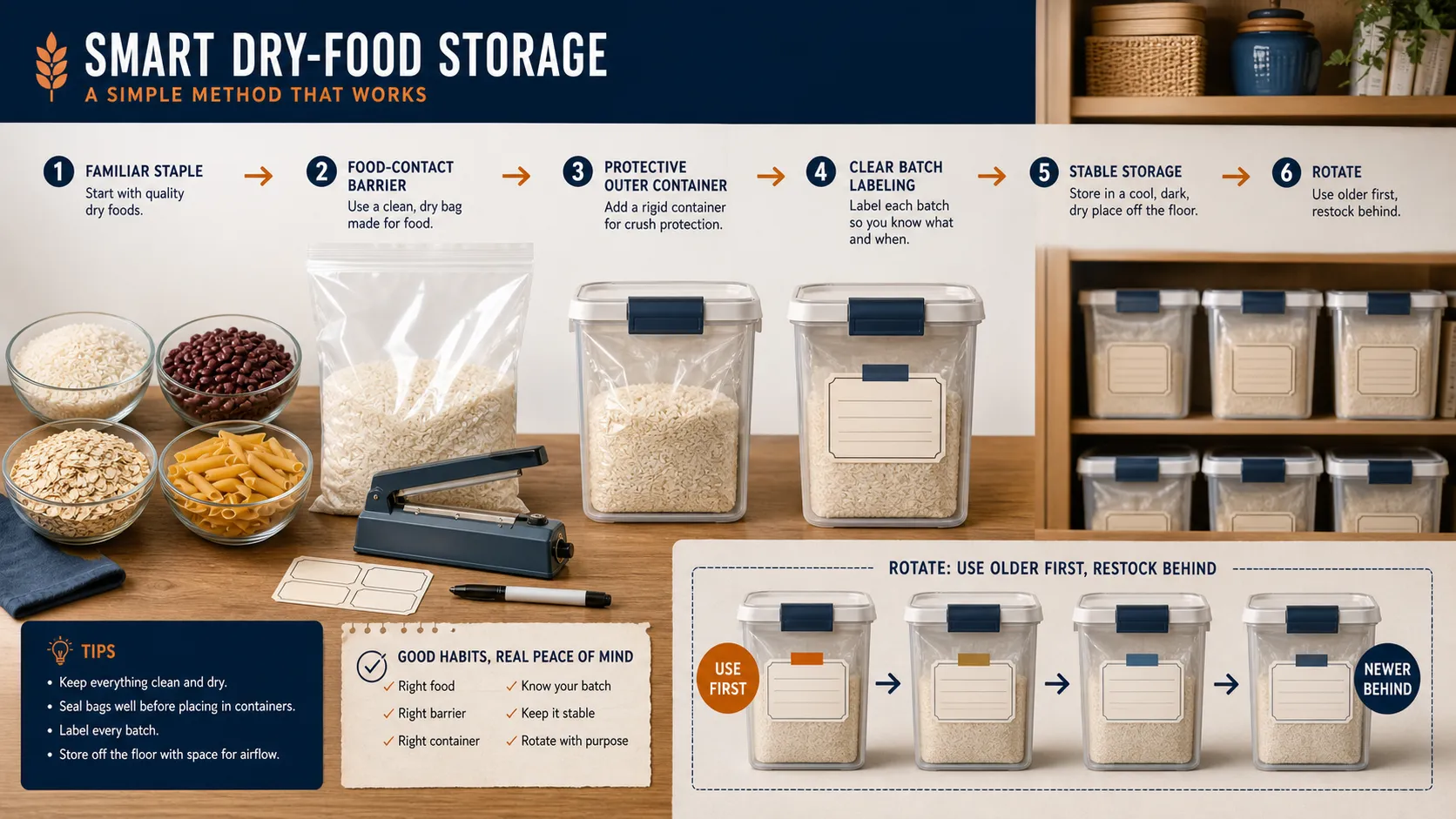
Step-by-step sealing process:
- Prepare workspace: Clean, dry area with all materials ready
- Fill bags: Leave 4-6 inches at top for sealing
- Add oxygen absorber: Fresh from unopened package, handle quickly
- Remove excess air: Gentle pressure, don’t vacuum completely
- Heat seal: Clothes iron on cotton setting, 3-4 second passes
- Test seal: Gentle pressure should not reopen sealed area
- Label clearly: Contents, date, quantity for future reference
Quality control:
- Sealed bags should become rock-hard within 12-24 hours as oxygen is absorbed
- Soft bags indicate seal failure or insufficient oxygen absorber
- Store test bags short-term to verify your sealing technique
Food-Grade Bucket Storage System
Bucket specifications:
- Food-grade requirement: Look for recycling code #2 (HDPE) with food-grade certification
- Size optimization: 5-6 gallon buckets for manageable weight when full
- Lid system: Gamma seal lids for frequent access, standard lids for long-term storage
- Cost considerations: $8-15 per bucket system, reusable for decades
Layered protection approach:
- Food in mylar bags (primary protection)
- Mylar bags in buckets (rodent and impact protection)
- Buckets with tight lids (final barrier)
- Storage location (cool, dry, away from chemicals)
Organization system:
- Color coding: Different colored lids for food types
- Clear labeling: Contents, date sealed, expected rotation date
- Inventory tracking: Simple spreadsheet or written log
- Access planning: Most-used items in easiest-to-reach locations
Alternative Storage Methods
#10 cans (commercial option):
- Advantages: Professional sealing, portion control, stackable
- Disadvantages: Higher cost per serving, limited to smaller quantities
- Best use: Specialty items like fruits, vegetables, proteins
- Shelf life: 25-30 years commercially sealed
Glass jars (small-scale option):
- Advantages: Reusable, clear contents visibility, pest-proof
- Disadvantages: Limited size, breakage risk, less efficient for bulk
- Best use: Spices, small quantities, frequently accessed items
- Vacuum sealing: Mason jar attachments for vacuum sealers
Vacuum sealing (short-to-medium term):
- Advantages: Compact storage, easy to do, portion control
- Disadvantages: 1-5 year maximum, bags can puncture
- Best use: Nuts, dried fruits, smaller quantities of grains
- Limitation: Not suitable for sharp items like pasta
Implementation Strategy
Starting Your Bulk Storage Program
Month 1: Foundation building:
- Small test batches: 5-10 pounds each of rice, beans, oats
- Basic equipment: Mylar bags, oxygen absorbers, heat sealer (clothes iron)
- Storage space: Identify cool, dry area for long-term storage
- Practice sealing: Perfect technique before investing in large quantities
Month 2-3: Scaling up:
- Larger quantities: 25-50 pound bags for better pricing
- Bucket acquisition: Start with 4-6 buckets for foundation foods
- Variety introduction: Add wheat berries, lentils, additional proteins
- System refinement: Improve labeling, organization, access methods
Month 4-6: Specialization:
- Comfort foods: Add pasta, dried fruits, specialized items
- Cooking oils: Coconut oil, olive oil in appropriate containers
- Spice program: Vacuum-seal spice collections for long-term flavor
- Rotation planning: Establish system for using and replacing stored food
Budget-Conscious Bulk Purchasing
Sourcing strategies:
- Restaurant supply stores: Commercial quantities at wholesale pricing
- Grain elevators: Direct from agricultural sources in rural areas
- Cooperatives: Group purchasing for better pricing
- Warehouse stores: Costco, Sam’s Club for consumer bulk quantities
Timing purchases:
- Seasonal patterns: Grains cheapest after harvest (fall)
- Economic cycles: Buy during stable periods before crisis pricing
- Storage capacity: Match purchases to storage ability, don’t over-buy
- Quality assessment: Test small quantities before large investments
Cost breakdown example (family of 4, 1-year storage):
- Rice (300 lbs): $150-225
- Beans (100 lbs): $100-150
- Wheat (200 lbs): $80-120
- Storage supplies: $100-150
- Total: $430-645 for foundational year supply
Storage Location Requirements
Environmental needs:
- Temperature: 50-70°F optimal, consistency more important than absolute temperature
- Humidity: Below 60% relative humidity to prevent mold
- Light: Dark storage to prevent nutrient degradation
- Ventilation: Air circulation without direct airflow on containers
Space planning:
- Accessibility: Frequently used items in easy-to-reach locations
- Weight distribution: Spread load across floor joists, avoid single concentrated area
- Pest prevention: Sealed containers, clean storage area, regular inspection
- Inventory visibility: Organization system allowing easy inventory assessment
Location options by dwelling type:
Apartment storage:
- Under-bed: 5-gallon buckets fit under most beds
- Closet floor: Stack buckets in back corners
- Pantry expansion: Maximize vertical space with shelving
- Temperature consideration: Avoid areas with heating ducts or appliances
House storage:
- Basement: Ideal temperature, large capacity, away from living areas
- Pantry expansion: Dedicated storage room or enlarged pantry
- Garage: Acceptable if temperature-controlled, protect from vehicle exhaust
- Outbuilding: Root cellar, storm shelter, dedicated storage building
Rotation and Quality Management
The 5-Year Rotation Reality
Practical rotation approach:
Most families cannot realistically rotate 20-30 year storage foods through daily meals. Plan for 5-10 year replacement cycles rather than perfect rotation.
Quality monitoring:
- Annual inspection: Check for pest signs, container integrity, moisture
- Sample testing: Cook small portions annually to verify quality
- Documentation: Track storage dates, expected replacement timelines
- Gradual use: Incorporate some stored foods into regular cooking to verify acceptability
Signs of storage failure:
- Visual indicators: Mold, discoloration, insect activity
- Smell test: Rancid, musty, or off odors when containers are opened
- Texture changes: Excessive moisture, clumping, unusual texture
- Taste testing: Off flavors, bitter or sour tastes in neutral foods
Using Your Long-Term Storage
Integration strategies:
- Power outage practice: Monthly meals using only stored foods
- Economic stretching: Use bulk storage during tight budget periods
- Skill development: Learn to cook with basic ingredients
- Family training: Ensure all family members know storage locations and cooking methods
Cooking considerations:
- Soaking times: Beans require 8-12 hour soaking before cooking
- Cooking fuel: Extended cooking times require more fuel planning
- Water usage: Calculate water needs for cooking dried foods
- Equipment needs: Grain mill for wheat, large pots for bulk cooking
Advanced Storage Considerations
Nutritional Completeness
Avoiding nutrient deficiencies:
- Vitamin C: Canned tomatoes, dried fruit, vitamin tablets
- Calcium: Canned salmon with bones, calcium supplements
- Healthy fats: Nuts, seeds, fish oil supplements
- Complete proteins: Proper grain/legume combinations
Supplementation strategy:
- High-quality multivitamins: 2-3 year supply minimum
- Vitamin D: Critical during extended indoor periods
- Omega-3 supplements: Fish oil or algae-based alternatives
- Mineral supplements: Calcium, magnesium, iron as needed
Specialized Dietary Needs
Gluten-free bulk storage:
- Rice emphasis: Multiple varieties for texture and flavor variety
- Quinoa: Complete protein, more expensive but nutritionally dense
- Certified facilities: Ensure processing in gluten-free facilities
- Cross-contamination prevention: Dedicated storage and preparation areas
Diabetic considerations:
- Lower glycemic options: Emphasis on beans, nuts, proteins
- Portion control: Smaller containers for better blood sugar management
- Complex carbohydrates: Steel-cut oats, brown rice in limited quantities
- Protein emphasis: Higher protein ratios to stabilize blood sugar
Security and Operational Considerations
Operational security (OPSEC):
- Discrete accumulation: Avoid obvious bulk purchasing that attracts attention
- Storage concealment: Non-obvious storage locations, blend with regular household items
- Information security: Limit knowledge of storage quantities and locations
- Community balance: Plan for sharing without advertising abundance
Multiple cache strategy:
- Primary storage: Main household supply for regular access
- Secondary cache: Garage, basement, or outbuilding for bulk supplies
- Tertiary backup: Off-site storage with trusted family or friends
- Mobile cache: Vehicle supplies for evacuation scenarios
Troubleshooting Common Storage Problems
Pest Management
Prevention strategies:
- Clean storage areas: Regular cleaning, eliminate food debris
- Sealed containers: Proper mylar sealing eliminates access
- Bay leaves: Natural deterrent for many insects
- Regular inspection: Monthly visual checks for early problem detection
Treatment options:
- Diatomaceous earth: Food-grade DE mixed with grains (1-2% by weight)
- Dry ice treatment: CO2 displaces oxygen, kills existing insects
- Freezer treatment: 48-72 hours at 0°F kills insects and eggs
- Professional consultation: Serious infestations require expert intervention
Moisture Problems
Moisture control:
- Desiccant packets: Silica gel for high-humidity storage areas
- Climate control: Dehumidifiers in storage areas if necessary
- Container sealing: Proper mylar bag sealing prevents moisture entry
- Storage elevation: Keep containers off concrete floors
Moisture damage recovery:
- Early detection: Slight moisture may be recoverable with re-drying
- Complete loss: Moldy or severely damp food must be discarded
- Prevention: Learn from failures to improve future storage
Storage Failure Analysis
Common failure points:
- Inadequate sealing: Poor heat sealing technique, damaged mylar
- Insufficient oxygen absorbers: Under-sized or expired absorbers
- Temperature fluctuation: Storage in areas with wide temperature swings
- Pest introduction: Contaminated bulk food before storage
Recovery protocols:
- Partial failure: Salvage unaffected portions, improve techniques
- Complete failure: Document causes, replace supplies, modify approach
- System improvement: Use failures as learning opportunities
Your Long-Term Storage Action Plan
Phase 1: Testing and Learning (Month 1-2)
Start small with high-success items:
- Purchase 10 pounds each of white rice, navy beans, rolled oats
- Acquire basic storage supplies: gallon mylar bags, oxygen absorbers, buckets
- Practice sealing technique with small batches
- Store in cool, dry location and monitor for success indicators
- Cook test meals using only stored ingredients
Phase 2: Foundation Building (Month 3-6)
Scale successful methods:
- Increase quantities to 50-100 pounds of foundation foods
- Add wheat berries if grain mill is available
- Establish organized storage system with clear labeling
- Begin integrating stored foods into regular meal rotation
- Calculate costs and adjust budget for ongoing purchases
Phase 3: System Maturation (Month 6-12)
Build comprehensive long-term capability:
- Achieve 6-12 month food storage using bulk methods
- Add variety foods, spices, and cooking oils
- Develop advanced storage locations and security measures
- Train family members in storage system use and maintenance
- Establish replacement and maintenance schedules
Key Success Factors
Quality over quantity: Better to have 3 months of well-stored, tested food than 2 years of poorly stored supplies that may fail when needed.
Gradual implementation: Build skills and confidence with small successes rather than attempting complete system immediately.
Family integration: Ensure your storage system works for your family’s actual eating patterns and cooking abilities.
Economic sensibility: Long-term storage should reduce food costs over time, not create financial hardship through over-investment.
Practical testing: Regular use and testing reveals problems before emergency situations when correction isn’t possible.
Long-term food storage provides genuine food security that extends beyond emergency preparedness. When properly implemented, it becomes a hedge against inflation, insurance against supply disruptions, and a practical way to maintain adequate nutrition when normal access changes.
The goal isn’t to build a bunker - it’s to build food security that serves your family through both everyday challenges and extraordinary circumstances.
Related Emergency Food Storage Resources
Complete Storage System:
- Emergency Food & Water Storage Guide - Complete 3-layer storage approach
- Winter Storm Grocery List - Emergency shopping strategies for immediate needs
- DIY Emergency Food Preservation - Home preservation to supplement bulk storage
- Water Storage Container Guide - Long-term water storage systems