In this guideJump to a section
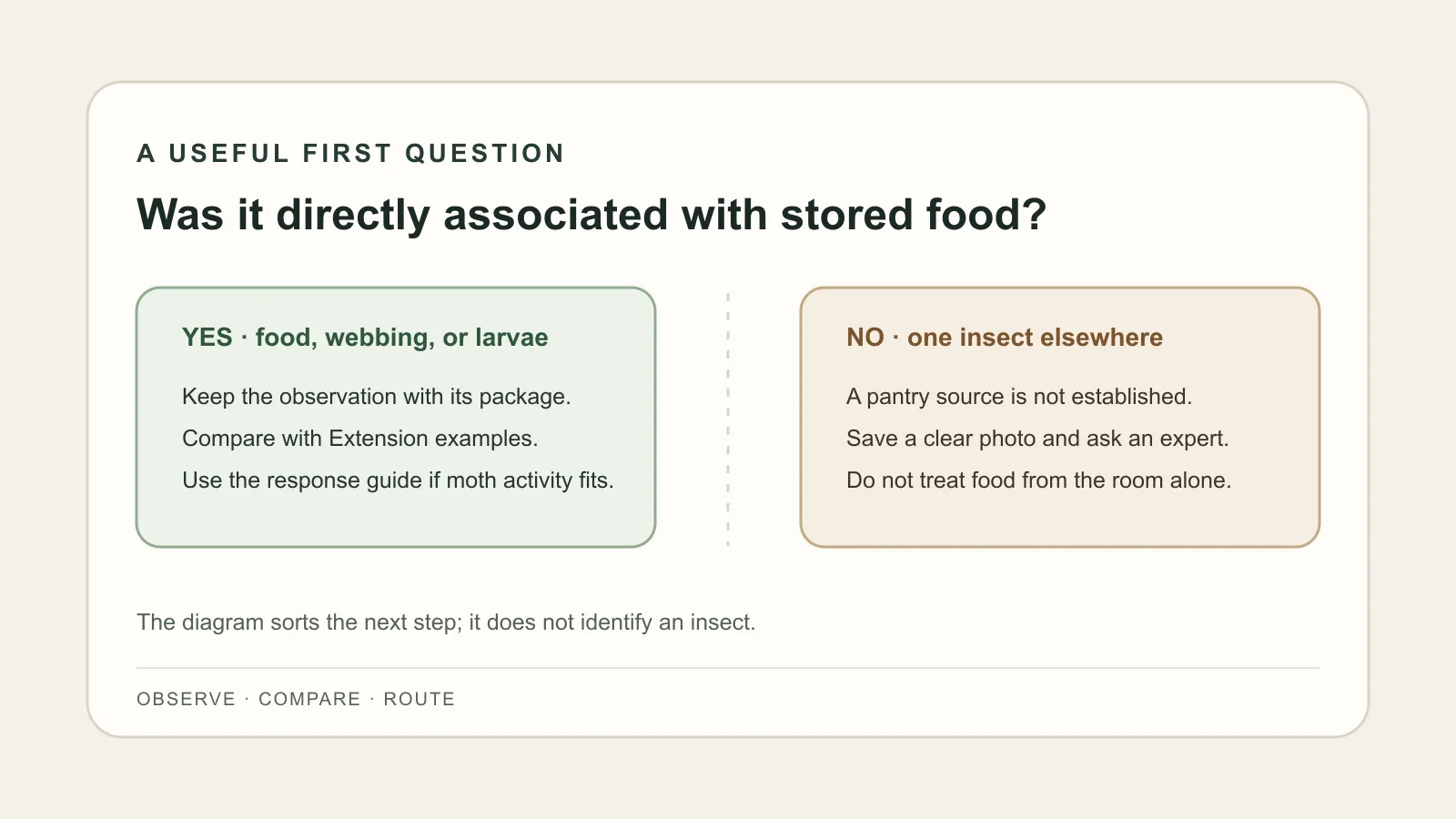
A beetle on a kitchen counter and a larva inside a flour package call for different next steps. Start with the connection to food, not the insect’s color or size alone. University of Minnesota Extension says not all small beetles or moths indoors are pantry pests; without a direct food association, it recommends expert identification.
Pantry-bug sorting
| What you found | What that supports | Useful next step |
|---|---|---|
| Webbing, larvae, or insects within a dried-food package | A stored-food source is plausible. UMN Extension’s Indianmeal moth photo and description show one example; webbing in food is a clue it describes for this moth. | Keep the observation tied to the package. If moth activity appears connected to stored food, use the pantry-moth response guide for inspection and cleanup. |
| Small beetles in a food package or whole grains with small round holes | A stored-food insect is possible, but the appearance alone does not confirm which one. UMN’s sawtoothed grain beetle photo and weevil example are comparison examples, not a complete key. | Note the food and package where it appeared. Use UMN Extension’s stored-food pest guidance or ask local Extension to identify it before choosing a response. The moth-specific guide below is for moth activity. |
| One insect near a window, wall, or counter, with no observed link to stored food | This does not establish a pantry infestation. UMN says a direct association with food matters. | Do not start pantry-pest treatment based on the room alone. Take a clear photograph if possible and ask your local Extension service or a qualified pest professional for identification. |
| Similar insects keep appearing, but the source is unclear | The sightings need identification and context; repeated appearance alone does not show whether the source is food, a plant product, or another household location. | Record where and when each was seen and what nearby material was present. Share those details and a photo with an expert. |
The linked photos come from UMN Extension’s page on insects found in stored food. They illustrate a few common examples, not every pantry pest or every insect that can wander indoors. A poor angle, worn markings, or a look-alike can make a visual match unreliable, so avoid declaring a species from this table.
If the evidence points to stored-food moth activity, the separate pantry-moth response guide covers package inspection and cleanup. If you only found a wandering insect, keep the observation and ask for identification before treating food or cupboards. For broader storage organization, see long-term food storage methods.