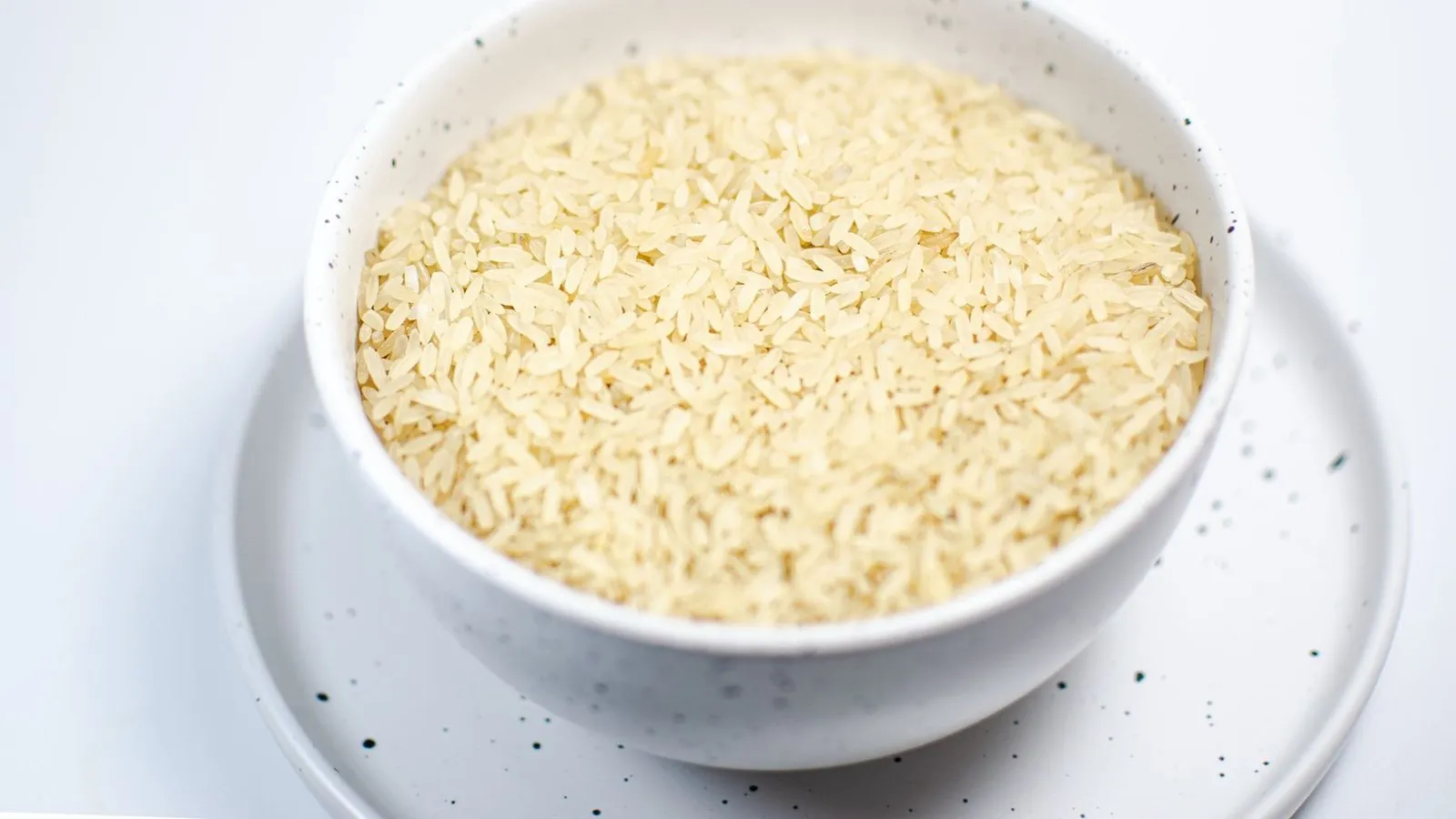
An older bag of rice can leave you guessing about its date, closure, or pantry conditions. If you moved it to another container, the missing label can matter as much as the type of rice. Keep the product and its storage history together before you decide what to do with it.
Start with the rice and its package
Look for the product name, rice type, manufacturer, best-by wording, and any storage direction on the bag or box. If you moved the rice into another container, check whether you kept the label and date. That information is more useful than a date remembered from when you bought it.
The maker’s date is not a universal safety deadline. For example, Mahatma says its regular white, whole grain brown, parboiled, jasmine, basmati, and instant rice products are best by two years from manufacture when stored properly and protected from pests and extreme temperature changes. That is Mahatma’s guidance for its listed products, not a promise for a different brand or a package that was damp, open, or exposed to pests. Check the maker’s storage FAQ and follow the date and instructions on your own product.
White and brown rice have different quality expectations
White rice has had the bran removed, while brown rice retains it. The bran’s natural oil means brown rice generally loses its best quality sooner. USA Rice’s consumer guidance says enriched white, parboiled, or pre-cooked rice keeps “almost indefinitely” on the pantry shelf; it estimates about six months for brown rice and up to a year if refrigerated or frozen. Those are broad quality expectations from a rice-industry source, not guaranteed lifespans or safety deadlines. They should not replace a product label. Read the USA Rice storage guidance.
| Dry rice or situation | What the guidance can tell you | Practical next step |
|---|---|---|
| White or polished rice | Broad guidance expects it to keep its quality longer than brown rice, but makers set different product dates. | Follow the label; after opening, close the package tightly and keep it cool and dry. |
| Brown or whole-grain rice | The bran contains natural oil, so it generally has a shorter quality window. | Check the specific product date and storage directions. If you will keep it longer, use a cooler location only when the maker’s instructions allow it. |
| Jasmine, basmati, parboiled, instant, or another specialty type | Similar names do not prove the same packaging, date, or storage recommendation. | Use the exact package directions; do not transfer another rice type’s time estimate. |
| Package was damp, torn, open for an unknown time, or shows pests | A typical shelf-life estimate cannot describe this package’s history. | Isolate it. Do not taste it to decide whether it is safe; discard it if its condition or safety is uncertain. |
Do not combine a general estimate with a manufacturer’s best-by date as if they measured the same thing. One is broad quality guidance; the other is tied to a brand’s product and conditions. If sources disagree, keep the more specific package date and storage directions visible, and treat any general estimate as context only.
Store an opened bag without losing its date
Once opened, rice should be kept tightly closed in a cool, dry place, according to USA Rice. You can keep it in its original package if it closes securely and remains intact, or put that package inside a clean, dry, tightly closing container. If you transfer the rice, cut out or copy the label so the type, maker, date, and any instructions stay with it.
Keep the package away from damp areas, direct heat, strong odors, cleaning products, and pests. A sealed container helps protect opened rice from moisture and insects, but it cannot repair rice that was already damaged or establish a new best-by date. If the package is exposed to moisture, has a hole, or shows insects or webbing, set it aside rather than mixing it with other dry goods. For visible pantry moth or larval activity, use the pantry-moth inspection guide.
Rice package record
Use this record when you open a package or move rice into another container. Keep the original label or a clear photo of it with the record.
| Record | Write down |
|---|---|
| Product and rice type | Brand, exact name, and white, brown, parboiled, instant, or other type: ___ |
| Date wording | Best by / best before / other: _ Printed date: _ |
| Package dates | Purchased: _ Opened or transferred: _ |
| Storage location | Pantry / refrigerator / freezer / other: ___ |
| Container condition | Closed tightly? Dry? Package intact? Notes: ___ |
| Next review | Check label and package condition on: ___ |
The record helps you keep track of the product and its storage history. It cannot prove that a package was always stored properly or make an unclear history safe. If you are asking about cooked rice, use the leftover storage guide instead; cooked rice has a separate handling question.
Keep the label with the rice and complete the package record when you open or transfer it. For bulk packaging rather than an ordinary retail bag, use the long-term food storage methods guide.