How to Clean a Portable Ice Maker Without Guessing at the Manual
Find the model-specific cleaning, descaling, sanitizing, rinsing, and drain steps before returning a portable ice maker to use.
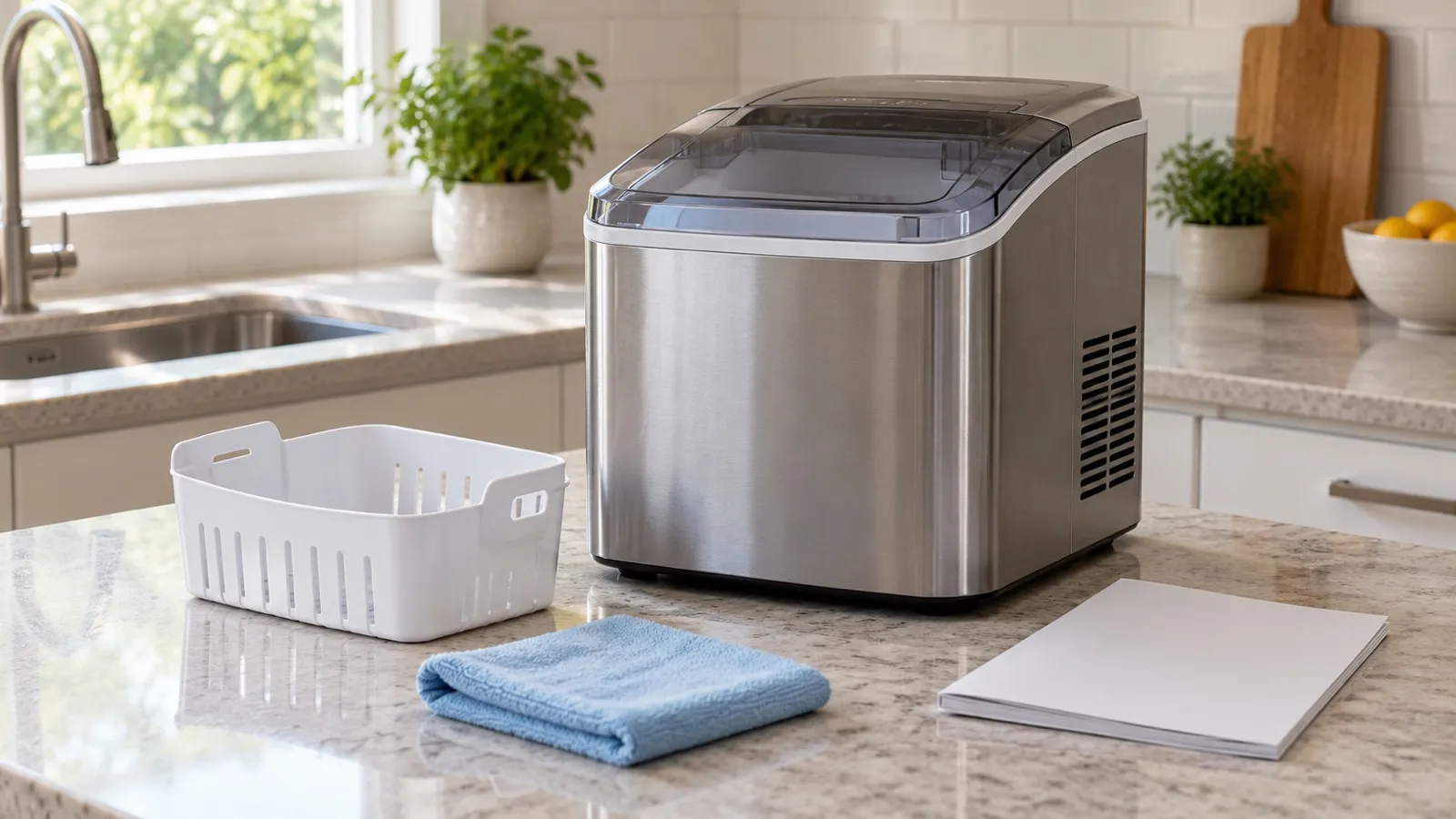
The cleaning routine starts with the model, not a bottle of vinegar. Portable ice makers can have different reservoirs, drain tubes, filters and control layouts. Find the exact manual, identify which maintenance job you need, and keep it open through the final rinse and reconnection.
Separate the four jobs
| Job | What to find in your manual |
|---|---|
| Hand cleaning | Which surfaces and removable parts can be cleaned, with what product, and when power must be disconnected. |
| Descaling | The approved product and process for mineral deposits. |
| Sanitizing | Whether the maker specifies a separate sanitizer process and which product is eligible. |
| Rinsing and return to use | Fresh-water cycles, drainage, filter/screen position and tube connections. |
For example, GE’s XPIO23SCSS support page links Opal Owner’s Manual 49-9000075 Rev. 2. It says to unplug before hand cleaning, never immerse the unit, and avoid soap in the reservoir. The bin, drip tray and exterior have their own instructions. These are covered-Opal directions, not rules for every countertop machine.
Match the controls before running a cycle
The Opal Rev. 2 manual shows why the button layout matters. Pages 8 and 9 describe different cleaning controls:
| Control layout in this manual | Descaling example | Sanitizing and rinse control |
|---|---|---|
| Four-button display | Hold Clean for its 55-minute descale cycle. | Tap Clean for the three-minute cycle. |
| Three-button display | Hold Clean for a three-minute cycle, run up to three times, then the stated 18-hour soak. | Hold Clean for the three-minute cycle. |
This table identifies the difference; it is not the complete procedure. The same manual specifies products, reservoir filling, preparation, drainage and precautions that must accompany those cycles. Match the exact unit and revision before using either page. If your buttons or tubing differ, get the correct instructions rather than choosing the closest-looking example.
Prepare the water path and approved product
Read the complete sequence before unplugging or draining anything. In the covered Opal example, preparation includes disconnecting the side tank if fitted, using the specified drain arrangement, and replacing an accessory filter with the supplied mesh screen for the process. Finishing requires restoring the configuration shown for with or without a side tank. An overlooked connection can leave water draining where it should not.
Use the cleaner and amount approved for your exact appliance, and read its current label. GE’s example names its Opal citric-acid descaler and separately describes a bleach sanitizing process. Those are separate jobs: never mix the descaler, vinegar or another cleaner with bleach. CDC warns against mixing bleach with any other cleaner or disinfectant. Its household surface instructions are not an ice-maker recipe.
If the appliance manual and product label do not clearly permit the intended use, ask the manufacturer to resolve the mismatch. Follow required ventilation and protective measures. GE also warns about scalding from hot water during descaling; do not increase water temperature to hurry the job.
Complete the rinse before making more ice
The Opal manual calls for three total fresh-water rinse cycles, with draining and refilling between them, followed by the illustrated tube reconnection. Its tap-versus-hold distinction still applies. A clear reservoir or lack of odor does not replace those steps.
Do not open the cabinet or attempt electrical, ice-making-mechanism or refrigerant repairs. If parts, labels or connections do not match the manual, stop before returning the unit to use. Contamination or an unsafe water source also needs a separate manufacturer or public-health decision; cleaning does not certify the supply.
Model procedure record
| Record before starting | Note from the matching manual |
|---|---|
| Appliance | Full model, manual revision and matching display layout |
| Preparation | Power, draining, removable parts, filter/screen and side-tank arrangement |
| Selected job | Cleaning, descaling or sanitizing; approved product and label match |
| Process | Required quantity, temperature precautions, cycle and any repeat/soak step |
| Finish | Fresh-water rinses, final drainage and illustrated connections |
| Unresolved item | Exact mismatch to ask the manufacturer about |
Save this with the manual for the next cleaning. If the problem is instead spoiled food in a refrigerator cabinet, use the separate refrigerator cleanup sequence.