How to Clean a Refrigerator After Spoiled Food or an Outage
Discard questionable food first, then clean shelves, seals, and the cabinet with a deliberate sequence for persistent refrigerator odors.
In this guideJump to a section
After spoiled food leaks or a refrigerator outage, cleaning is a separate job from deciding what can be eaten. Remove questionable food first; no cleaning product, deodorizer, or later temperature reading can undo an unsafe storage history.
For outage-related food decisions, follow the official food chart before you begin. This checklist owns the refrigerator cleanup afterward, including seams where liquid and odor can linger.
Refrigerator cleanup checklist
- Make the appliance safe to work around. If it is damaged, wet around electrical parts, or unusually hot, stop and contact an appropriate appliance professional. Otherwise follow the manufacturer’s cleaning and unplugging instructions.
- Remove spoiled or questionable food. Do not taste it. Seal leaking packages before disposal and follow local waste instructions. Keep children and pets away from contaminated food and cleaners.
- Take out removable parts. Remove shelves, crispers, and ice trays. Let cold glass shelves come to room temperature before hot-water cleaning so they do not crack, as CDC explains in its refrigerator-cleaning steps. Wash the parts with hot water and detergent, then use the USDA sanitizing solution described below. Let parts dry before reinstalling.
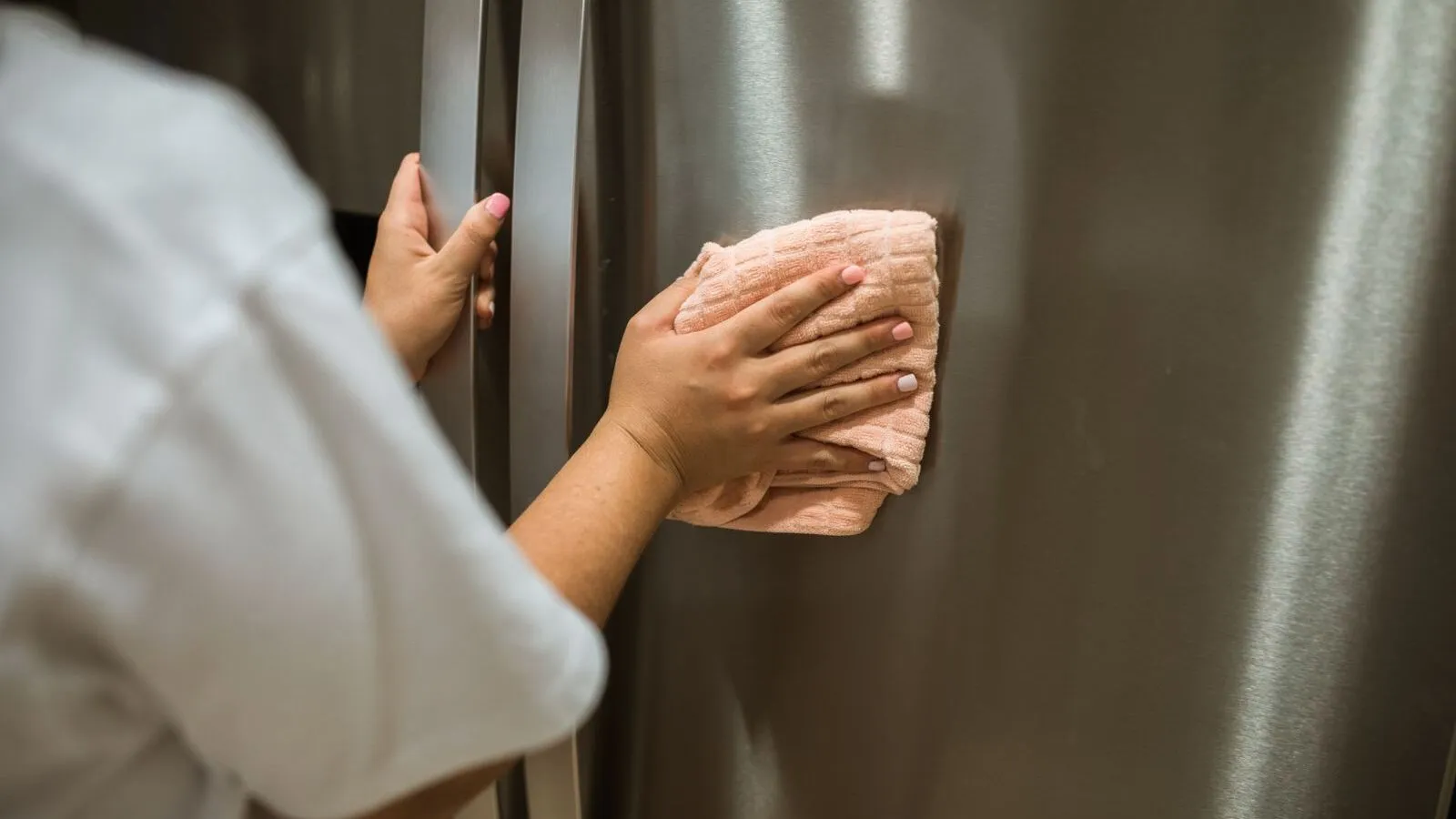
- Clean the cabinet and gasket. Wash the interior, door, and gasket with hot water and baking soda. Wipe seams and corners where liquid may have collected. Rinse with the sanitizing solution.
- Air the empty appliance. USDA advises leaving the door open about 15 minutes to circulate air after cleaning. Keep children from climbing into an appliance; do not leave an accessible open refrigerator unattended.
- Restore and verify operation. Reinstall parts, follow the manual, and let the unit return to its operating temperature before restocking. Use the refrigerator and freezer temperature check to verify the appliance, not to clear previously unsafe food.
USDA FSIS specifies a sanitizing solution of 1 tablespoon unscented liquid chlorine bleach per 1 gallon of water for these surfaces. Make it separately, follow the bleach label and appliance manual, and never combine bleach with vinegar, ammonia, or another cleaner. If the product label gives stricter precautions, follow them.
If the odor remains
USDA notes that odor removal may need to be repeated. Once the cabinet is clean and dry, it lists options such as airing the empty unit longer, placing baking soda in a shallow container, or using a commercial odor product according to its label. Choose one method at a time; do not layer cleaners or fragrances over residue.
If the odor remains despite repeated cleaning, stop using the appliance for food storage until the source is resolved. Have a qualified appliance or remediation professional assess persistent contamination or a malfunction. If disposal becomes necessary, USDA warns that old refrigerators can trap children; follow local disposal arrangements and make the appliance inaccessible until collection.
A clean smell is not a food-safety test. Once the refrigerator is operating normally, restock only food that was independently determined safe and keep it at 40°F (4°C) or below, the FoodSafety.gov refrigerator limit.