How Long Can Food Sit Out at a Party or Buffet?
Use the two-hour rule, the one-hour hot-weather limit, and temperature checks to manage food on a buffet without guessing.
In this guideJump to a section
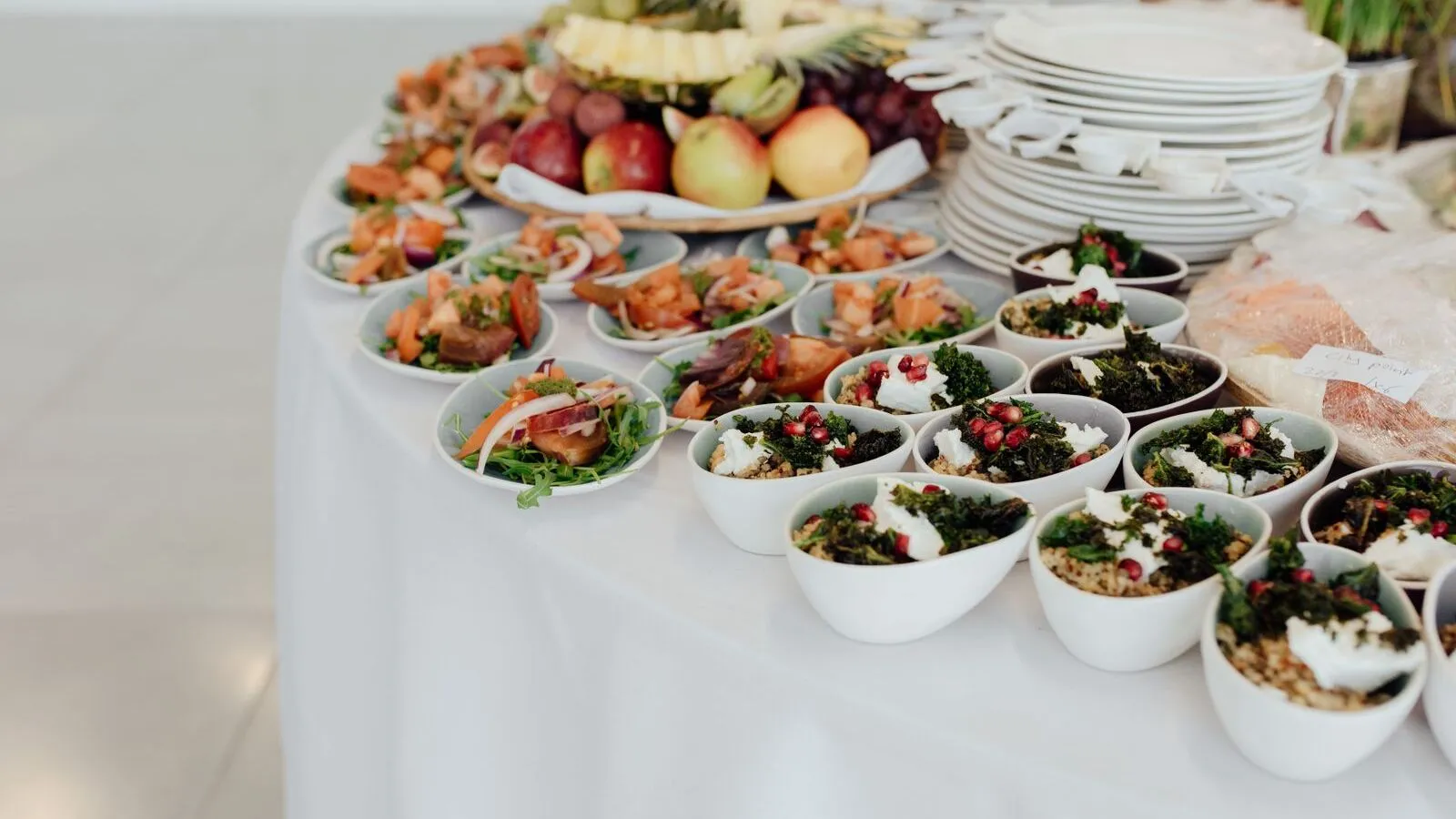
A buffet becomes hard to judge when dishes are refilled and guests arrive in waves. Give each perishable dish a start time and keep it either cold or hot; do not rely on how it looks. USDA says perishable food should not remain out longer than 2 hours, shortened to 1 hour when the temperature is above 90°F (32°C).
The timer is a different job from transporting food. For a car ride or short move from the refrigerator, use the cooler packing guide. This page is for serving and holding food at the table.
Serving limits at a glance
The USDA consumer guidance distinguishes verified hot/cold holding from food left without temperature control. The two-hour/one-hour clock below applies when perishable food is out of safe temperature control; it does not require discarding food solely because a properly controlled buffet has been open that long.
| Food setup | Target | Host action |
|---|---|---|
| Cold perishable dishes | 40°F (4°C) or below | Keep dishes nested in ice or use small cold platters and replenish from refrigeration. |
| Hot perishable dishes | 140°F (60°C) or above | Use suitable hot-holding equipment and verify with a food thermometer. |
| Perishable food without safe hot/cold holding | No more than 2 hours total | Record when service begins; discard food that passes the limit. |
| Perishable food without temperature control when the air is above 90°F (32°C) | No more than 1 hour total | Use the shorter limit even if the serving area is shaded. |
These are general USDA consumer limits. Follow stricter local event requirements or product instructions. A dish that has been sitting out does not get a fresh clock because it was moved to another table or topped with a new portion.
Buffet serving log
Before guests arrive, write down the dish, the time it goes onto the buffet, how it is being held, and when you will check it again. Keep a clean serving utensil with each dish, and bring out smaller platters from the refrigerator or oven as needed rather than placing the entire supply out at once.
| Dish | Start time | Holding method | Temperature check | Remove by |
|---|---|---|---|---|
| Example: potato salad | Noon | No reliable cold holding | No verified temperature control | 2 p.m.; 1 p.m. if air is above 90°F |
The example is a planning illustration, not a measured result or exception to the rule. Record actual times and readings. The example starts with safely refrigerated salad and counts all time without reliable cold holding from noon. If the dish was already out during preparation or travel, include that time too. If you cannot establish its history, discard it. A temperature reading at one moment cannot reconstruct earlier handling.
When the limit passes
Discard perishable food that has exceeded the applicable time limit or has an unknown service history. Do not taste it to decide. Refrigerating it after an extended time out does not erase that interval. For food still within the safe window, refrigerate it promptly in shallow containers; leftovers then follow the separate 3-to-4-day refrigerator plan.
During especially hot weather, plan for the one-hour limit before serving starts. If guests will arrive over a long period, rotate smaller batches and label the replacement time rather than mixing new food into an old tray.