How to Safely Thaw Frozen Meat
Choose refrigerator, cold-water, or microwave thawing based on the time you have, and know which methods require cooking right away.
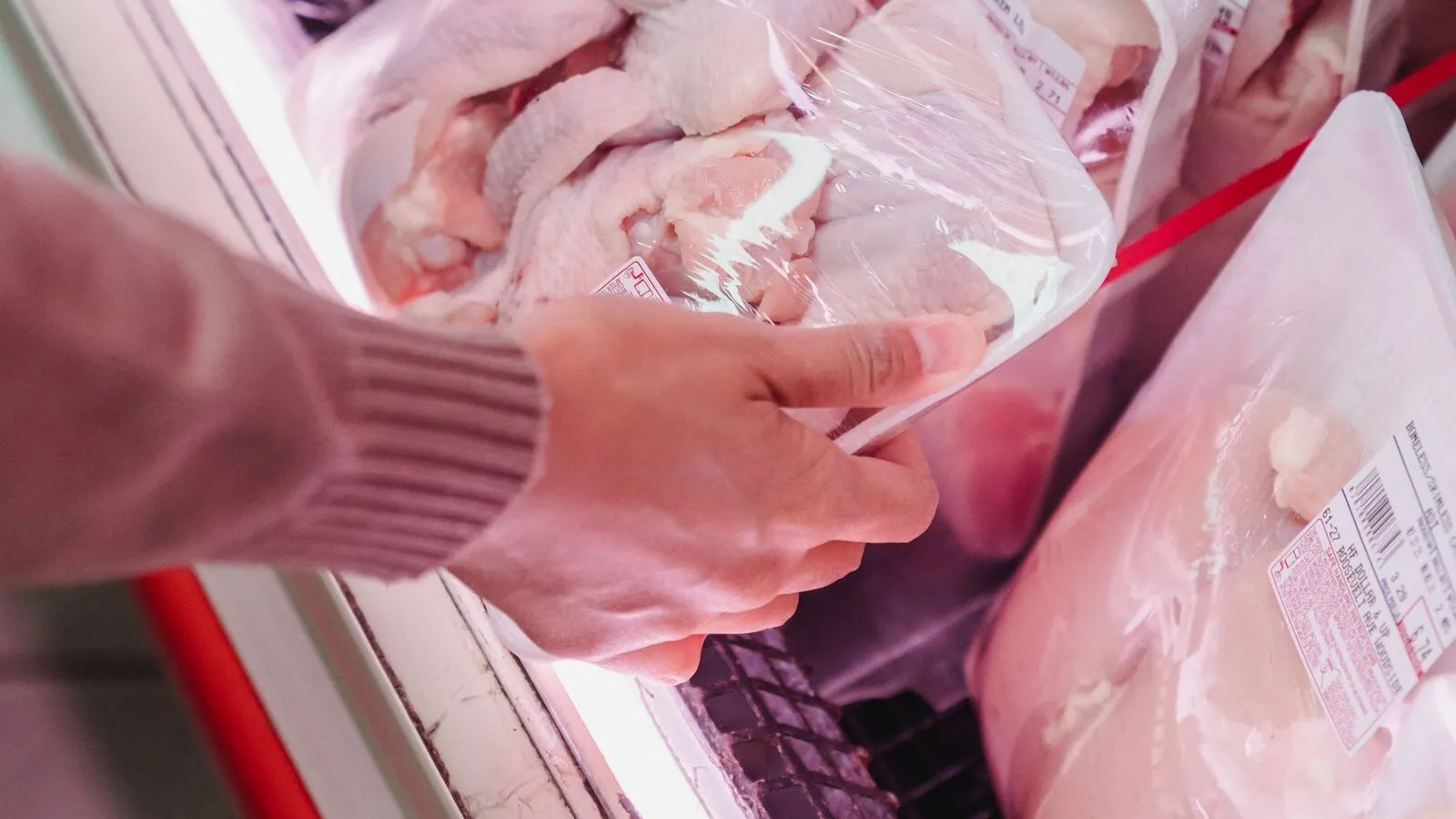
You have a frozen package and dinner is getting closer. Pick the thawing method before the meat warms: USDA recognizes refrigerator, cold-water, and microwave thawing. Countertop and hot-water thawing are not safe shortcuts.
This article owns the thawing workflow. For the later question of whether thawed food can go back in the freezer, use the separate refreezing decision table; outage-thawed food belongs to the official item-specific chart.
Thawing method table
| Method | What to do | What happens next |
|---|---|---|
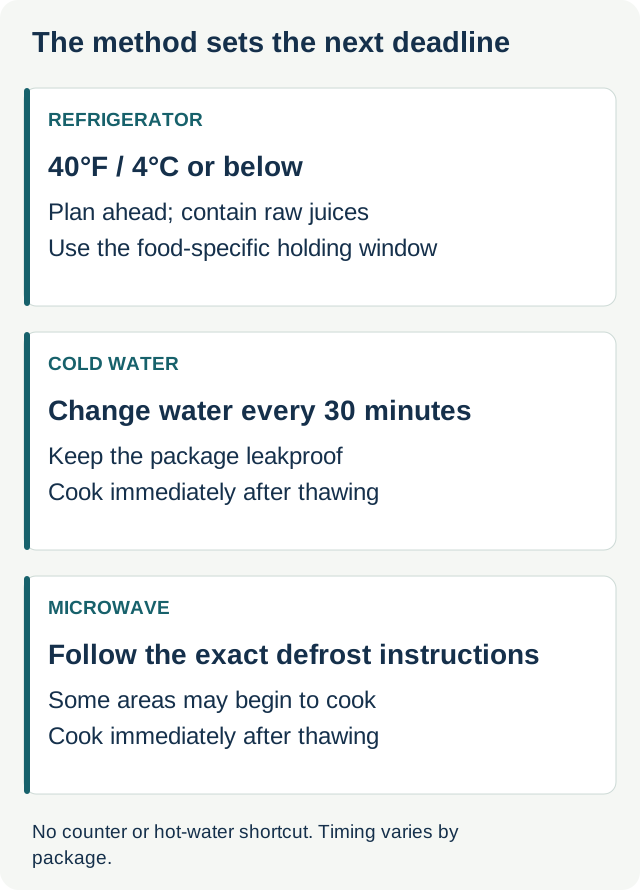
| Refrigerator | Put the wrapped meat on a tray or rimmed plate on a low shelf so drips cannot reach other food. Keep the refrigerator at 40°F (4°C) or below. | Slowest method, but the meat stays cold. Once thawed, follow the food-specific refrigerator holding window and package directions. |
| Cold water | Keep meat in leakproof packaging, submerge in cold tap water, and change the water every 30 minutes. | Cook immediately after thawing. Do not leave it waiting for later. |
| Microwave | Follow the microwave’s defrost directions and rotate or separate pieces as directed. | Cook immediately because some areas may warm or begin cooking during defrost. |
The table summarizes USDA consumer guidance; it does not predict thawing time for every cut, package, or microwave. A large roast may need substantially more planning than thin portions. If the meal time is uncertain, refrigerator thawing gives more flexibility.
Refrigerator method: plan ahead
Place the package where raw juices cannot drip onto ready-to-eat food. A plate or shallow pan helps contain leaks. Keep the package wrapped unless its instructions say otherwise. Allow a full day even for some small packages; a frozen center does not justify leaving the package on the counter to finish. Refrigerator temperature, thickness, and package shape can change the time.
After refrigerator thawing, cook the meat within the food-specific refrigerated window. USDA allows refrigerator-thawed food to be refrozen without cooking when it has remained safely cold, though quality may decline. The refreezing guide explains that separate decision.
Chicken, ground beef, and turkey: choose the schedule
These are planning estimates from the linked federal guidance, not a promise that every package will thaw on time. Keep the refrigerator at 40°F (4°C) or below and contain raw juices.
| Frozen package | Refrigerator planning | If using cold water |
|---|---|---|
| Chicken breasts, parts, or a whole chicken | USDA says 1–2 days or longer may be needed. | Its examples are about 1 hour or less for 1 lb of boneless breasts, or 2–3 hours for a 3–4 lb whole chicken; cook immediately after thawing. |
| Ground beef | Plan ahead for refrigerator thawing. USDA says to cook or refreeze within 1–2 days after safely thawing in the refrigerator. | Use a watertight bag, change cold water every 30 minutes, and cook immediately; there is no universal time for every block thickness. |
| Whole turkey, 12–16 lb | FoodSafety.gov estimates 3–4 days in the refrigerator. | The same chart estimates 6–8 hours, changing cold water every 30 minutes, followed by immediate cooking. |
For example, a 14 lb turkey for Thursday needs several days of refrigerator space and a drip-catching pan, rather than a Wednesday-night shortcut. Use the weight band in the official chart and allow for your refrigerator and packaging. If it is still icy when cooking must begin, consult the product instructions and the official cooking guidance; do not speed the last stage with hot water.
Faster methods create a deadline
For cold-water thawing, use a leakproof bag and change the water every 30 minutes so it stays cold. When thawed, cook the food right away. For microwave thawing, cook immediately as well; partial warming can start cooking some areas while others remain frozen.
If the package leaks, the meat has been on a counter, or you do not know how long it has been warm, stop and use current USDA food-safety guidance. Do not use counter or hot-water thawing as a shortcut; if you do not know how long the meat has been warm, do not infer that cooking later will correct its history.
No time to thaw?
USDA says chicken can be cooked from frozen in an oven or on the stove, with cooking time about 50% longer. It says to thaw chicken before slow-cooker or microwave cooking; the oven/stovetop statement is not permission to use every appliance from frozen. Check the product label first: special items such as stuffed poultry may have mandatory instructions. Confirm the center reaches the minimum temperature for that food in the FoodSafety.gov chart using a food thermometer; do not estimate doneness by color.