In this guideJump to a section
- Compare three filtration paths for the room you need to protect
- Write a one-page requirement before shopping
- For a portable unit, read the smoke CADR
- Prefer particle removal without intentional ozone
- For central HVAC, compatibility comes before MERV
- Understand what particle filtration does not do
- Use DIY filtration as a documented temporary fallback
- Compare the complete ownership job
- Test the plan before the air turns unhealthy
- Primary sources
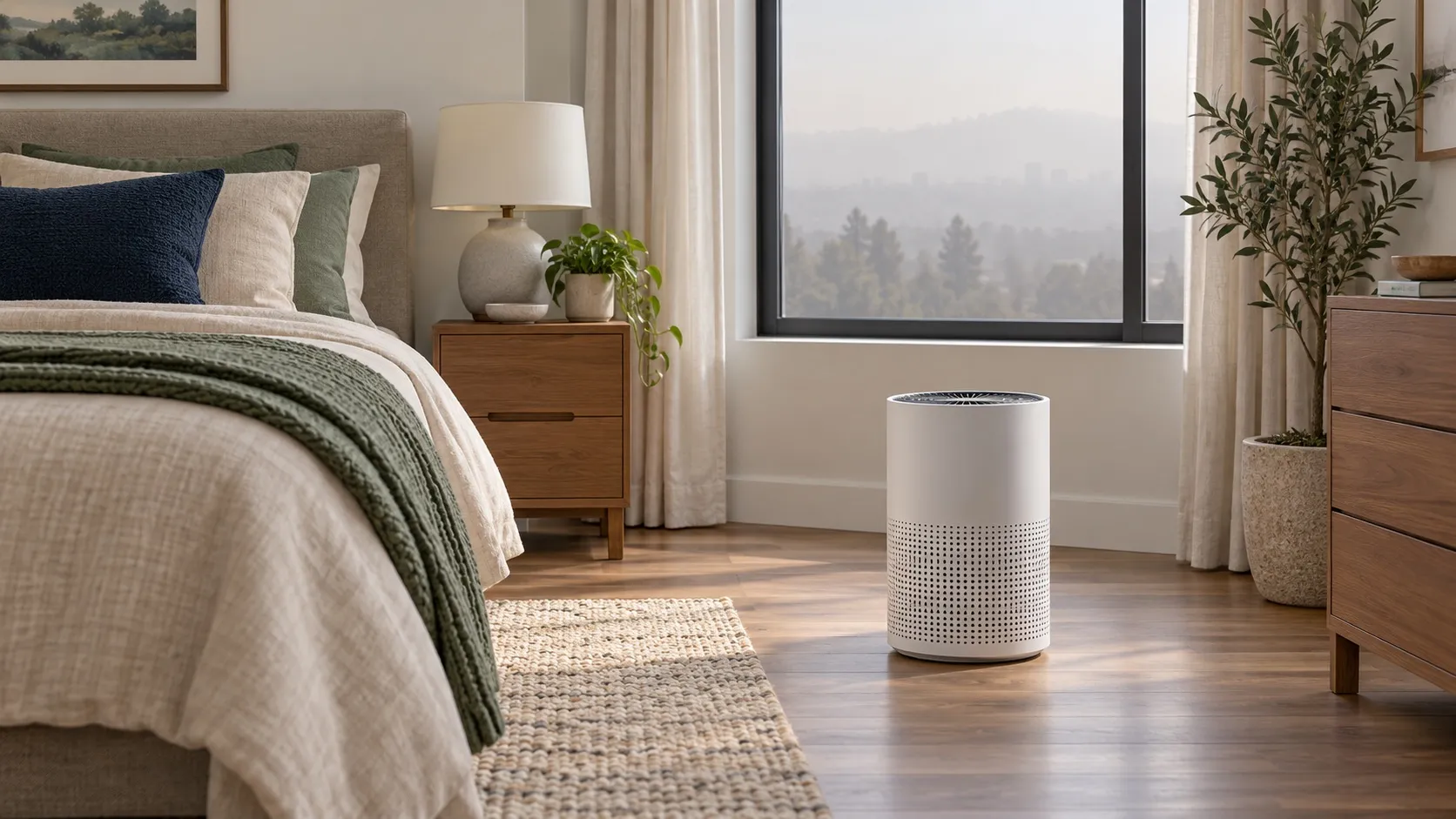
Choose the room before choosing the machine. A portable air cleaner sized for one closed bedroom may be more useful than a larger unit placed in an open area where people do not spend the smoky hours. A central HVAC filter may help across the home, but only while the system moves air and only if the fan, filter slot, and controls can support that filter.
The useful question is not “Which purifier is best?” It is “Which filtration path can this household run, maintain, hear over, and replace filters for when smoke arrives?”
Compare three filtration paths for the room you need to protect
| Path | Best fit | Main checks | Important limit |
|---|---|---|---|
| Portable mechanical air cleaner | One bedroom or cleaner-air room | Smoke CADR, room size, highest usable fan speed, ozone, noise, power, replacement filter | Cleans the room it serves; it does not manage the whole building or every smoke gas |
| Central furnace or HVAC filter | A compatible forced-air system | Exact filter size, MERV rating, fan capability, outdoor-air setting, run mode, service access | A high-efficiency filter can reduce airflow or stress a system that is not designed for it |
| Temporary DIY air cleaner | A short-term fallback when a known-performance unit is unavailable or unaffordable | Newer certified fan, filter and design, shroud, safe assembly, power, supervision, filter condition | Performance varies by build and is not a permanent substitute for a standardized unit |
| Cleaner-air destination | The home cannot remain cool, powered, accessible, or suitable | Open hours, transport, accessibility, care needs, pets or service animals | Must be confirmed before travel; an address on an old list may not be open now |
More than one path can work. A compatible central filter and a portable unit in the room where people sleep may complement each other. Buying several undersized or difficult-to-maintain units is not automatically better.
Write a one-page requirement before shopping
Record these details without a brand name:
- Room: length, width, ceiling height, doors, windows, and whether it opens into other rooms.
- People: when they will use the room, sleep and mobility needs, noise tolerance, and any clinician-directed smoke plan.
- Air system: central forced air, window unit, mini-split, evaporative cooler, portable air conditioner, or no mechanical cooling.
- Power: outlet location, unit wattage, expected run time, and the plan for an outage. Do not use an undersized extension cord as the normal setup.
- Upkeep: exact replacement-filter model, local or shipped availability, expected inspection frequency, and where clean replacements will be stored.
- Exit: the cleaner-air destination used if smoke continues entering or the room cannot stay cool.
That page prevents a temporary sale price or a vague “large room” label from replacing the real requirements.
For a portable unit, read the smoke CADR
Clean Air Delivery Rate, or CADR, combines how much filtered air a unit delivers with how effectively it removes a particle size under the test conditions. Portable-unit labels may show separate values for smoke, dust, and pollen. For wildfire smoke, use the smoke value and the manufacturer’s room-size information rather than the largest number on the box.
EPA’s current cleaner-air-room guidance gives a practical planning floor for wildfire smoke: choose a portable unit whose smoke CADR is at least two-thirds of the room area in square feet. For a 150-square-foot room, that baseline is a smoke CADR of at least 100 cfm. EPA also recommends CARB-certified air cleaners for this use because they produce little or no ozone.
| Closed room dimensions (8 ft ceiling baseline) | Room floor area | Minimum EPA baseline smoke CADR (2/3 × sq ft) | Practical sizing note |
|---|---|---|---|
| 10 ft × 10 ft small bedroom or office | 100 sq ft | 67 cfm | Look for 100+ cfm smoke CADR so you can run the fan one step below maximum during sleep |
| 12 ft × 12.5 ft standard bedroom | 150 sq ft | 100 cfm | EPA’s worked cleaner-air-room example; verify sound level at the speed that delivers 100+ |
| 12 ft × 16.5 ft primary bedroom | 200 sq ft | 134 cfm | Check replacement HEPA filter availability before committing to a proprietary housing |
| 15 ft × 20 ft family or living room | 300 sq ft | 200 cfm | Two smaller CARB-listed units can also reach the combined smoke CADR target |
| 20 ft × 20 ft large closed room | 400 sq ft | 267 cfm | Tall ceilings or open doorways require more capacity or closing off a smaller room |
Treat that ratio as a starting point, not a promise. High ceilings, open doors, heavy smoke entry, a leaky room, furniture, and running the unit below its rated speed can all reduce real-world performance. If the label does not state the tested speed or room assumptions, ask the manufacturer rather than inventing them.
Use the highest fan speed the household can keep running. Noise belongs in the decision: a powerful unit that is switched off for calls, sleep, sensory needs, or television does not deliver its label performance during those hours. Compare published sound data at the speed you expect to use, but treat manufacturer values as test-condition data, not a promise about the furnished room.
Prefer particle removal without intentional ozone
Mechanical filters such as high-efficiency pleated or HEPA filters capture particles without intentionally generating ozone. EPA’s 2026 Wildfire Smoke Guide does not recommend electronic air-cleaning technologies for smoke removal because of limited evidence and the potential for ozone or other byproducts.
Do not treat words such as “ion,” “plasma,” “active oxygen,” “hydroxyl,” “UV,” or “sanitizing” as proof of smoke-particle removal. Ask which technology moves air through which mechanical filter, what the smoke CADR is, and whether any mode produces ozone.
California requires many air cleaners sold in the state to be certified for electrical safety and limited ozone emissions. The CARB consumer list is a useful model check, but certification is not an effectiveness award. A listed device can still be too small, too loud, poorly placed, or expensive to maintain.
For central HVAC, compatibility comes before MERV
EPA recommends MERV 13 or the highest-efficiency filter the central system can accommodate. “Can accommodate” is the important part. A filter that does not fit, bypasses around the edges, or creates more resistance than the fan can handle will not be repaired by a higher number on the label.
Check the exact equipment manual or ask a qualified HVAC technician:
- Which filter dimensions and efficiency range does the system support?
- Is the filter rack sealed well enough to prevent air bypass?
- Can the fan run continuously or on a smoke-event schedule without creating a maintenance or comfort problem?
- Does the system bring in outdoor air, and which documented setting is appropriate during smoke?
- How often should the filter be inspected during a heavy-smoke event?
- What sign—reduced airflow, unusual noise, icing, heat, or a service alert—means stop and call for help?
Do not force a thicker filter into a shallow slot, stack filters, tape over equipment openings, or alter dampers based on a generic article. Apartment and shared-building systems belong to building management or a qualified service provider.
Understand what particle filtration does not do
Wildfire smoke contains particles and gases. A particle filter can reduce airborne particles that pass through it. It does not reliably remove all gases, make smoke odor a health meter, cool the room, add oxygen, repair a leaky building, or make it safe to stay near an active fire.
Some units add activated carbon or another sorbent. The amount, gas target, contact time, and replacement condition affect whether that layer does useful work. A thin carbon sheet and the phrase “odor control” do not establish broad gas removal. Ask for dated, named test methods and the quantity and replacement schedule of the media if gas performance is a purchase reason.
Use DIY filtration as a documented temporary fallback
EPA’s DIY air-cleaner research found that a shroud, thicker or multiple filters, fan speed, and clean filters changed performance in the designs it tested. Those findings do not give every household build the same CADR.
If this is the practical fallback, use a 2012-or-newer box fan with a UL or ETL safety mark, follow the fan instructions, keep the intake and outlet clear, and do not use a damaged fan or extension cord. Keep children and animals away from the fan and cord. Stop if the fan overheats, smells unusual, vibrates, is damaged, or cannot move air through the loaded filter.
Compare the complete ownership job
Use this short scorecard for every candidate:
| Question | Record this, not a marketing phrase |
|---|---|
| Will it serve the room? | Smoke CADR, room assumptions, planned fan speed |
| Will people run it? | Sound at the planned speed, controls, light dimming, accessibility |
| Does it avoid added pollution? | Mechanical filtration, ozone disclosure, CARB listing where relevant |
| Can the household power it? | Rated watts, normal outlet, outage plan, and any backup-power limits in the manual |
| Can the household maintain it? | Exact filter model, availability, replacement indicator and manual |
| What does a year require? | Unit cost plus a realistic number of filters and electricity, dated when checked |
| What is the fallback? | Second unit, temporary DIY option, or confirmed cleaner-air destination |
Do not publish a fixed annual cost without a dated filter price, local electricity rate, run schedule, and smoke conditions. The goal is a replaceable worksheet, not a timeless winner.
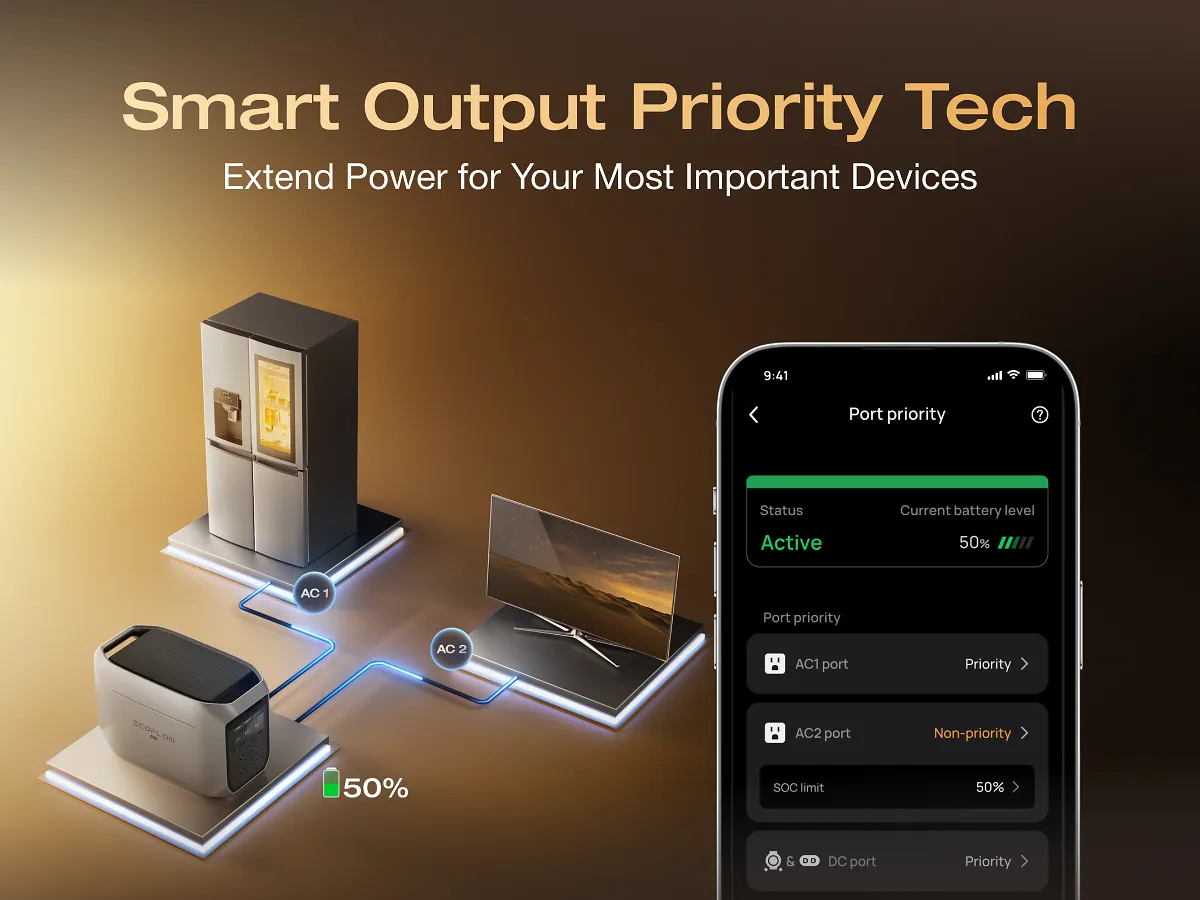
If wildfire smoke coincides with a Public Safety Power Shutoff or grid outage, check the air cleaner’s rated wattage on its nameplate so you can run it indoors on a battery power station rather than opening doors or windows to manage generator cords.
Paid links — we may earn a commission. As an Amazon Associate I earn from qualifying purchases.
 Check price at Amazon
 EcoFlow DELTA 3
1,024 Wh LiFePO4 battery station with 1,800 W AC output that operates indoors without exhaust, allowing a portable room air cleaner and phone chargers to run during smoke-event power shutoffs.
- Nominal capacity
- 1,024 Wh
- Continuous AC output
- 1,800 W
- Base-unit weight
- 27.6 lb
Source records checked on 2026-10-04. This is research, not hands-on testing. Read the manufacturer manual.
Test the plan before the air turns unhealthy
Place the unit, close the room as it would be used, run it at the planned speed, and check noise, airflow, heat, controls, cords, doors, mobility, and sleep. Show another household member how to check and replace the filter without touching the dirty media more than necessary. Keep the manual and model number on paper.
Then complete the cleaner-air-room setup and connect it to the wildfire evacuation plan. Filtration belongs inside that larger plan, never in place of it.