A breaker trip is a protective event, not a request to keep resetting a switch until it stays on. Warm, buzzing or scorched service equipment can involve faults hidden behind a cover that a household member must not open to investigate.
This guide helps decide when to leave the area, call emergency services, or contact a licensed electrician. For partial power or flickering lights, see partial power and flickering lights. For GFCI troubleshooting within the manufacturer’s instructions, see GFCI outlet keeps tripping.
Signs that should change the response
| What is safely observed | Why it may matter | Conservative action |
|---|---|---|
| Smoke, sparks, flames or active shocks | Immediate electrical injury or fire hazard | Keep people clear; call emergency services from a safe place |
| Burning insulation smell, scorching or unusual heat | Damaged wiring or overheating may be present | Avoid touching the equipment; contact qualified help promptly |
| Buzzing, crackling or sizzling from a panel | Possible loose, damaged or arcing electrical equipment | Do not open the enclosure; ask a licensed electrician |
| Breaker trips repeatedly | Overload, wiring fault or damaged device is possible | Do not repeatedly reset or install a larger rating |
| Unexplained flicker in multiple rooms | Branch or upstream supply problem may exist | Document safe observations and contact electrician/utility |
| Wet panel or submerged outlet after flooding | Electric shock and fire risk | Stay out; let utility and qualified professionals make it safe |
The Electrical Safety Foundation International identifies shocks, burning smells, buzzing, damaged insulation and frequent trips as warning signs requiring a licensed electrician. A symptom does not establish the exact fault without examination.
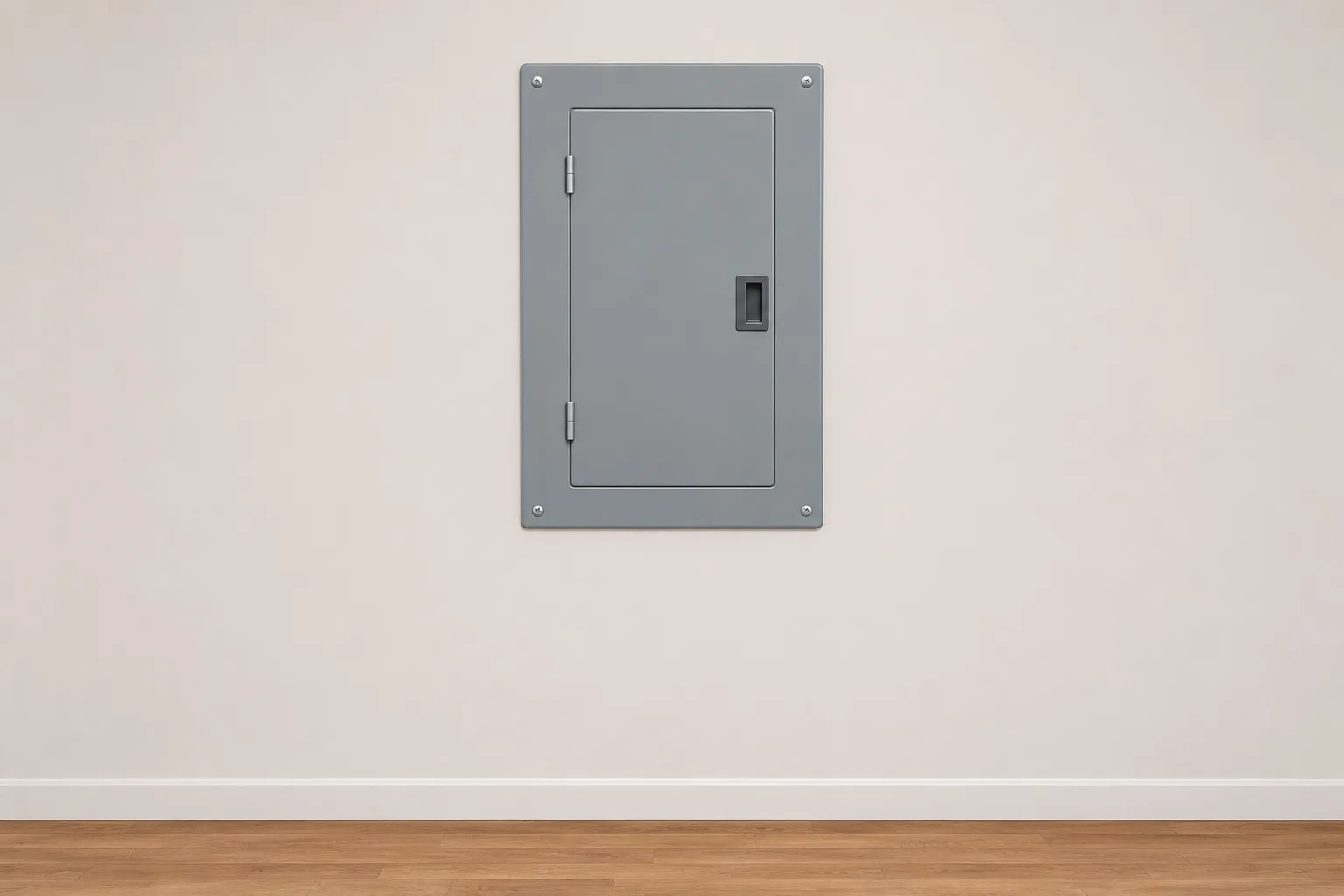
Do not investigate inside the panel
Panel interiors contain energized parts even when some individual branch breakers are switched off. Never remove a cover, tighten a terminal, replace a breaker, work on a service meter, touch standing water near electrical equipment or handle damaged conductors. Do not instruct someone to “check” a panel by feeling it for heat.
The ESFI home electrical fire guidance recommends qualified inspections for repeated breaker trips and unusual sounds. An electrician can decide whether the concern is within the property or requires the utility.
Collect only safe context for the appointment
From a safe, dry location, note the time of the problem, which rooms were affected, relevant unusual sounds or visible smoke, whether a power outage was reported, and any appliances operating immediately beforehand. Don’t stage a second trip to create evidence. Do not use a phone camera inside a live panel as a DIY inspection.
If the property is rented, notify the building manager or emergency maintenance number. If there is immediate danger, evacuation and emergency services take priority over making a ticket.
Electrical warning escalation record
| Safe observation/time | Rooms or appliances affected | Emergency or qualified contact | Resolved/next inspection |
|---|---|---|---|
The ESFI breaker overview cautions against changing protective device ratings and explains why repeated trips require professional investigation.
Next action: record the single observation you know is true and contact the correct qualified professional; do not attempt to discover the fault yourself.