Dryer Vent Safety: A Simple Check Before the Next Load
Check the lint filter, vent path, and exterior outlet for visible problems, then know when a dryer needs qualified service before it runs again.
Laundry is easy to run on autopilot: load the clothes, press the button, and come back later. A change in the usual cycle—damp clothes that used to dry, a vent flap that stays shut, or a hot smell—deserves a pause. Dryer fires can involve lint in the machine or exhaust duct; CPSC explains how lint can restrict airflow and contribute to heat buildup. A visual check helps you spot when ordinary cleaning is not enough.
The home fire escape plan is for getting out if a fire occurs. This guide covers the smaller task before that: a manual-led check of the dryer’s accessible parts and the point where a household should stop and call for service.
Start with the lint screen and the exact manual
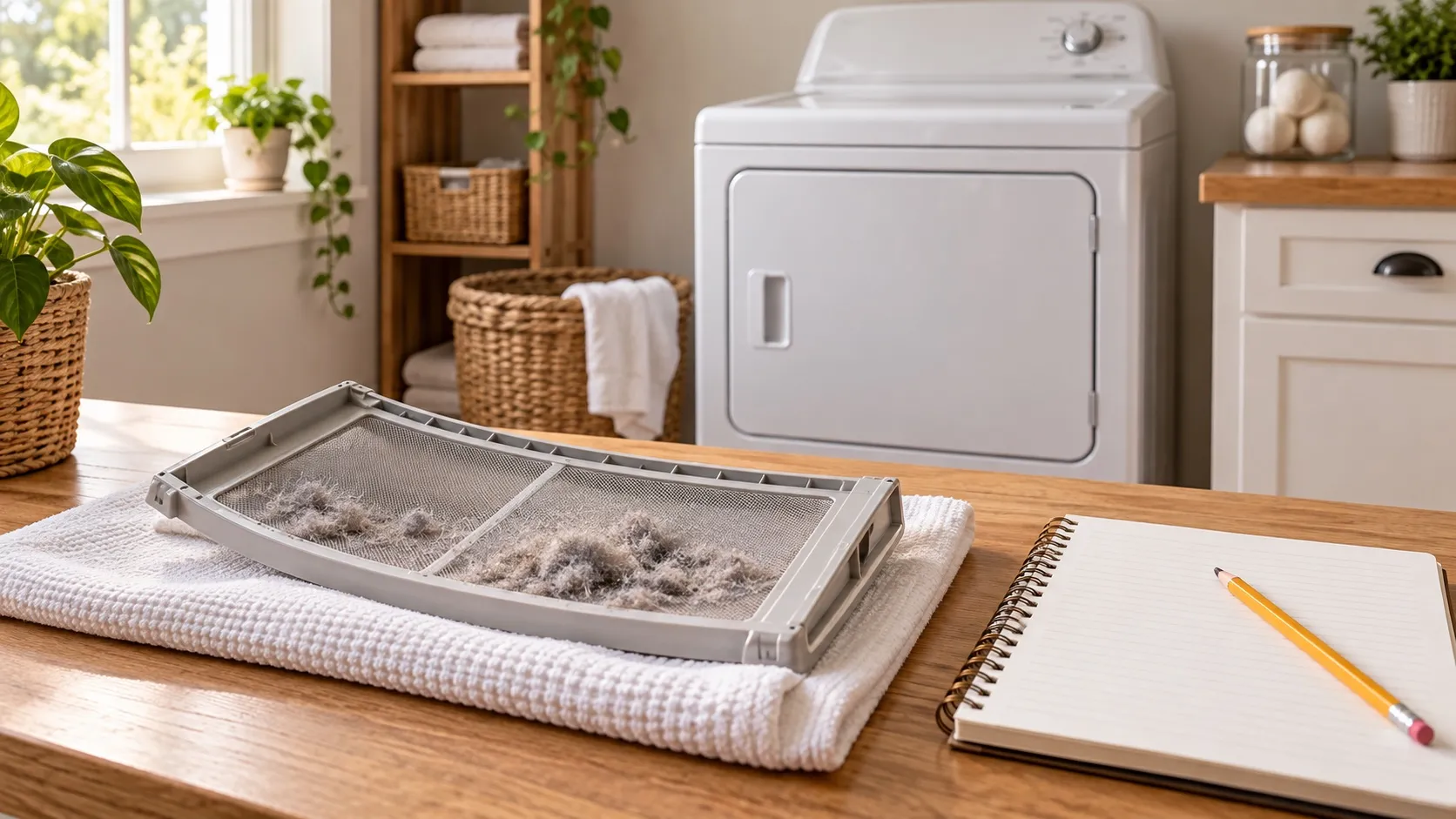
The U.S. Fire Administration says to clean the lint filter before and after each cycle and to have dryers installed and serviced professionally. CPSC also warns that lint can block airflow, cause heat to build up, and contribute to a fire in some dryers. Read your model’s manual for the lint-screen procedure, items that must not go in the dryer, and any user maintenance it permits.
Do not run a dryer without its lint filter. If the screen is torn, missing, or does not fit, stop using the appliance until you have the correct replacement and instructions. Never use an improvised screen or continue running the dryer with an airflow warning unresolved.
Check the vent path you can see
When the dryer is off and cool, look at the visible section behind it without pulling, tilting, or disconnecting the appliance. CPSC describes a crushed, blocked, or disconnected exhaust path as a problem to address; USFA advises checking that the vent is not damaged, crushed, or restricted and that the outside covering opens while the dryer is operating.
Use the table to decide what the observation means. If checking would require moving a heavy appliance, reaching into a duct, entering an unsafe space, or disturbing a shared building system, ask the property manager or a qualified service person instead.
| What you notice | What to do |
|---|---|
| Lint on the screen after a load | Clean the screen according to the manual before the next cycle. |
| Visible vent is crushed, separated, damaged, or blocked | Do not keep running cycles. Arrange service or contact the building manager to restore an approved exhaust path. |
| Clothes stay damp after a normal cycle or need longer than usual | CPSC identifies longer drying as a possible sign of a blocked screen or duct. Stop repeated cycles and have the airflow problem checked. |
| Outside vent cover does not open during normal operation | Stop using the dryer and arrange inspection of the vent path. Do not reach into the vent while the machine is running. |
| Burning smell, smoke, or visible heat damage | Stop the cycle only if safe to do so, leave if there is smoke or fire, and call 911 from safety. Do not restart the appliance until it has been checked. |
That last row is a fire response, not a maintenance step. If there is active smoke or flame, get people out and use the emergency response instructions for your location; do not stay to inspect the vent.
Decide who should handle the cleaning
Routine lint-screen care and a look at accessible vent sections are different from opening the dryer cabinet or cleaning a long concealed duct. USFA recommends professional installation and service. CPSC says the interior chassis may need periodic cleaning by a qualified service person and notes that a blockage may require duct disconnection. Those statements do not create one schedule for every home: duct length, turns, material, usage, and the appliance instructions differ.
Ask the installer, landlord, or service company who is responsible for the duct and what interval applies to your setup. If the vent passes through a shared wall or roof, do not modify it or substitute a different termination. A renter can send the manager the symptom, date, and a photo of visible damage instead of attempting a repair.
Dryer vent check record
Keep a short record with the laundry or appliance paperwork. It makes a recurring problem easier to describe without guessing at its cause.
| Record | Entry |
|---|---|
| Dryer | Brand and exact model; where the model label is located |
| Manual | Link, QR code, or paper copy and the relevant maintenance section |
| Visible check | Date; lint screen condition; visible vent condition; outside-cover observation |
| Change noticed | Longer cycle, damp load, odor, warning code, noise, or other change and when it began |
| Follow-up | Who was contacted, service date, and what instructions they gave |
A boundary worth keeping
Do not treat a successful cycle as proof that a vent is clear, and do not treat one long cycle as proof of a specific failure. Use the exact manual and qualified service to investigate a repeated change. If you see fire or smoke, leave the inspection for responders.