How to Test for Radon at Home—and What Your Result Means
Choose a short- or long-term radon test, follow its placement instructions, record the result, and know when to confirm it or contact a qualified professional.
In this guideJump to a section
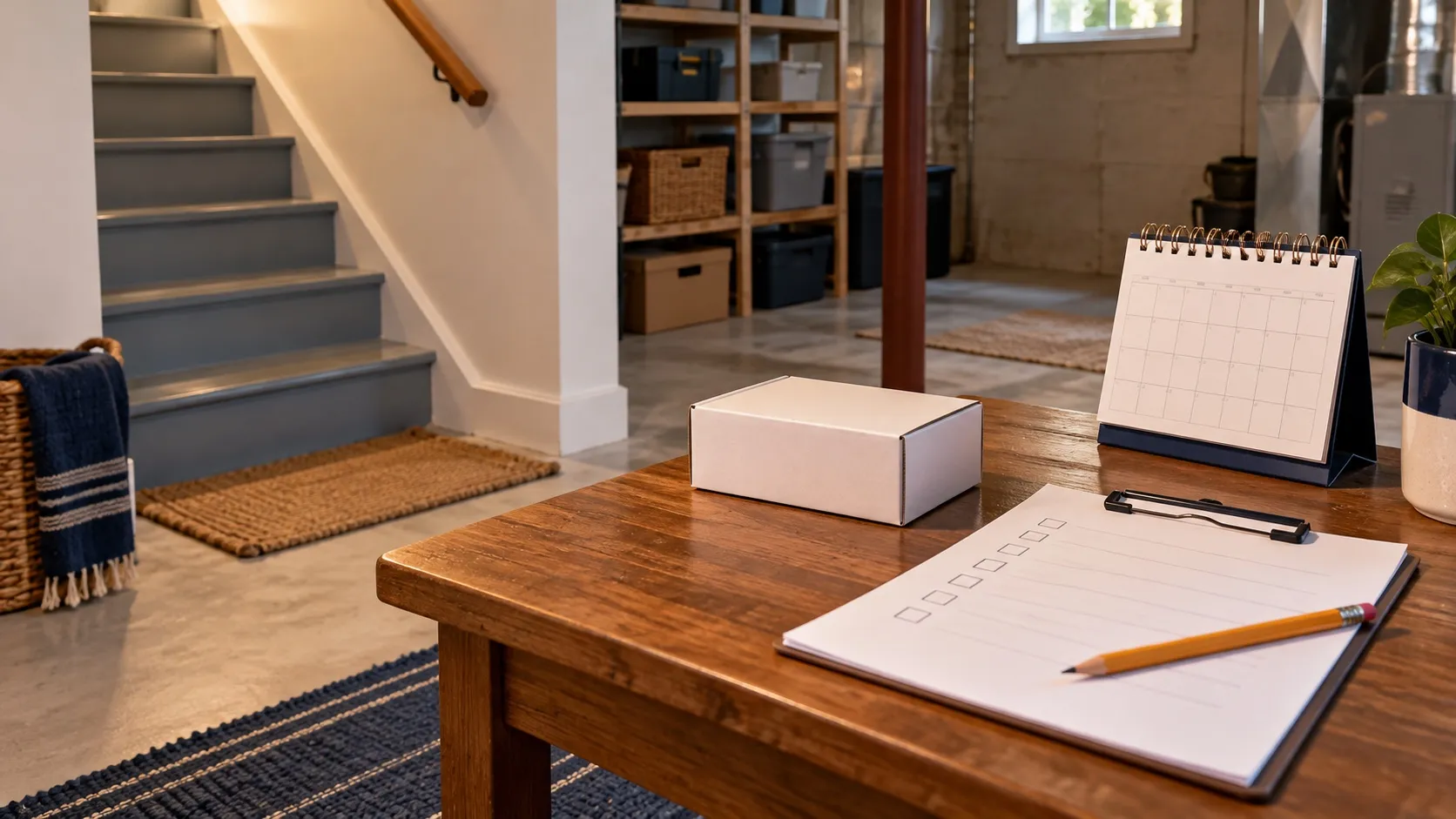
If a basement is becoming a bedroom, workshop, or play space—or a home purchase is moving quickly—a radon result can feel like a yes-or-no verdict. It is better treated as a measurement with a location, duration, and set of instructions attached. Radon is invisible and cannot be judged by smell or appearance; testing is how a household learns the level in a particular space.
The smoke and carbon monoxide alarm guide covers devices that warn of immediate hazards. Radon testing answers a different question: what concentration was measured over a specified period in the lowest level the household may regularly use?
Choose the test for the decision
EPA describes short-term tests that remain in place from 2 to 90 days, depending on the device, and long-term tests that run for more than 90 days. Tests must run at least 48 hours, although a specific kit may require more. A long-term result is more likely to represent a home’s year-round average; a short test can be useful when an answer is needed sooner. Check the exact kit and laboratory instructions before buying or starting a test.
| Situation | A useful test choice | What the result can tell you |
|---|---|---|
| You want a current screening result | A qualified short-term kit, used for its full stated duration | A reading from that test period and location, not a year-round average |
| You can leave a monitor in place for months | A long-term test over 90 days | A result more representative of longer-term exposure in that location |
| A short result is elevated or conditions were uncertain | Follow EPA and state guidance for confirmation or professional measurement | Whether a properly performed follow-up test supports taking mitigation steps |
| A lower level will become regularly occupied | Retest that level if your earlier sample was taken elsewhere | The earlier result may not describe the newly used space |
The method and follow-up can depend on whether you are testing for your own planning or during a sale. EPA’s buyer-and-seller guide sets out the real-estate case separately; do not substitute an informal test schedule for a transaction requirement.
Place and run the kit carefully
For a home test, use the lowest level that could be used regularly, not a crawl space or a room that is not suitable for normal use. EPA’s guide gives device-placement directions and calls for short-term closed-house conditions in specific test windows. For short tests lasting two to four days, its checklist says to maintain closed-house conditions for at least 12 hours before starting and throughout the test. Other test lengths have their own directions; read the EPA test checklist and the exact kit instructions.
Treat the kit’s instructions as part of the measurement. Keep the device away from drafts, high heat, high humidity, and places where it could be disturbed, as the guide specifies. Record the start time, finish at the required time, reseal or return the device as instructed, and send it to the laboratory named on the package. If windows were open or the test was moved, note that rather than quietly treating the result as a standard test.
Do not choose a test location from a radon-zone map alone. EPA describes zone maps as a broad view of potential; they do not establish the concentration inside one particular home. A house’s measurement is more useful than a regional estimate for deciding what that household should do.
Read the result as a next-step signal
EPA recommends fixing a home at 4 picocuries per liter (4 pCi/L) or higher. That action level is not limited to long-term tests, and a lower result is not a risk-free verdict. How you confirm a short-term result depends on the testing arrangement: follow EPA’s test and follow-up guidance and the state radon program’s instructions rather than dismissing an elevated screening result.
| Your result or circumstance | Practical next step |
|---|---|
| Below 2 pCi/L, and the test followed its instructions | Keep the report. A lower result is not a risk-free guarantee; reconsider testing after changes to the home or occupied level. |
| From 2 to below 4 pCi/L | EPA recommends considering a fix. Discuss the result, test method, and options with the state radon program or a qualified professional. |
| At or above 4 pCi/L on a long-term test | Contact your state radon program or a qualified radon mitigation professional about fixing the home. |
| At or above 4 pCi/L on a short-term test | EPA’s Citizen’s Guide calls for a follow-up test. If a second short-term test is used, consider fixing when the average is at least 4 pCi/L. Ask the state program or a qualified professional to apply the pathway to your test. |
| Uncertain test conditions or conflicting results | Ask the state radon program or a qualified measurement professional how to obtain a valid result; do not treat an invalid test as clearance. |
| An earlier report is from another floor or before a major change | Check whether that report answers the current question; test the level that is now or will be regularly occupied when appropriate. |
The lower-result distinction follows EPA’s action-level explanation, updated October 13, 2026: there is no known safe exposure level, and 2–4 pCi/L deserves consideration of a fix. The Citizen’s Guide follow-up steps, reviewed October 15, 2026, say to take a second short-term test immediately if the first result is more than twice the 4 pCi/L action level—above 8 pCi/L—instead of waiting for a long-term follow-up. A sale can require a different prescribed test arrangement under the buyer-and-seller guide. Contact the state radon program for provider qualifications and state requirements; a national article cannot certify a provider or choose a system for your home.
Radon test record
Put the report somewhere you can find it again, especially if the home changes hands or you plan a project. Use a simple record like this:
| Record | What to write down |
|---|---|
| Home and test area | Address or household label; floor and room; whether the level is regularly used |
| Test | Kit or monitor name, lab, device type, and any instructions that differ from a standard test |
| Timing | Start and stop date/time, test duration, and whether required closed-house conditions were followed |
| Result | Value, unit (pCi/L), lab report date, and report file or contact |
| Next step | Retest, state radon program contact, or qualified professional follow-up, with the date and reason |
Before you start, write the room and floor on the record. After the result arrives, keep the original lab report with it; a handwritten value without the report, units, and test duration is easy to misread later.
The home improvement preparedness guide can help place this task on a broader project list, but the test instructions and state radon program should guide the radon decision itself.