Swollen, Hot, or Leaking Rechargeable Battery? Stop Use
Recognize visible signs of a lithium-ion battery problem, know when to leave and call emergency services, and find a safe disposal contact without handling a damaged pack.
In this guideJump to a section
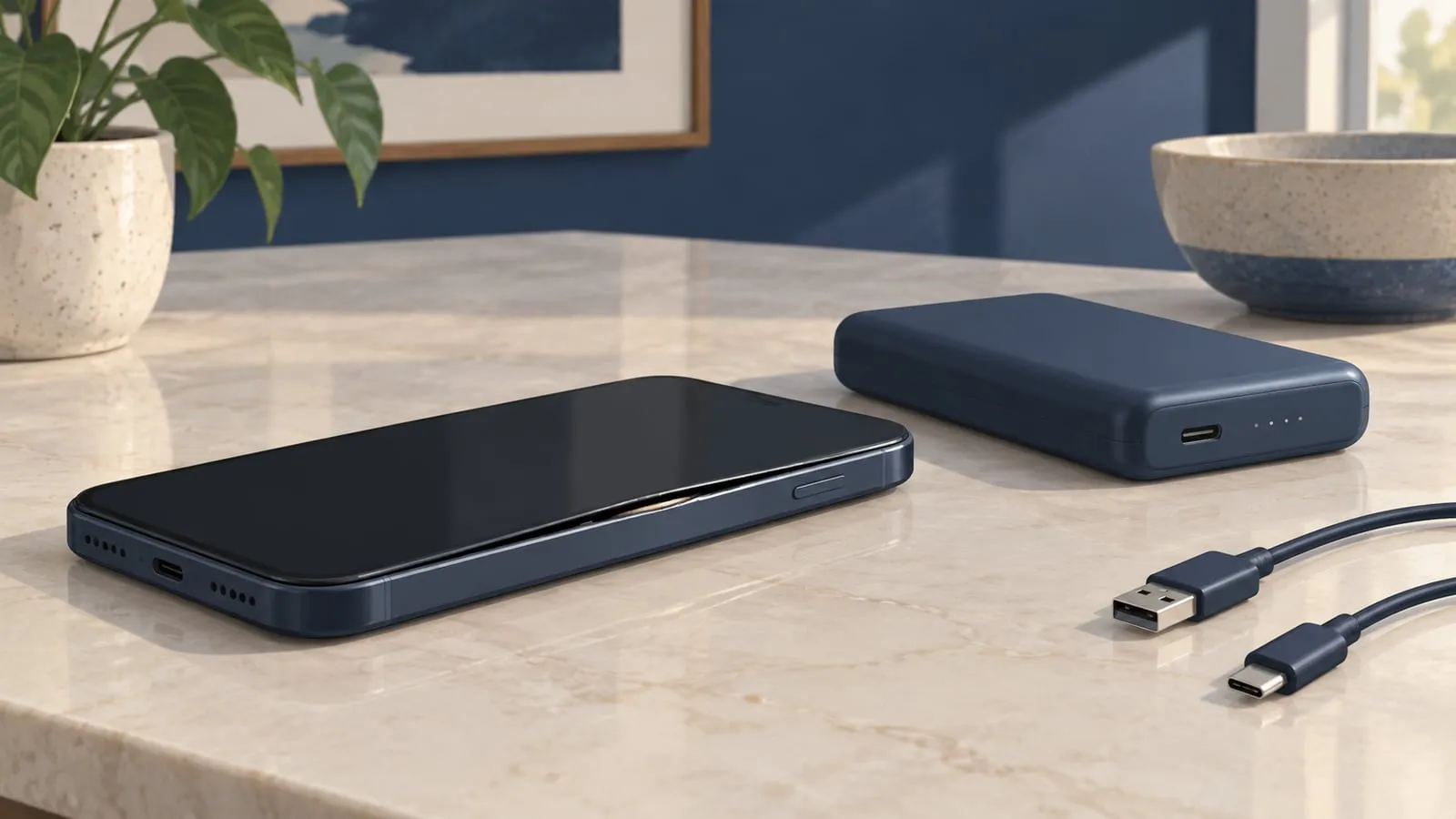
Rechargeable batteries sit inside phones, power tools, scooters, vacuums, and other household devices. A battery that becomes unusually hot, changes shape, leaks, smells unusual, changes color, or makes odd noises is not a device to keep testing. The U.S. Fire Administration lists those changes as warning signs for lithium-ion batteries.
Separate an active emergency from a damaged device
If you see smoke or flame, hear hissing, or the device is rapidly heating, move people away, leave, and call 911 from a safe location. USFA’s battery-fire guidance says to get out quickly; its community education guidance says not to try to put out a lithium-ion battery fire. Do not approach the device to unplug, move, or inspect it.
If a battery appears damaged but there is no smoke or active fire, stop using or charging the product and keep others away. Do not press, bend, open, puncture, or pick up the battery. Contact the product maker and your local hazardous-waste, fire, or solid-waste authority for directions specific to the device and its condition.
| What you observe | Safer next move |
|---|---|
| Smoke, flame, hissing, or rapidly increasing heat | Leave the area and call 911 from safety. Do not attempt to extinguish or handle the device. |
| Bulging, changed shape, leaking, unusual odor, color change, or excessive heat without active fire | Stop ordinary use and charging; keep people away and contact the product manufacturer or local authority before handling or transport. |
| A battery or device is recalled | Match the exact model and other identifiers to the notice. Follow the recall’s stop-use and remedy directions exactly. |
| A normally used battery reaches end of life without signs of damage | Use the maker’s instructions and an accepted local collection site; do not put lithium-ion batteries in trash or curbside recycling. |
Do not interpret the last row as permission to take a visibly damaged battery to an ordinary drop-off point. EPA advises households not to put lithium-ion batteries in household trash or curbside recycling and points to collection locations. Its ordinary used-battery guidance does not tell you how to pack or transport a damaged, hot, swollen, or leaking unit; call first and follow local instructions.
Keep the response product-specific
Battery packs differ in shape, chemistry, enclosure, and whether they can be separated from a device. A phone battery, an e-bike pack, and a home backup battery do not have one interchangeable handling procedure. Do not remove a built-in pack, put it in a container, tape its terminals, or carry it through the home based on generic advice. Those actions may be appropriate for some ordinary, undamaged batteries under local guidance, but they are not a safe universal procedure for a damaged battery.
USFA advises following the product’s instructions for using, storing, and disposing of batteries. For an active incident, leave and call emergency services. For a non-burning but damaged product, ask the manufacturer and the local authority how to proceed before you handle it. If the product is part of a home battery-storage or energy system, keep away and use the system’s emergency contact or qualified service route; do not operate its internal disconnects unless emergency responders or the exact manufacturer instructions tell you to.
This page is about warning signs and the first safe handoff. The home fire extinguisher guide explains why fire equipment is not a reason to stay in danger or attempt to fight a battery fire.
Battery record and local contact
For an ordinary planning record—completed before a problem—write down:
| Record | Keep with the product instructions |
|---|---|
| Product | Brand, model, battery type if listed, and serial or date code |
| Manual | Manufacturer support page and the model’s use, warning, and disposal instructions |
| Recall check | Date checked and the exact notice or search result, if any |
| Local disposal | Household hazardous-waste or electronics-recycler contact; ask whether it accepts this battery type and condition |
| Emergency contact | Local emergency number and a household exit or regrouping reminder |
Do not delay evacuation to gather this record. A small product note is useful before an incident; smoke, fire, or fast heating changes the priority to leaving and calling for help.