A Power Line Is Down Near Home: Stay Back and Call
Treat a fallen or damaged power line as energized, keep people away from it and anything touching it, and call emergency services from a safe location.
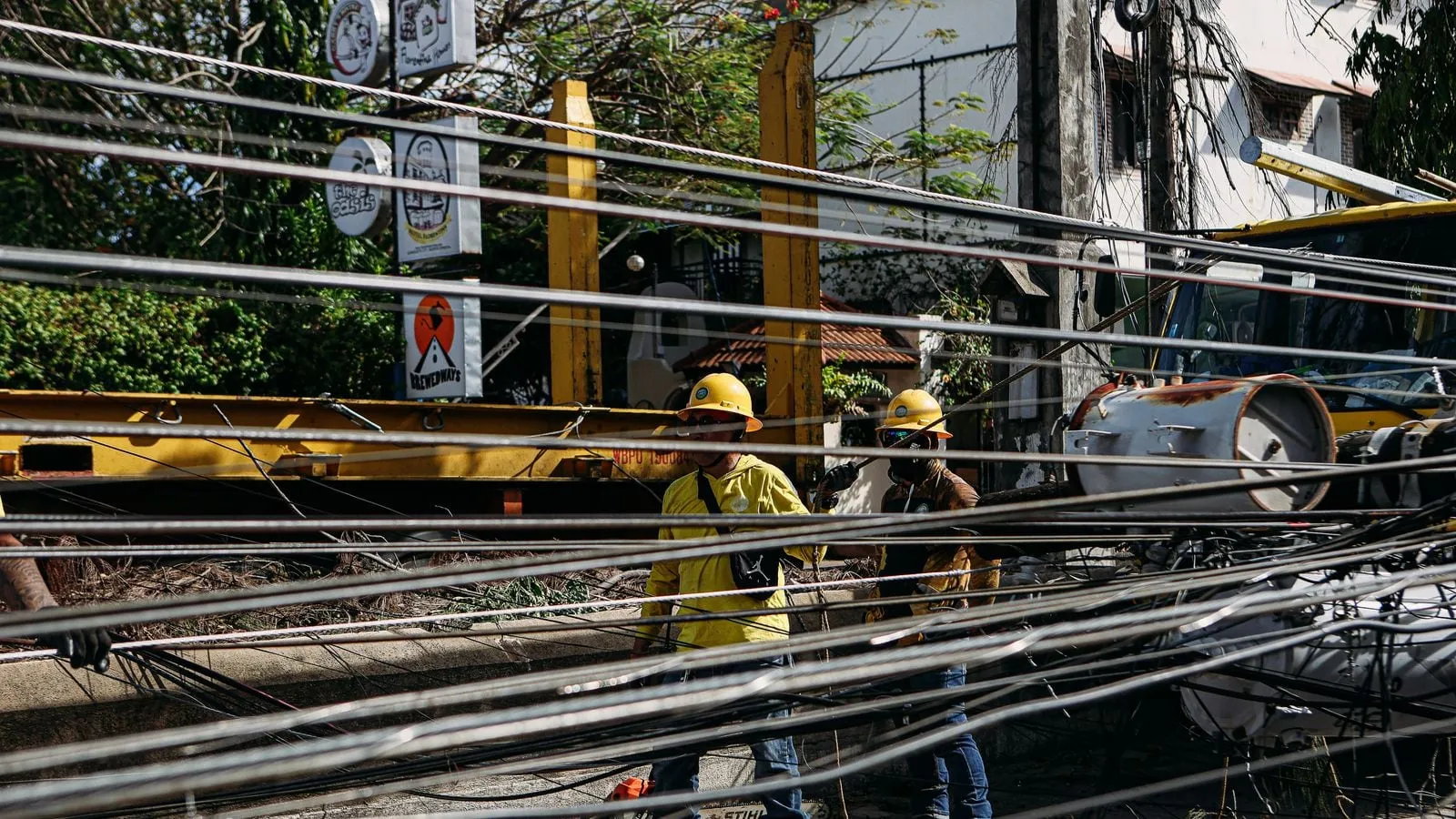
A storm knocks a wire onto a driveway, fence, vehicle, or tree. Assume it is energized even if it looks like a cable or the power is out. Stay away from the line and anything touching it, keep others back without approaching, and call 911 from a safe location. Notify the local electric utility after emergency services.
Electricity may energize nearby objects and wet ground; the hazard is not limited to the visible wire. ESFI warns that ground can be energized around a downed line and that wet conditions may extend the danger. Do not try to estimate where safety begins. Follow your utility’s instructions and directions from responders.
Keep people away and report the location
Do not touch, move, drive over, or photograph a downed line from nearby. Do not touch a person, vehicle, fence, tree, puddle, or tool that may be in contact with it. Tell others to keep clear from a safe distance, then call 911 and state that it is a possible electrical emergency. Give the nearest address, cross street, landmark, or direction of travel; do not walk toward the wire to improve the description.
After emergency services are contacted, report the line to the electric utility that serves that address. For example, PG&E tells its customers to call 911 and then PG&E. Use your own utility’s reporting instructions and the responders’ directions; do not estimate a safe clearance from an online distance rule.
| Situation | What to do |
|---|---|
| Line on a road, yard, roof, fence, or tree | Keep away, warn others from safety, call 911, then report it to the local utility. |
| A person or object is touching the line | Do not touch or approach them. Call 911 and tell the dispatcher exactly what is in contact. |
| Line is near water, wet grass, or storm debris | Keep clear of the entire affected area; do not cross water or debris to get around the line. |
| Line touches a vehicle | Stay inside and call 911; warn others away. If fire or smoke makes staying immediately dangerous, use the emergency-exit guidance below. |
| You are in a vehicle approaching a downed line | Stop well short, do not drive over it, and find another route without approaching the hazard. |
If a power line contacts your vehicle
Remain inside, call 911, and warn others not to approach. Do not get out to inspect the line, and do not approach another vehicle or try to pull someone out. Wait for responders and the utility to say when exit is safe.
Fire or smoke that makes staying immediately dangerous is the exception. Follow emergency dispatch directions when available, but do not wait inside an immediately dangerous fire to obtain a phone connection. PG&E’s emergency-exit transcript and PSE&G’s vehicle guidance describe jumping clear so you never touch the vehicle and ground together. Land with both feet together, then shuffle away with small steps, keeping feet close and not letting one pass the other. Do not reach back or return to the vehicle.
These are emergency movements for an unavoidable exit, not a reason to leave a contacted vehicle otherwise. Keep moving away and follow the dispatcher and local utility; neither a visible gap nor a memorized distance establishes that the area is safe.
Wait for the utility or emergency responders
Do not assume a wire is safe because it is quiet, not sparking, or has been there for a while. Do not use a branch, broom, rope, glove, or other object to move it. Do not cut nearby limbs or operate equipment that could make contact. Let trained responders and line crews determine when the area is safe.
When the immediate hazard is clear and the issue is an ordinary outage, use the home power-outage security plan for the separate task of securing the house during a loss of power.
If there is smoke or fire near the line, keep back and tell the 911 dispatcher. Do not apply water or approach with an extinguisher. If the hazard blocks a road or entrance, give responders that detail when you call; keep yourself and household members out of the repair path.
Downed-line response card
Prepare a small card before storm season. The card should help someone contact responders without stepping toward a line or searching for a utility bill during the incident.
| Card item | Record |
|---|---|
| Electric utility | Provider name and its public emergency/outage contact |
| Emergency contact | 911 and any local accessibility or relay option the household uses |
| Address details | Street address, unit, nearest cross street, gate or access notes that can be safely shared |
| Household roles | Who will call, who will keep people away, and where to meet away from the hazard |
| Last check | Date you verified the provider and contact information |
Do not delay a 911 call to find this card, take a picture, or identify the wire owner. The only useful record during an incident is one you can access from a safe location.