Water Heater Leaking? What to Do First
See water around a water heater? Use a safety-first check to decide whether to leave, who to contact, and what to report without testing or repairing the appliance.
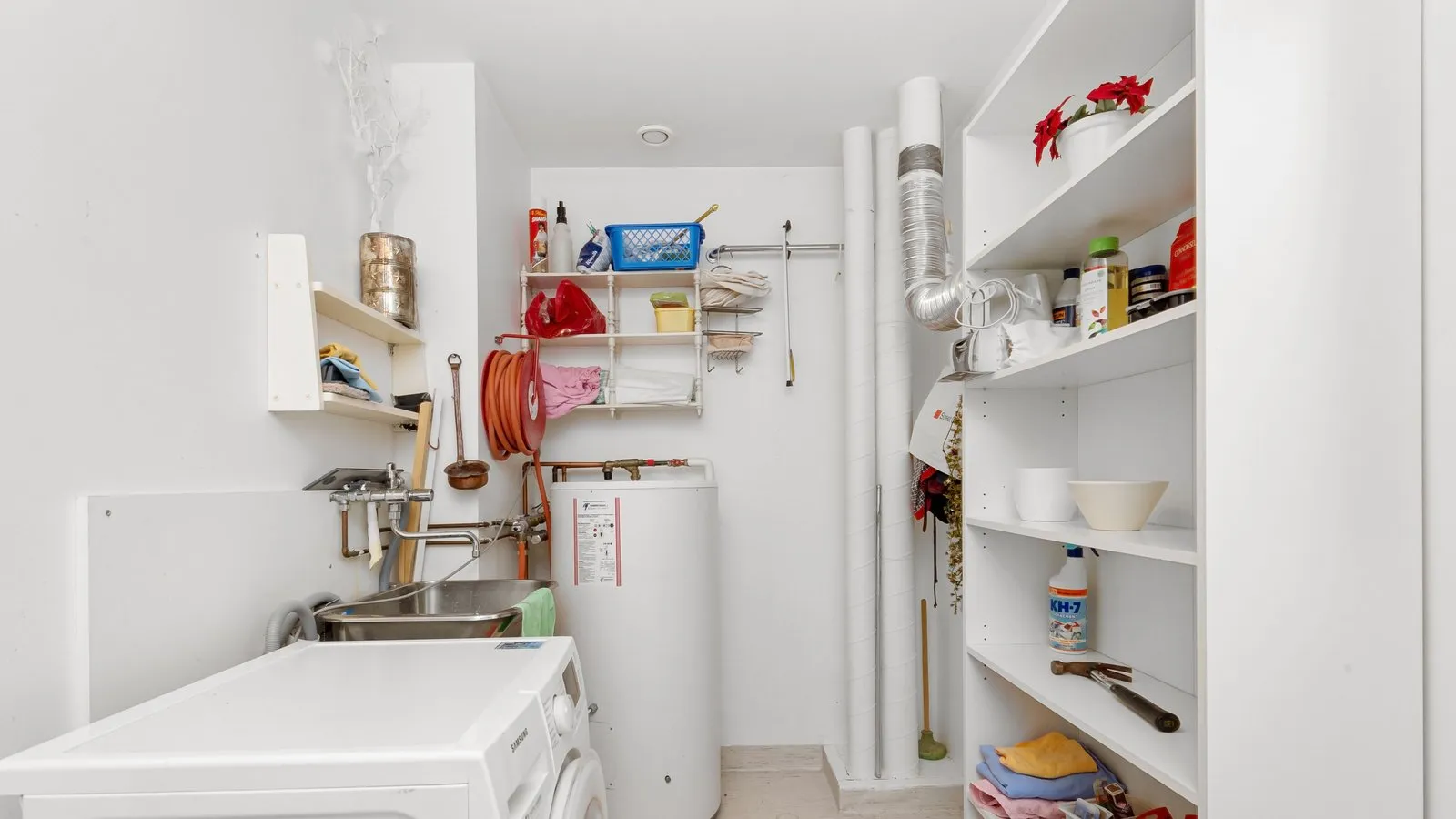
If your water heater appears to be leaking, water on the floor is a reason to pause, not a clue that identifies a failed part. From a safe, dry place, first decide whether there is an emergency sign. The table below helps you choose whom to contact; it is not a leak-diagnosis chart.
Decide whether to leave or keep clear
| What you notice from a safe place | First response | Do not |
|---|---|---|
| Gas odor or a sound that could be escaping gas | Leave without investigating. From well away, call 911 or the gas utility and follow its instructions. | Do not use switches or a phone inside, approach the heater, or try to operate a gas control. CPSC’s gas-leak guidance says to leave and contact local gas authorities from outside. |
| A carbon-monoxide alarm sounds | Get everyone outside to fresh air and call 911. Wait for emergency responders to say when it is safe to return. | Do not silence the warning and stay, look for the source, or re-enter to retrieve belongings. CPSC’s consumer guidance says not to ignore an alarm and not to re-enter until responders allow it. |
| Fire or smoke | Alert others as you leave. Call 911 from outside or a neighbor’s phone. | Do not delay to investigate or fight a fire when you are unsure it is safe. The U.S. Fire Administration says to alert others, leave, and call 911 when unsure about using an extinguisher. |
| Water in/near electrical equipment, cords, outlets, or a panel | Leave the affected area. Call emergency services for immediate danger; contact qualified electrical help from a safe place. | Do not enter standing water to reach a breaker, or touch the heater or wet equipment. CDC guidance warns against entering water to reach electrical controls. |
| Water is visible, but none of those danger signs are present | Stay on a dry route away from the water and contact the property manager or owner if you rent, or a qualified plumbing professional. | Do not move the heater, open an access cover, touch a valve or control, or guess where the water began. |
If you are unsure whether an area is safe, stay out and call for help. The gas-odor guide covers the leave-first response in more detail. The water response may also depend on who owns or may access a shutoff; use the water shutoff access plan to identify the right contact. This article does not ask you to operate a valve.
Does a puddle mean the tank has failed?
It does not identify the cause. Whirlpool’s gas-heater support page describes condensation in some conditions and leaks at fittings or connections as different possibilities. That distinction is a reason to get the actual heater assessed, not a way to clear a puddle as harmless. The same page says its web instructions supplement the printed product manual.
Describe the water you already noticed. Do not touch a hot vent, dry fittings to trace a drip, or manipulate a relief valve to decide which explanation fits. A qualified professional can distinguish an appliance problem from another source of water and explain whether repair or replacement is appropriate.
Contact the right person without investigating
For a renter or a shared building, contact the property manager or building emergency contact and give the unit and location. For an owner-occupied home without immediate danger, arrange an inspection with a qualified plumbing professional or the heater maker’s service route. The manufacturer’s A. O. Smith support directory is one example of a model-specific lookup; it does not cover every brand. Use the exact make and model only if its label is readable from a safe, dry place. Manuals and service paths differ by model and fuel type.
Do not use a generic online fix for a heater you have not identified. This guide intentionally does not explain how to remove a cover, adjust a connection, drain a tank, operate gas or electrical controls, or test a temperature-and-pressure relief device. If water is actively spreading, there is a spray, or the source is unclear, tell the person you contact what you can see and let a qualified professional choose the next step. If the area becomes unsafe, leave and call emergency services.
Water-heater observation record
Copy this short record before calling, if you can do so from a safe place. Leave any field blank if answering would require approaching water or equipment.
| Record | What to note |
|---|---|
| Address and unit | Include the building or apartment number, if relevant. |
| First noticed | Date/time, and whether anyone saw water spreading or heard a sound. |
| Visible water | Drips, a small area of water, active spray, or not sure. Describe what is visible; do not trace it to a part. |
| Immediate safety signs | Gas odor/sound, CO alarm, fire/smoke, water near electrical equipment, none noticed, or not sure. State whether anyone has left or called emergency services. |
| Heater details | Fuel/type and make/model only if visible from a safe, dry place; otherwise write “not safely visible.” |
| Contact and next step | Property manager/owner, gas or electric utility, emergency responder, or qualified plumbing professional contacted; record their instructions. |
The record is a handoff, not a test. A photo is optional only if it can be taken without entering the area or delaying an emergency call. Do not return to the room just to fill in a detail.