Room Humidity and Dehumidifier Size: Measure Before You Buy
Measure room humidity, describe how damp the space is, and use ENERGY STAR's capacity ranges as a starting estimate before comparing a portable dehumidifier.
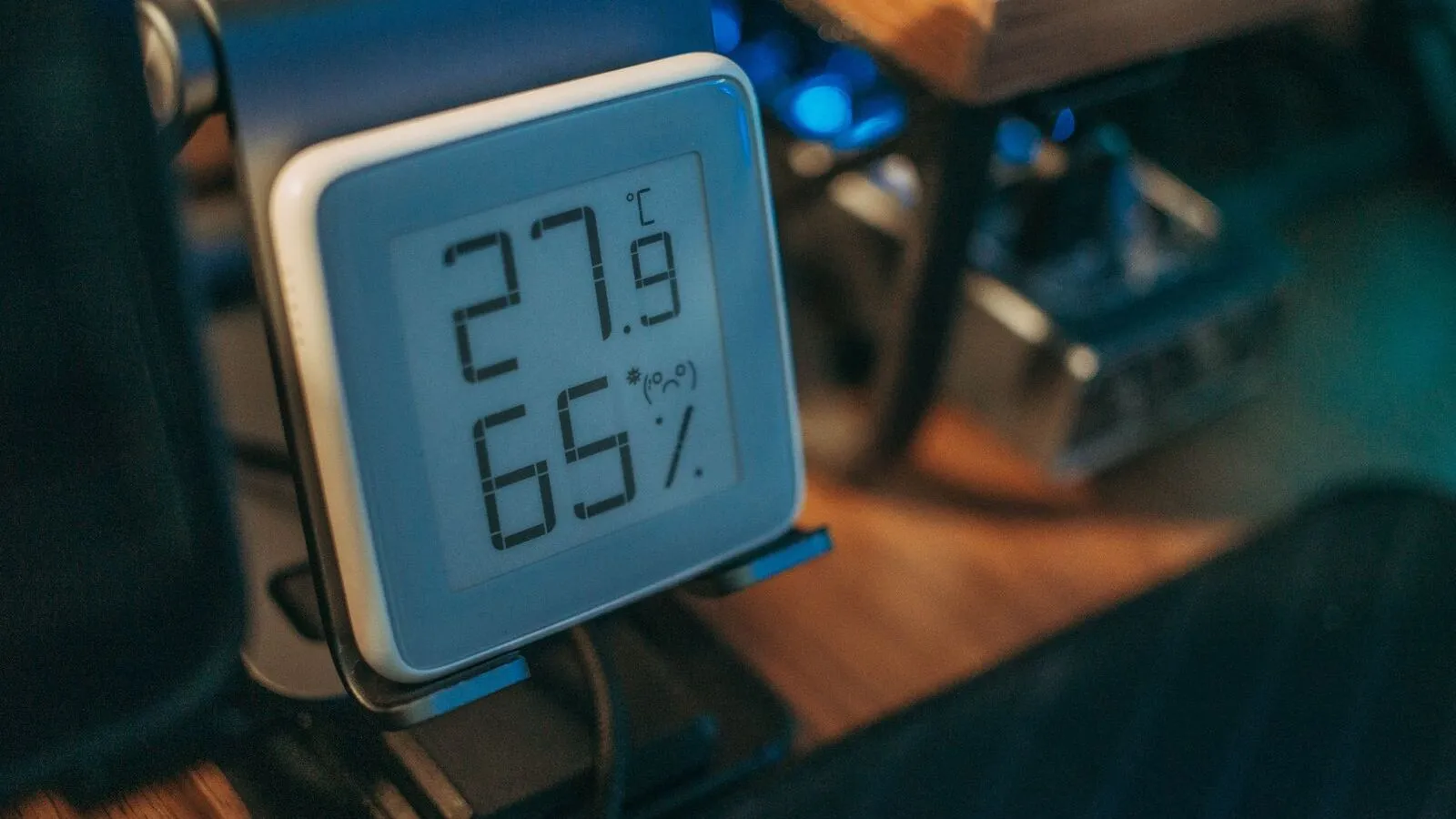
A small hygrometer can show a high reading in the corner that always feels clammy, while the rest of the room feels comfortable. Measure the condition before buying equipment: room area alone does not tell you how much moisture the unit may need to remove.
For a room affected by a leak, start with the water-damage and mold response guide. Stop the source and assess wet materials before treating portable-appliance capacity as the answer.
Measure the room before comparing capacity
Record the room’s approximate floor area, the temperature, and relative humidity (RH) at a consistent time. If the unit’s display is unreliable or does not show RH, ENERGY STAR suggests a separate hygrometer. Place it where the room is normally used, away from the dehumidifier’s warm exhaust and direct sun; take more than one reading if the room has distinct damp areas.
Describe the condition you can observe as well as the number: intermittent damp or musty odor, persistent damp smell or spots, or wet/sweating surfaces or seepage. The latter conditions can point to a moisture source that needs repair, not simply a larger appliance.
EPA’s mold and moisture guide says to keep indoor humidity below 60% if possible, ideally between 30% and 50%. These are general moisture-control targets, not a diagnosis, a guarantee against mold, or a required setting for every building and season. For colder climates during heating season, ENERGY STAR gives a general 30–40% RH range to limit window condensation; local building conditions still matter.
Translate measurements into a starting capacity range
ENERGY STAR’s current portable-unit chart uses both room size and dampness condition. For a space under 2,000 square feet, it lists the following minimum capacity ranges as buying guidance:
| Observed condition without dehumidification | ENERGY STAR range for a space under 2,000 sq. ft. | What to verify |
|---|---|---|
| Slightly to moderately damp; intermittent musty odor; chart range 50–75% RH | 20–30 pints per day | Confirm the room area and compare the unit’s capacity under the current rating method. |
| Very damp; persistent damp feel or odor, perhaps spots; chart range 75–90% RH | 25–40 pints per day | Look for why the dampness persists; capacity does not locate the moisture source. |
| Wet; surfaces sweat or seepage is present; chart range 90–100% RH | 30–50 pints per day | Address the water source and assess the materials; do not rely on a dehumidifier alone. |
The ranges overlap. They are not a precise sizing formula, and the chart’s conditions and current capacity method matter. A basement, a room with an open doorway, high ceilings, cold temperatures, laundry drying, or moisture entering through a wall may behave differently. ENERGY STAR says that for a space typically below 65°F, shoppers may want a model specified for lower temperatures because frost on the coils can reduce performance; check the exact unit guidance and operating-temperature instructions rather than assuming every model behaves the same way.
Worked example: one room with a musty smell
Suppose a 300-square-foot room reads 58% RH on several checks and has an intermittent musty odor, but no visible water, wet surface, or active leak. The ENERGY STAR category is a small-to-medium room with slight/moderate dampness, whose listed range is 20–30 pints per day. That gives a shopping range to compare, not a guarantee that a particular unit will reach 50% RH in that room. Repeat readings after the unit operates as directed and reassess whether the moisture source is still present.
If the same room has visible seepage or a wet wall, pause the shopping decision and contact the landlord or an appropriate building professional. A higher-capacity unit may collect more water without correcting the cause.
Check the operating job, not just the number
Compare the control range and RH display, operating temperature limits, noise, filter cleaning, bucket size, auto-shutoff, continuous-drain requirements, and accessible outlet location. A larger unit may remove water faster in suitable conditions, but it can take more space and may be noisier. A bucket requires regular emptying; a hose requires an approved drain route that will not leak, back up, or create a trip hazard. Follow the exact manual and do not route water into an unapproved drain.
Avoid placing a portable unit where it blocks an exit, sits in standing water, or can be reached by children or pets in a way that creates a hazard. Do not open an appliance to repair it. If a plug or receptacle is hot, damaged, wet, or discolored, stop using it and contact a qualified electrician or property manager.
Room log
| Date and time | Room area | Temperature | RH reading and meter location | Dampness / visible water | Next check or person to contact |
|---|---|---|---|---|---|
Use several observations to choose the product category. If readings remain high, water appears, or a damp smell returns after drying, find and address the moisture source rather than treating the equipment size as the only variable.