In this guideJump to a section
Water on a window can be frustrating because the same visible symptom can accompany different conditions. Cold glass can collect condensation, but water near the frame, sill, or wall may need a closer look. A few dated observations are more useful to a property manager or window professional than a guess about the cause.
The EPA’s moisture guidance explains that moisture from everyday activities can condense on cold glass, while water can also enter a home through leaks or seepage. Those possibilities are why a wet pane alone cannot tell you what is happening. If water is near electrical equipment or access is unsafe, keep away and use the building’s emergency contact or local emergency service rather than completing a routine log.
What the pattern can and cannot tell you
Use this table to choose what to record and whom to contact. It is not a test that identifies the source.
| What you can see from a safe position | Record this | Useful next step |
|---|---|---|
| Droplets on the room-facing glass, especially after a cold night or indoor moisture event | Which pane, approximate area, time, outdoor conditions, and any available room RH reading | Dry the accessible surface and note whether it returns. If this repeats, share the record with the property manager or building professional. |
| Water on the outdoor face, or appearing after rain | Which face seems wet, when rain occurred, and whether water is near the frame, sill, or wall | Do not assume it is condensation. Ask the property manager or window/building professional to inspect the condition. |
| Water that seems to be between panes, or wetness at the frame or adjacent wall | Where it appears, whether the wall or sill feels damp, and whether the condition recurs | Do not infer a failed seal or leak from appearance alone. Request a professional assessment. |
| A one-time film that clears and does not return | When it appeared and what changed before it cleared | Keep the note; repeated or spreading moisture deserves follow-up. |
The EPA advises drying wet window surfaces and reducing the moisture source when condensation or moisture collects. That is a practical response to visible wetness, not proof that the source has been found. For persistent excess condensation, the U.S. Department of Energy’s window guidance notes that window and adjacent wall components can be damaged over time; the guidance is product information, not an inspection method.
Window moisture log
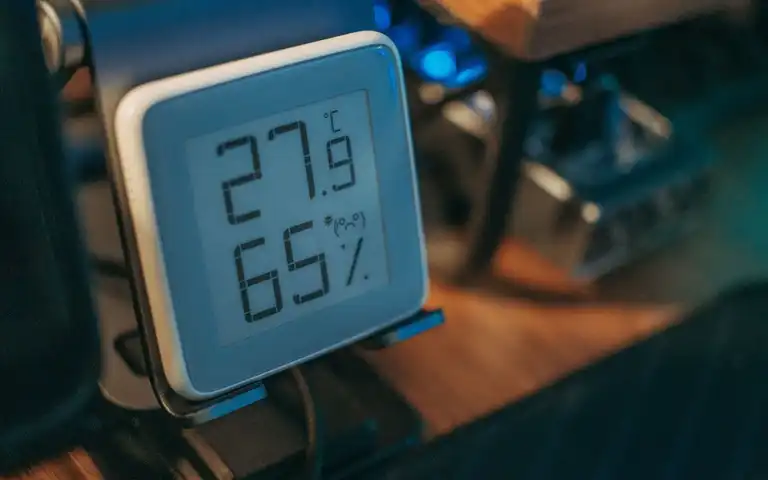
Record only what you can see or already know. If you have a room hygrometer, note its reading and time; do not buy equipment just to complete the log. A reading from elsewhere in the room does not establish what is inside a wall or window assembly.
| Field | Entry |
|---|---|
| Date, time, room, and window identifier | |
| Visible wet surface | Room-facing glass / outdoor-facing glass / frame or sill / appears between panes / unsure |
| Location and extent | Which edge or corner; approximate area; beads, film, or standing water |
| Conditions before it appeared | Cold night / rain or wind-driven rain / shower, cooking, laundry, plants, or other known indoor moisture / unsure |
| Room reading, if already available | Temperature, RH, device location, and time; otherwise leave blank |
| Nearby surfaces | Sill, trim, wall, or floor visibly damp? Where and when noticed? |
| Follow-up | Did it return? Date checked; person contacted; work-order or response details |
| Photo | One safely taken from inside, with date/time; do not lean out or climb |
If the log shows repeated wetness, water at the wall or frame, or a pattern tied to rain, share it with the property manager or a qualified window/building professional. Do not use the log to diagnose mold or a failed window seal. For room measurements or a portable dehumidifier estimate, use the separate room humidity and dehumidifier sizing guide. If there is confirmed water damage, follow the water-damage and mold response guide instead of treating it as a window-only issue.