In this guideJump to a section
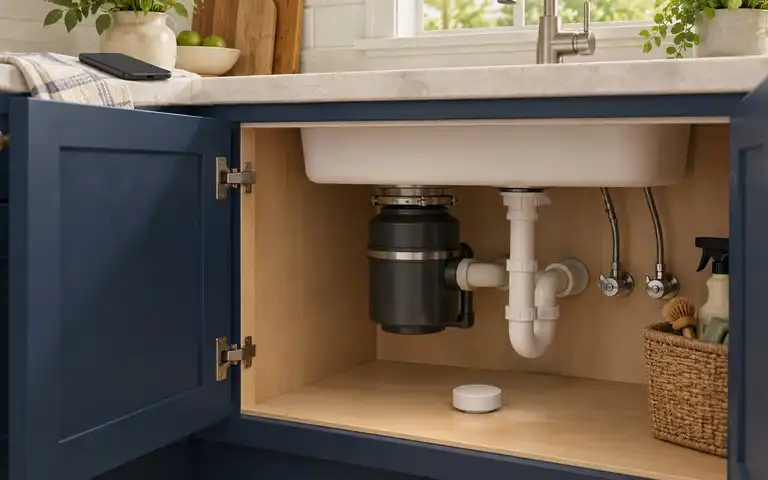
A phone alert about water under the sink helps only if someone can respond. Before leaving a home empty, separate detecting water, telling a person, and actually isolating the affected pipe. They can be three different products or a connected system, and one success does not prove the other steps work.
For a room-by-room moisture-sensor plan, see where to place and test leak sensors. This page owns the absence decision: coverage, valve scope, power failures and the person who will help while you are away.
Choose the failure you want to catch
| Approach | What it can do | What must still be verified |
|---|---|---|
| Point-of-use moisture alarm | Detect water at one contact point | Is the sensor in the right place? Who hears it? |
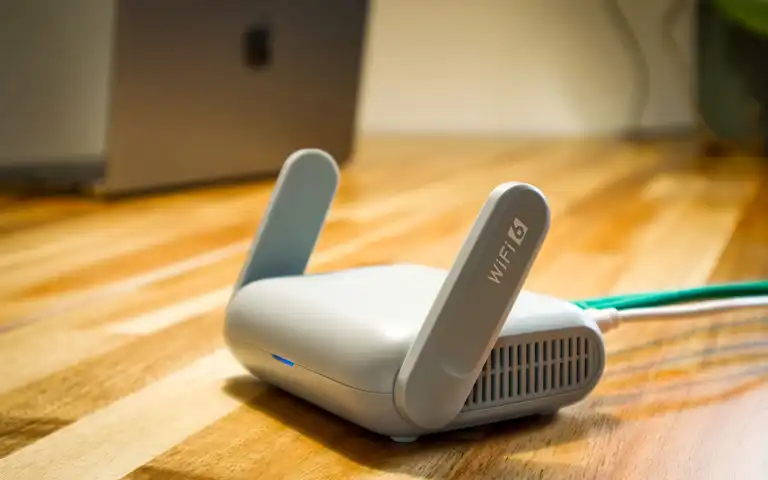
| App-connected leak alert | Send a phone alert through a hub or network | Does the full internet, hub and notification path work in an outage? |
| Whole-home flow monitor | Analyze water patterns in the supply | Does it cover irrigation, fixtures and expected vacancy usage? |
| Remote-command valve | Close a compatible valve when commanded | What if the app, home power or internet is down? |
| Configured automatic shutoff | Close an installed valve after a qualifying trigger | Which trigger, valve, supply segment and exception rules actually apply? |
EPA WaterSense distinguishes moisture and flow detection. Its 2026 consumer guide highlights that monitored area, automatic shutoff, pipe size and installation needs differ. None of the rows above guarantees a flood-free home.
Before buying or enabling any automatic valve
Ask a qualified installer or property manager:
- Is this a private, accessible water supply or a shared/utility-controlled line?
- Is there a fire-sprinkler, heating, irrigation, water-care or other system whose operation a valve could disrupt?
- Is the model approved for this location, pipe size, pressure and intended duty?
- Does the homeowner or renter have legal authority to install or operate the valve?
- What happens with a dead battery, failed hub, disconnected internet or interrupted electrical power?
- How does the system signal an actual closed-valve state rather than merely a successfully sent command?
Do not force a stiff valve, work on live piping, bypass fire-protection equipment, or test isolation by depriving someone of a needed water supply. The main water shutoff locator is an ownership-and-contact guide, not permission to operate shared valves.
A safe departure check
Arrange any physical test under the exact device manual and installer-approved conditions, with someone on site. Write down separately: moisture alarm confirmed, remote message received, command acknowledged, and valve closure verified. These may each be unknown if you cannot safely test them; recording “not verified” is more useful than assuming the system works.
If you rely on a caretaker, confirm they can enter legitimately, know which company to call, and are not expected to repair plumbing or enter electrical hazards. Keep the local utility, landlord, plumber and insurance contacts available offline.
Travel water check card
| Question | Answer / evidence | If unavailable |
|---|---|---|
| Property and water-line ownership | ||
| Fixture or whole-home monitored area | ||
| Device make, model and manual | ||
| Alert or valve actually tested? Date | ||
| Failure without power/internet | ||
| On-site authorized responder | ||
| Qualified plumber/property manager contact |
Your next action is to complete the card with the actual equipment and responsible contacts. Buying a device before resolving coverage and installation boundaries is unlikely to help.