How to Choose a Portable Generator for Home Backup
Choose a portable generator from critical loads, starting demand, a safe outdoor location, connection method, fuel plan, service, and the exact manual.
In this guideJump to a section
Plan the operating location first
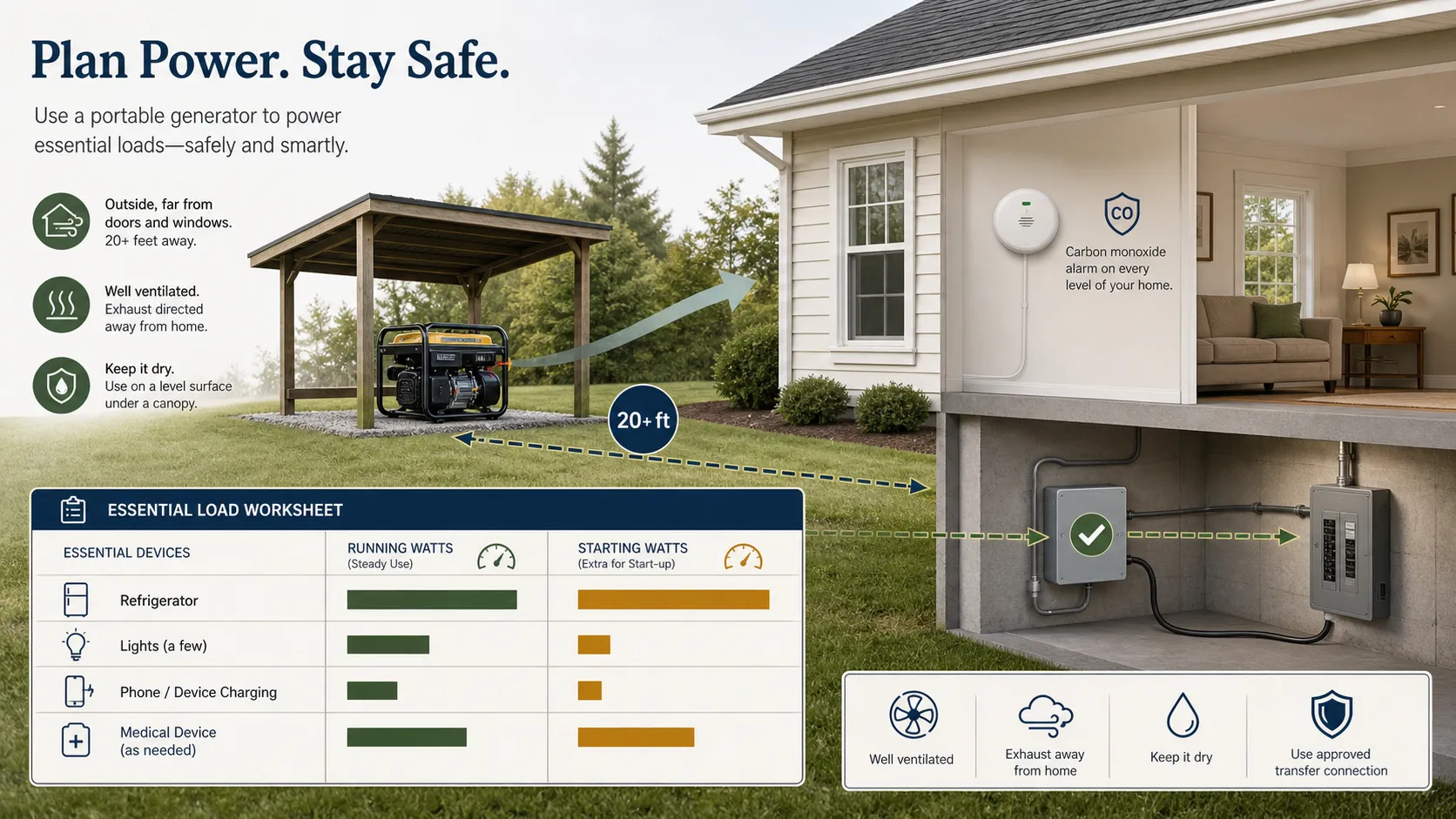
The CDC says to operate a portable generator outdoors more than 20 feet from windows, doors, and vents, with exhaust directed away from buildings. Never use one in a home, garage, basement, shed, porch, carport, or enclosed patio.
A generator is a poor purchase if there is no safe place to run it, no approved way to connect the intended loads, or no realistic fuel and maintenance plan. Resolve those questions before comparing output or brand.
This guide does not publish a model winner. Availability, specifications, firmware, prices, and service networks change. Use it to create a shortlist from current manuals.
Define the loads
List what must run and what can wait. Record running watts, starting demand, hours of operation, voltage, and whether loads may operate together.
Common critical loads include refrigeration, communications, lighting, a sump pump, a well pump, or a furnace blower. Pumps and compressors can determine the required starting output even if their running watts are modest.
Use manufacturer data or a qualified electrician for hardwired loads and motor starting requirements. For medical equipment, confirm the backup arrangement with the equipment provider and clinician.
The Generator Runtime Estimator can apply fuel-use figures from a manual to a planned load. It does not confirm motor-start compatibility or electrical safety. Keep the device labels, starting watts, manual limits, and approved connection path together in the Essential-Load Backup Power Worksheet.
Decide how power will connect
Direct appliance connection
Compatible appliances may connect with intact, outdoor-rated extension cords that are rated above the total connected load and used within the manual’s limits. Cord length, load, voltage, receptacle, and environmental rating all matter.
Selected household circuits
A transfer switch or interlock must be matched to the electrical panel, generator, inlet, and local requirements. Use a qualified electrician. Never power household wiring by plugging a generator into a wall outlet.
The outlet configuration can rule out a generator even when its headline watts look sufficient. Compare voltage, receptacles, circuit protection, neutral and bonding instructions, and the approved connection method.
Compare rated and starting output
Rated output is the power the generator can sustain under stated conditions. Maximum or surge output is brief. Ask:
- Can it support the simultaneous running load?
- Can it start the largest motor while other required loads are present?
- How long is maximum output available?
- Does output change by fuel type on a dual-fuel model?
- Which receptacles can deliver the required voltage and current?
Do not add a generic percentage and assume the result is compatible. Use the actual load information and confirm uncertain motor loads with the manufacturer or electrician.
Compare fuel on the same basis
Runtime claims are tied to a fuel quantity and load. Compare models at the same load percentage and fuel type. Then check:
- Fuel consumption at the planned load
- Tank or cylinder connection and approved size
- Refueling and cooling instructions
- Local storage quantity and location rules
- Cold-weather starting instructions
- Fuel system maintenance and storage procedure
Gasoline, propane, and natural gas have different storage, output, and service tradeoffs. A dual-fuel label is not enough; compare the manual’s output and runtime for each fuel.
Compare sound, weight, and service
Sound figures are useful only when measurement distance, load, and test method match. Check local quiet-hour rules and how the operating location affects neighbors.
Confirm that the generator can be moved safely by the people expected to use it. Look for local service, routine parts, warranty terms, recall history, and a support contact. A slightly smaller unit with an accessible service path may be a more resilient choice than a larger unsupported model.
Review safety features without relying on them
Look for a current carbon monoxide shutoff feature and applicable certification, but continue to follow outdoor-placement and alarm guidance. A shutoff sensor does not make indoor, garage, porch, or near-window use safe.
Review:
- Carbon monoxide shutoff behavior and test instructions
- Ground-fault and circuit protection
- Low-oil and overload shutdown
- Weather and wet-condition instructions
- Required clearances and exhaust direction
- Warning labels and recall status
Use the Generator Safety Guide for the complete operating checklist.
Shortlist worksheet
For each candidate, capture the same fields:
- Exact model and manual revision
- Rated and maximum output by fuel type
- Receptacles and connection method
- Fuel use at the planned load
- Safe outdoor location confirmed
- Weather instructions
- Carbon monoxide shutoff and alarm plan
- Weight and safe movement plan
- Service, parts, warranty, and recall check
- Maintenance and storage schedule
Do not compare a promotional bundle price without checking included cords, transfer equipment, wheel kits, warranty, seller, and return terms.
Test before outage season
Practice the approved setup on an ordinary day. Use the marked operating location, actual cords or transfer equipment, and intended loads. Start the largest motor, observe faults, and record fuel use at the planned load.
Everyone responsible for operation should know the start, connection, load-shedding, shutdown, and emergency steps. Keep an offline manual and service contact with the plan.
Primary sources
- CDC: Use a Generator Safely
- CPSC: 2026 Generator, Carbon Monoxide, and Fire Safety Guidance
- CPSC: Portable Generator Safety and Standards
- CPSC: Product Recalls
Your next step
Before comparing models, mark the outdoor location and complete the Generator Safety Guide checklist. If that location or the approved connection method does not work, stop the generator shortlist and compare another backup-power category.