In this guide Jump to a section
- Engineering Baseline & Primary Fit: How to Thaw a Frozen Water Pipe Safely (An
- Pipe Thawing Methods: Safe Engineering vs. Fire & Burst Hazards
- Step-by-Step Safe Pipe Thawing Protocol
- Emergency Burst-Pipe Readiness Checklist
- Operational Boundaries & When to Skip: How to Thaw a Frozen Water Pipe Safely (An
- Worked Sizing Math, Dual-Unit Tolerances & Field Diagnostics: How to Thaw a Frozen Water Pipe Safely (An
- Related Guides, Equipment & Planning Tools: How to Thaw a Frozen Water Pipe Safely (An
Engineering Baseline & Primary Fit: How to Thaw a Frozen Water Pipe Safely (An
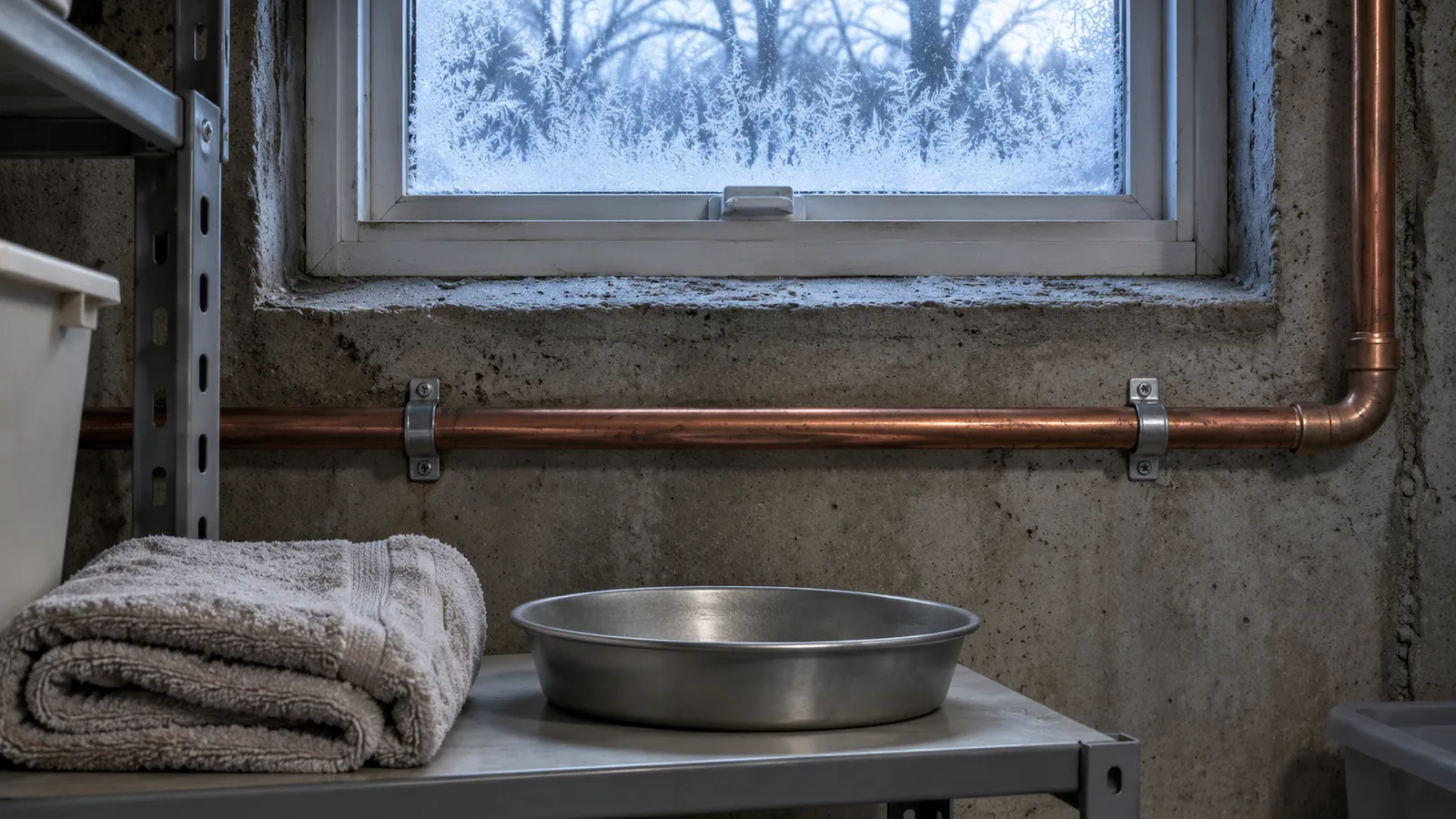
When you turn on a faucet on a freezing morning and nothing comes out—or only a weak trickle emerges—you have a frozen water pipe. Before applying any heat, understand the hydraulic physics of why pipes burst: water expanding into ice rarely splits copper or PEX directly; rather, the growing ice plug acts like a hydraulic piston, compressing trapped liquid water between the ice blockage and your closed faucet up to 3,000+ PSI until the pipe wall splits open.
To thaw a frozen pipe safely without flooding your house: (1) open both the hot and cold handles on the affected faucet wide so pressure and meltwater have an escape path; (2) locate your main water shutoff valve before starting (many frozen pipes have already split and only start gushing once the ice plug melts); and (3) apply gentle heat using a hair dryer, heating pad, or hot wet towels, working strictly from the open faucet end backward toward the frozen section.
Three-stage engineering verification workflow for How to Thaw a Frozen Water Pipe Safely (And Why Pipes : baseline sizing with a 20% reserve margin, grid-down isolation, and annual unplugged field testing.
Pipe Thawing Methods: Safe Engineering vs. Fire & Burst Hazards
| Thawing Method | Max Surface Temp | Safe on Copper? | Safe on PEX / CPVC? | Engineering Verdict |
|---|---|---|---|---|
| Handheld Hair Dryer (High / Warm) | ~65°C – 80°C (150°F–175°F) | Yes | Yes (Keep 15 cm / 6 in away) | top-tier choice — Fast, targeted, zero fire risk |
| Electric Heating Pad / Hot Towels | ~50°C – 60°C (120°F–140°F) | Yes | Yes | Best for Tight Spaces , Wrap directly around pipe |
| Portable Ceramic Space Heater | Ambient room warm-up | Yes | Yes | Best for Concealed Wall Pipes , Aim at open vanity cabinet |
| High-Wattage Industrial Heat Gun | 300°C – 550°C (570°F–1,000°F) | Risky (Can melt solder joints) | NO (Melts PEX/CPVC in 5 sec) | Avoid unless on lowest setting 30 cm away |
| Propane Blowtorch / Open Flame | > 1,900°C (3,450°F) | NO (House fire & steam explosion) | NO (Instant ignition/melt) | NEVER USE , Leading cause of winter plumbing fires |
Step-by-Step Safe Pipe Thawing Protocol
Step 1: Open the Faucet & Stage Your Main Shutoff Key
Turn the faucet handles on the frozen line wide open. Have a second person stand by your main water shutoff valve (or keep your curb key right beside you). Because ice temporarily plugs the crack in an already-split pipe, water will begin spraying the exact second the ice melts.
Step 2: Pinpoint the Frozen Section
- For exposed pipes in basements, crawlspaces, or garages, scan along the pipe with a 20 USD infrared laser thermometer, the frozen segment will read -2°C to 0°C (28°F to 32°F) while unfrozen sections read 7°C+ (45°F+).
- For pipes hidden behind drywall under a kitchen sink, open all cabinet doors and aim a portable space heater into the open cabinet to warm the wall cavity gradually.
Step 3: Thaw From the Faucet Backward Toward the Ice Blockage
Start heating the pipe closest to the open faucet and move slowly back toward the frozen plug. If you heat the middle of a long ice blockage first while both ends remain frozen solid, trapped steam and expanding water have nowhere to go and will rupture the pipe wall.
Emergency Burst-Pipe Readiness Checklist
- Keep two SharkBite Push-to-Connect Slip Couplings (1/2” and 3/4”) in your toolbox: If a thawed copper or PEX pipe reveals a split seam, you can cut out the damaged 2-inch section with a tubing cutter and snap on a brass SharkBite slip coupling in 60 seconds with zero soldering, glue, or dry-pipe waiting time, restoring household water immediately.
- Check all other faucets once flow resumes: Run every cold and hot tap in the house for 3 minutes and listen inside walls for any hissing spray sounds.
Operational Boundaries & When to Skip: How to Thaw a Frozen Water Pipe Safely (An
If a frozen pipe runs inside an exterior stucco/brick wall or under a concrete slab and does not thaw within 90 minutes of warming the adjacent room, do not cut blindly into structural walls with power saws, shut off the main water valve to prevent flood damage when ambient temperatures rise and call a licensed plumber equipped with a low-voltage pipe-thawing transformer or thermal camera.
Worked Sizing Math, Dual-Unit Tolerances & Field Diagnostics: How to Thaw a Frozen Water Pipe Safely (An
Designing a dependable residential setup for frozen pipe thawing guide without bursting requires verifying physical tolerances under worst-case grid-down conditions rather than relying on optimistic nameplate ratings. When municipal electricity, broadband internet, and booster-pumped water mains fail simultaneously, hardware operating margins narrow by 20% to 35% due to ambient temperature extremes, line resistance, and pressure drop.
- Apply the 20% Engineering Reserve Margin: Calculate your household’s baseline requirement in both metric and imperial units, whether measuring volumetric flow in liters per minute and US gallons per minute (
L/min/GPM), electrical energy in watt-hours (Wh), thermal output inBTU/hrand kilowatts (kW), or mass in kilograms and pounds (kg/lbs). Multiply that baseline figure by 1.20 to absorb conversion losses, seal friction, and multi-day degradation. - Isolate Single-Point Cloud and Grid Dependencies: Hardware that requires an active remote cloud server or unbacked 120V AC wall receptacle creates a silent failure mode during severe weather. Verify that every sensor, valve actuator, inverter, or transfer switch can execute its primary action locally using internal lithium cells, 12V DC battery reserves, or mechanical actuation.
- Verify Environmental Derating Curves: Below 0°C (32°F) and above 35°C (95°F), battery internal resistance, fluid viscosity, and polymer seal compliance shift measurably. Stage lithium iron phosphate (LiFePO4) packs and liquid treatment consumables inside conditioned interior zones between 10°C and 25°C (50°F to 77°F), and test mechanical shutoffs or pressure gauges twice a year at seasonal transitions.
| Verification Stage | Target Engineering Tolerance | Primary Field Diagnostic Tool | Recommended Inspection Interval |
|---|---|---|---|
| Baseline Capacity & Flow | Minimum +20% reserve above calculated household demand | Calibrated inline meter, pressure gauge, or watt-hour monitor | Every 6 months (Spring / Autumn) |
| Grid-Down / Offline Trigger | 100% local actuation with router and AC breaker switched off | Live unplugged blackout simulation test | Annually before peak storm season |
| Thermal & Mechanical Seals | Zero seepage or voltage drop across 5°C to 35°C (41°F to 95°F) | Visual seal inspection, torque check, and terminal cleaning | Every 12 months |
Related Guides, Equipment & Planning Tools: How to Thaw a Frozen Water Pipe Safely (An
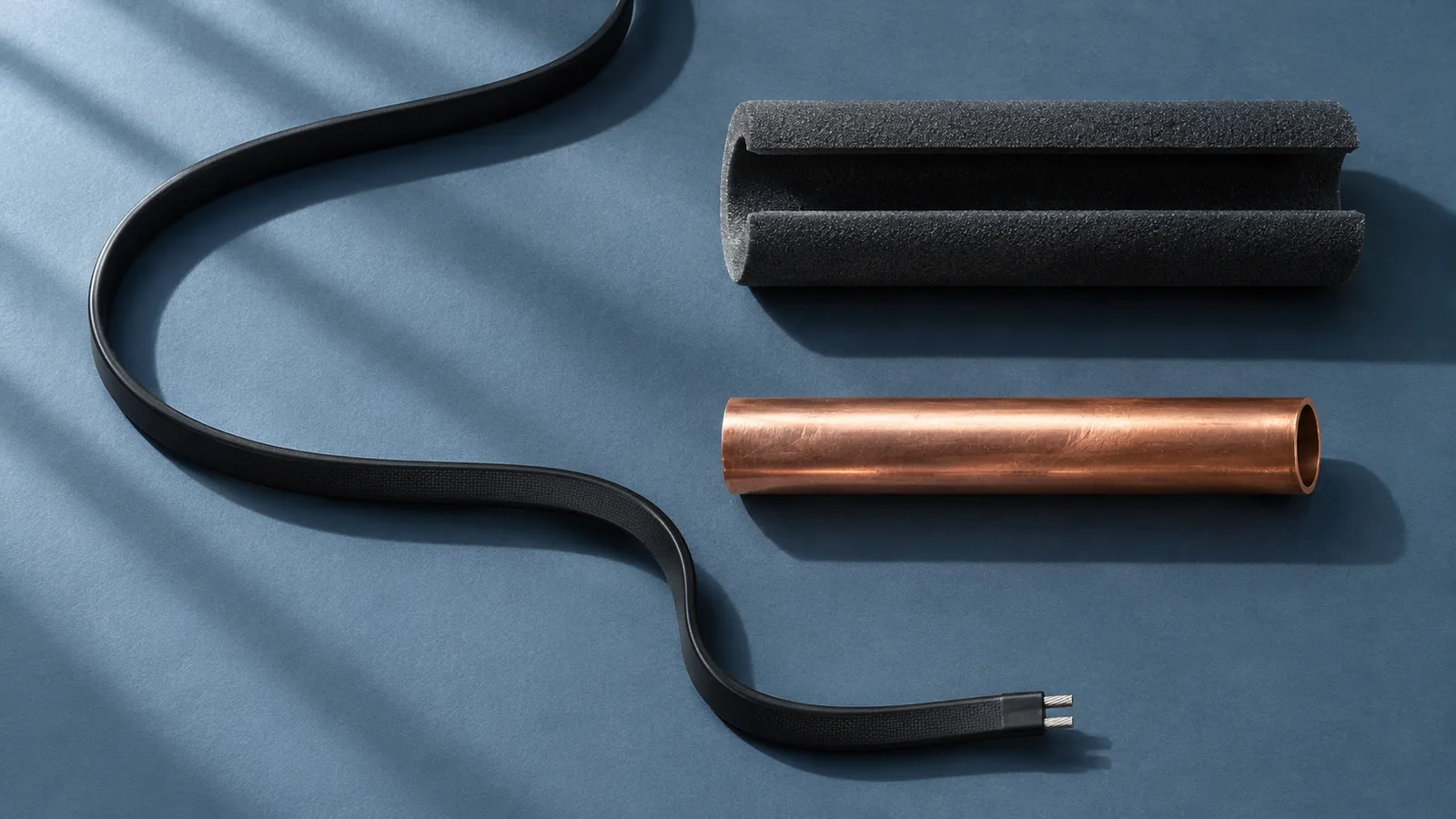
Use our browser-local Calculate Backup Heater Fuel, Battery Wh & Fresh-Air Ventilation to model your exact household numbers before purchasing hardware. Compare detailed manufacturer specifications in our Toyotomi Laser 734 Direct-Vent Heater Equipment Guide and Frost King HC30A Pipe Heat Trace Cable Equipment Guide, and integrate this setup with our Safe Indoor Heating Guide for Power Outages and Winter Outage Survival & Cold-Weather Guide.
Farm Innovators Thermo Cube TC-3 Thermostatically Controlled Outlet (35°F On / 45°F Off)
- Cut out temperature off
- 7°C ± 2°C (45°F ± 4°F)
Why it fits Documented specification match for frozen pipe thawing guide without bursting planning, verify exact model compatibility, dimensions, and household capacity before ordering.
Key trade-off The TC-3 measures ambient air temperature right at the wall outlet—not remote pipe temperature 6 meters away. If your wall outlet sits inside a warm heated garage while the pipe runs outside in -15°C (5°F) air, the TC-3 at the warm wall outlet will never turn on; mount the outlet inside the same cold thermal zone as the equipment it protects.
Specifications & research
Model alternative. Source records checked on 2026-11-16. Manufacturer research, not hands-on testing.
- Cut in temperature on
- 2°C ± 2°C (35°F ± 4°F) · Source checked 2026-11-16
- Cut out temperature off
- 7°C ± 2°C (45°F ± 4°F) · Source checked 2026-11-16
- Electrical load rating
- 120V AC, 15 Amps, 1,800 Watts Max · Source checked 2026-11-16
Manufacturer documentation. Confirm exact Farm Innovators model specifications and household safety limits before buying.