In this guide Jump to a section
- Engineering Baseline & Primary Fit: Alaska Extreme-Cold Home Engineering
- Sub-Arctic vs. Lower-48 Residential Mechanical Systems
- Three Core Pillars of Alaskan Cold-Climate Resilience
- Cold-Climate Hardening Checklist (Applicable to Any Freezing Region)
- Operational Boundaries & When to Skip: Alaska Extreme-Cold Home Engineering
- Worked Sizing Math, Dual-Unit Tolerances & Field Diagnostics: Alaska Extreme-Cold Home Engineering
- Related Guides, Equipment & Planning Tools: Alaska Extreme-Cold Home Engineering
Engineering Baseline & Primary Fit: Alaska Extreme-Cold Home Engineering
Across Interior and Arctic Alaska—where winter freezing indices exceed 5,000 degree-days (°F·days) and ambient temperatures plunge to -50°C (-58°F)—residential buildings are engineered first as thermodynamic survival vessels. Unlike the contiguous United States, where homeowners rely on unvented propane heaters or standard buried water lines, Alaskan residential engineering rests on three non-negotiable standards:
- No. 1 Fuel Oil in Sealed Direct-Vent Heaters: Kerosene and standard No. 2 diesel gel into solid paraffin wax below -18°C (0°F). Off-grid and backup Alaskan homes burn No. 1 fuel oil inside Toyotomi Laser pipe-in-pipe direct-vent stoves that draw combustion air strictly from outdoors and draw just 46W continuous electricity, allowing a 1,000Wh LFP battery to run them for 18+ hours during grid outages.
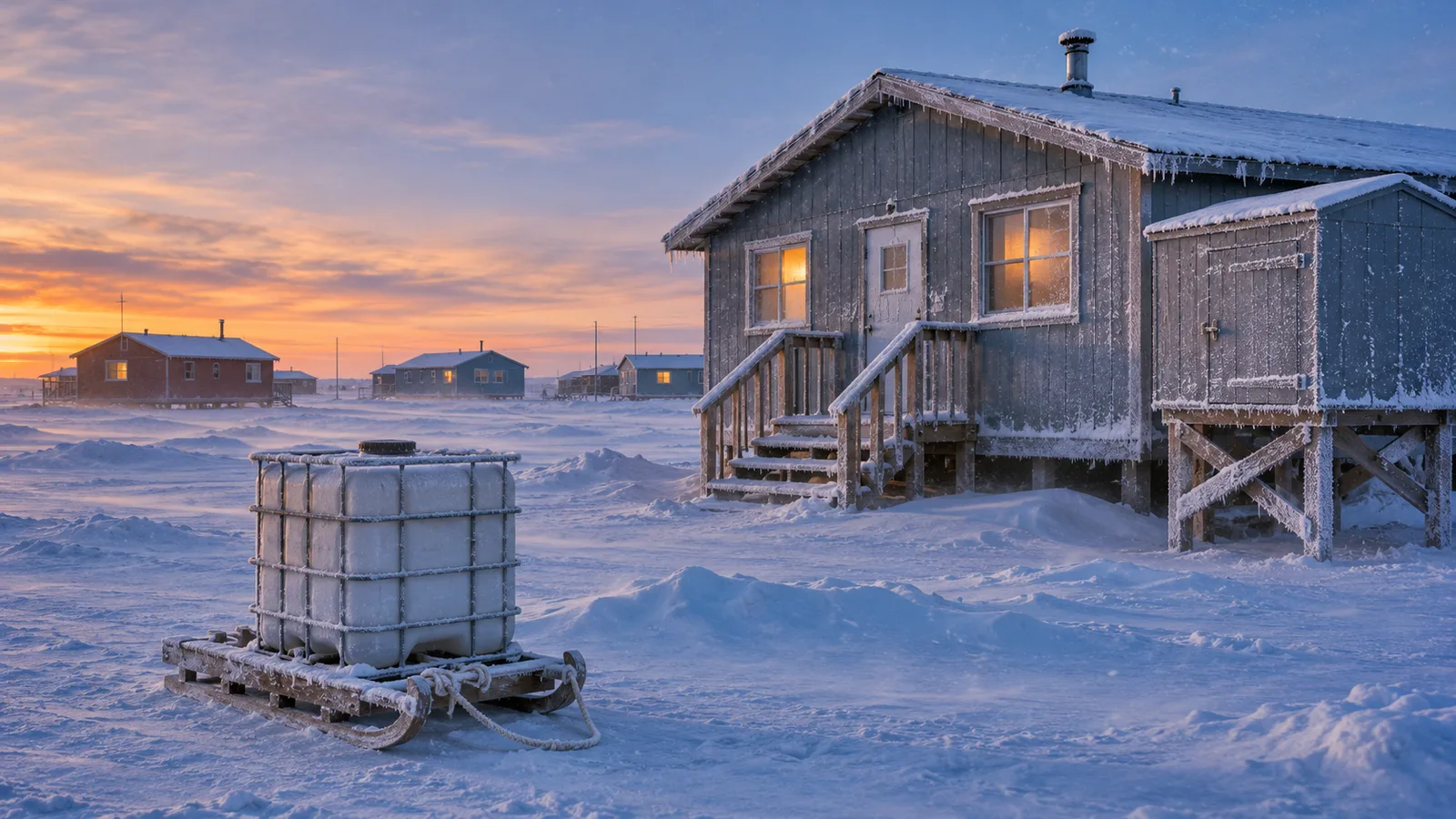
- Above-Ground Insulated Utilidors & PEX Glycol Loops: Conventional buried water mains freeze solid or shear apart when permafrost shifts; utilities run inside heated above-ground utilidors with flexible building entry loops.
- Exhaust-Heated Haul Water: In villages without piped infrastructure, water delivery trucks heat their onboard tanks using engine exhaust gas heat exchangers.
Three-stage engineering verification workflow for Alaska Extreme-Cold Home Engineering: No. 1 Fuel Oil, : baseline sizing with a 20% reserve margin, grid-down isolation, and annual unplugged field testing.
Sub-Arctic vs. Lower-48 Residential Mechanical Systems
| Mechanical System | Standard Lower-48 US Home | Alaska Sub-Arctic / Arctic Standard | Why Lower-48 Designs Fail at -45°C (-49°F) |
|---|---|---|---|
| Liquid Heating Fuel | No. 2 Heating Oil or 1-K Kerosene | No. 1 Fuel Oil (Arctic Grade) | No. 2 oil waxes and clogs fuel filters at -15°C (5°F); No. 1 flows down to -48°C (-54°F) |
| Backup Space Heating | Unvented indoor propane (Mr. Heater Buddy) | Toyotomi Laser Direct-Vent Oil Stove | Unvented propane dumps water vapor indoors, turning walls to ice and risking CO buildup |
| Water Main Routing | Buried 1.2m–1.8m (4–6 ft) underground | Above-ground insulated utilidors or insulated haul tanks | Permafrost reaches 600m deep; underground pipes freeze or collapse as permafrost thaws |
| Interior Piping Material | Rigid Type L Copper or CPVC | Cross-linked Polyethylene (PEX-a) + Glycol | Copper splits cleanly upon first freeze; PEX-a expands up to 3x diameter without bursting |
| Ventilation Air Exchange | Passive leaks or standard HRV | Dual-Coil Preheated Heat Recovery Ventilator | Humid indoor exhaust air freezes solid inside un-preheated HRV cores below -25°C (-13°F) |
Three Core Pillars of Alaskan Cold-Climate Resilience
1. Why No. 1 Fuel Oil & Pipe-in-Pipe Direct Venting Dominate
In Fairbanks, Bethel, and rural off-grid cabins, unvented combustion heaters are avoided for primary winter heat because burning 1 gallon of hydrocarbon fuel releases roughly 1 gallon of water vapor into the indoor air. In a tightly vapor-sealed arctic house at -40°C (-40°F), that moisture condenses inside wall cavities and freezes into structural frost.
- Concentric Flue Physics: Direct-vent heaters like the Toyotomi Laser 531 and 734 pass a narrow stainless exhaust pipe inside a larger intake sleeve through a single wall penetration. Incoming frigid -45°C (-49°F) outdoor combustion air is pre-warmed by the hot outgoing exhaust gases, boosting thermal efficiency above 87% while guaranteeing zero indoor oxygen depletion and zero carbon monoxide risk.
2. Permafrost Utilidors & The Historic Nome Engineering Lesson
Where continuous permafrost contains frost-susceptible silts (soils with more than 3% of particles passing a No. 200 sieve), burying water and sewer mains underground causes two catastrophic failures: frost jacking (upward heaving that snaps rigid joints) and thermal thaw slumping. In a landmark municipal failure in Nome, Alaska, underground water/sewer lines laid directly on permafrost and backfilled with silt thawed the surrounding ground, causing 50% of the utilidor tunnel to cave in and flood with mud. Modern Arctic communities route water, sewer, and district hot-water lines inside elevated, foam-insulated above-ground utilidor boxes fitted with flexible corrugated stainless hoses where pipes enter buildings.
3. Cold-Climate HRV Defrost Engineering
Super-insulated northern homes require mechanical Heat Recovery Ventilators (HRVs) to prevent stale air and mold. However, when outdoor air enters an HRV core at -40°C (-40°F), warm, humid 21°C (70°F) indoor exhaust air condenses and freezes into solid ice inside the aluminum heat-exchange plates within minutes. Arctic HVAC engineers solve this by installing a preheat coil on the outdoor intake duct calibrated to warm incoming air just enough (to roughly -10°C / 14°F) to keep the exhaust core above freezing—preserving maximum temperature delta across the exchanger, followed by a post-core reheat coil to bring supply air up to room temperature.
Cold-Climate Hardening Checklist (Applicable to Any Freezing Region)
- Blend or switch to No. 1 fuel oil / winterized diesel before November: If you run an outdoor oil tank or diesel standby generator in northern states, verify your fuel supplier delivers winterized No. 1 / No. 2 blend before temperatures drop below -12°C (10°F).
- Pair direct-vent oil or gas furnaces with a pure sine wave LFP battery: Because a Toyotomi Laser heater uses only 46W continuous (and ~260W for 90 seconds during electric ignitor startup), a 1,000Wh LFP station sustains whole-home heat for 18 to 22 hours per charge.
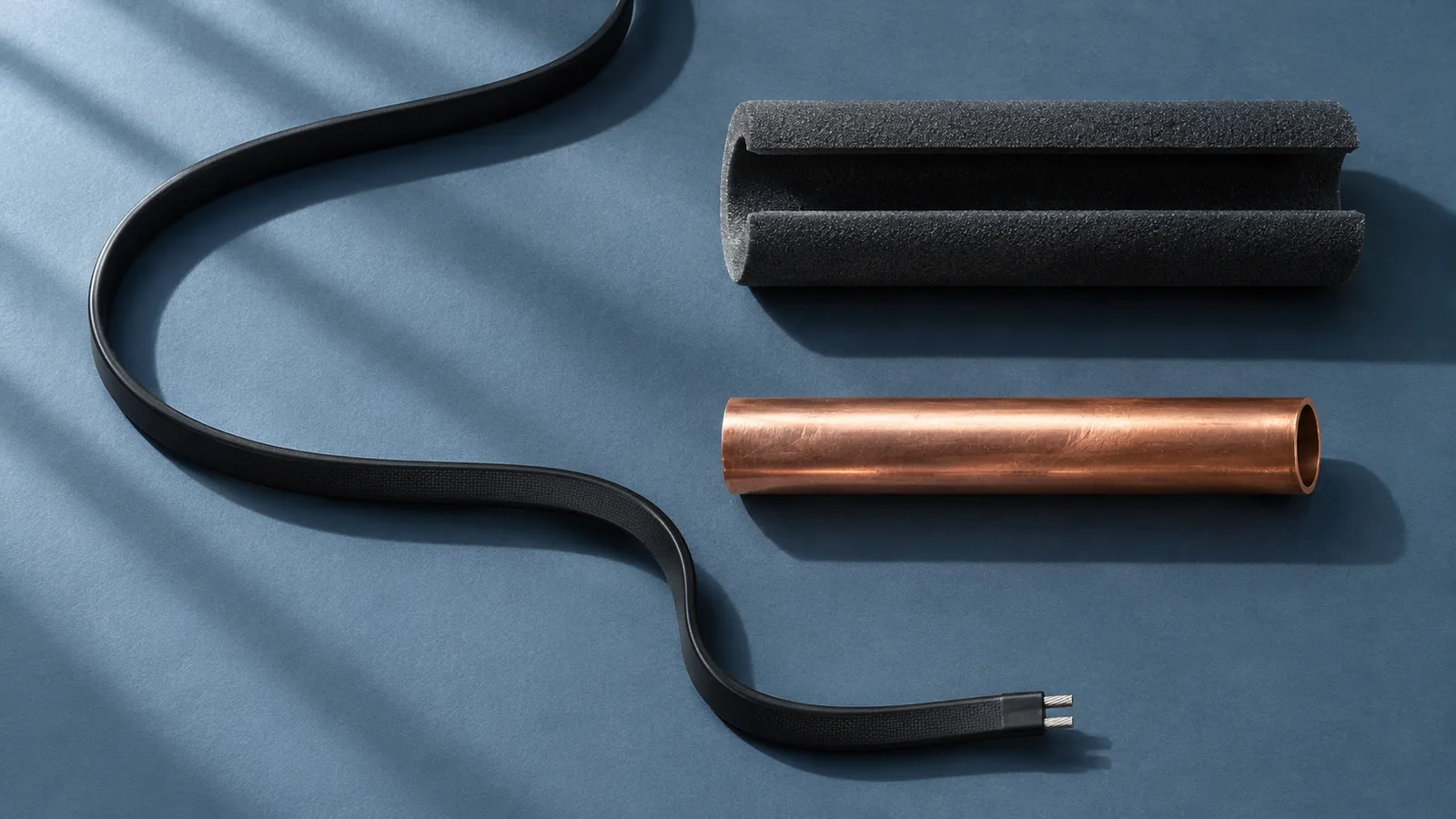
- Install PEX-a manifolds and electric heat-trace on exposed risers: Wrap any exposed crawlspace or garage water entry pipe in UL-listed self-regulating heat trace cable insulated with closed-cell foam pipe sleeves.
Operational Boundaries & When to Skip: Alaska Extreme-Cold Home Engineering
Installing a vented No. 1 fuel oil heater requires drilling an exterior wall flue penetration and mounting an elevated outdoor gravity-feed or fuel-lifter oil tank, making it unsuitable for multi-story apartment renters or short-term urban emergency kits where portable 12V heated blankets and indoor tents are the only legal options.
Worked Sizing Math, Dual-Unit Tolerances & Field Diagnostics: Alaska Extreme-Cold Home Engineering
Designing a dependable residential setup for alaska extreme cold home engineering heating plumbing requires verifying physical tolerances under worst-case grid-down conditions rather than relying on optimistic nameplate ratings. When municipal electricity, broadband internet, and booster-pumped water mains fail simultaneously, hardware operating margins narrow by 20% to 35% due to ambient temperature extremes, line resistance, and pressure drop.
- Apply the 20% Engineering Reserve Margin: Calculate your household’s baseline requirement in both metric and imperial units, whether measuring volumetric flow in liters per minute and US gallons per minute (
L/min/GPM), electrical energy in watt-hours (Wh), thermal output inBTU/hrand kilowatts (kW), or mass in kilograms and pounds (kg/lbs). Multiply that baseline figure by 1.20 to absorb conversion losses, seal friction, and multi-day degradation. - Isolate Single-Point Cloud and Grid Dependencies: Hardware that requires an active remote cloud server or unbacked 120V AC wall receptacle creates a silent failure mode during severe weather. Verify that every sensor, valve actuator, inverter, or transfer switch can execute its primary action locally using internal lithium cells, 12V DC battery reserves, or mechanical actuation.
- Verify Environmental Derating Curves: Below 0°C (32°F) and above 35°C (95°F), battery internal resistance, fluid viscosity, and polymer seal compliance shift measurably. Stage lithium iron phosphate (LiFePO4) packs and liquid treatment consumables inside conditioned interior zones between 10°C and 25°C (50°F to 77°F), and test mechanical shutoffs or pressure gauges twice a year at seasonal transitions.
| Verification Stage | Target Engineering Tolerance | Primary Field Diagnostic Tool | Recommended Inspection Interval |
|---|---|---|---|
| Baseline Capacity & Flow | Minimum +20% reserve above calculated household demand | Calibrated inline meter, pressure gauge, or watt-hour monitor | Every 6 months (Spring / Autumn) |
| Grid-Down / Offline Trigger | 100% local actuation with router and AC breaker switched off | Live unplugged blackout simulation test | Annually before peak storm season |
| Thermal & Mechanical Seals | Zero seepage or voltage drop across 5°C to 35°C (41°F to 95°F) | Visual seal inspection, torque check, and terminal cleaning | Every 12 months |
Related Guides, Equipment & Planning Tools: Alaska Extreme-Cold Home Engineering
Use our browser-local Calculate Backup Heater Fuel, Battery Wh & Fresh-Air Ventilation to model your exact household numbers before purchasing hardware. Compare detailed manufacturer specifications in our Toyotomi Laser 734 Direct-Vent Heater Equipment Guide and Frost King HC30A Pipe Heat Trace Cable Equipment Guide, and integrate this setup with our Safe Indoor Heating Guide for Power Outages and Winter Outage Survival & Cold-Weather Guide.
Mr. Heater Big Buddy (MH18B)
- Stated heating area
- 450 sq ft
Why it fits Documented specification match for alaska extreme cold home engineering heating plumbing planning, verify exact model compatibility, dimensions, and household capacity before ordering.
Key trade-off Using a 20 lb propane tank indoors is prohibited by fire codes; bulk tanks must remain outside with hose routed through an aperture.
Specifications & research
Model alternative. Source records checked on 2026-11-04. Manufacturer research, not hands-on testing.
- Heat output
- 4,000 / 9,000 / 18,000 BTU/hr · Source checked 2026-11-04
- Stated heating area
- 450 sq ft · Source checked 2026-11-04
- Fuel type
- Propane · Source checked 2026-11-04
Manufacturer documentation. Confirm exact Mr. Heater model specifications and household safety limits before buying.