In this guide Jump to a section
- Engineering Baseline & Primary Fit: Svalbard & Scandinavian Arctic Resilience
- High-Arctic Infrastructure Failures & Scandinavian Engineering Fixes
- Key Lessons for Homeowners in Cold & Frost-Heave Climates
- Cold-Climate Foundation & Hydronic Checklist
- Operational Boundaries & When to Skip: Svalbard & Scandinavian Arctic Resilience
- Worked Sizing Math, Dual-Unit Tolerances & Field Diagnostics: Svalbard & Scandinavian Arctic Resilience
- Related Guides, Equipment & Planning Tools: Svalbard & Scandinavian Arctic Resilience
Engineering Baseline & Primary Fit: Svalbard & Scandinavian Arctic Resilience
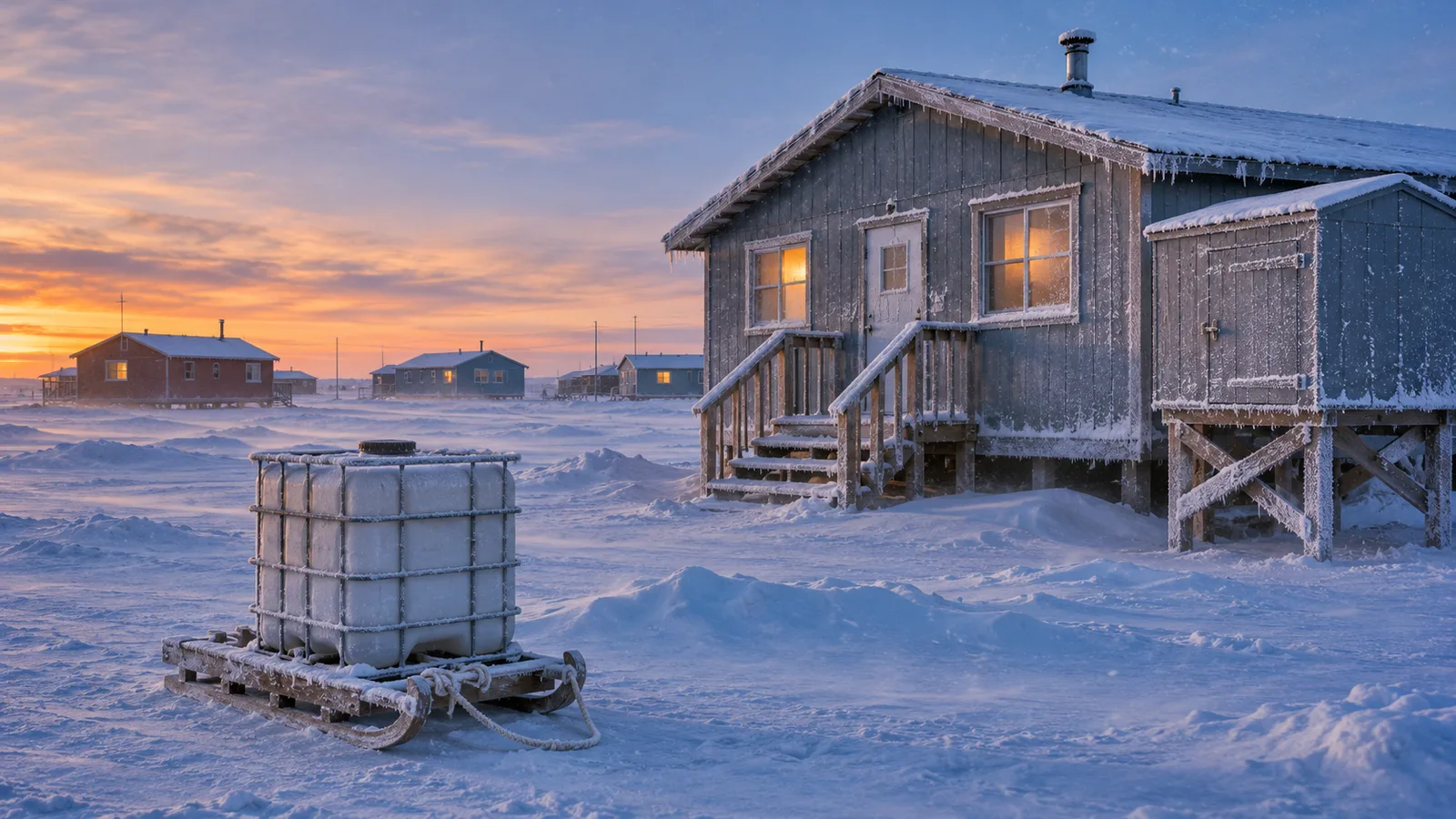
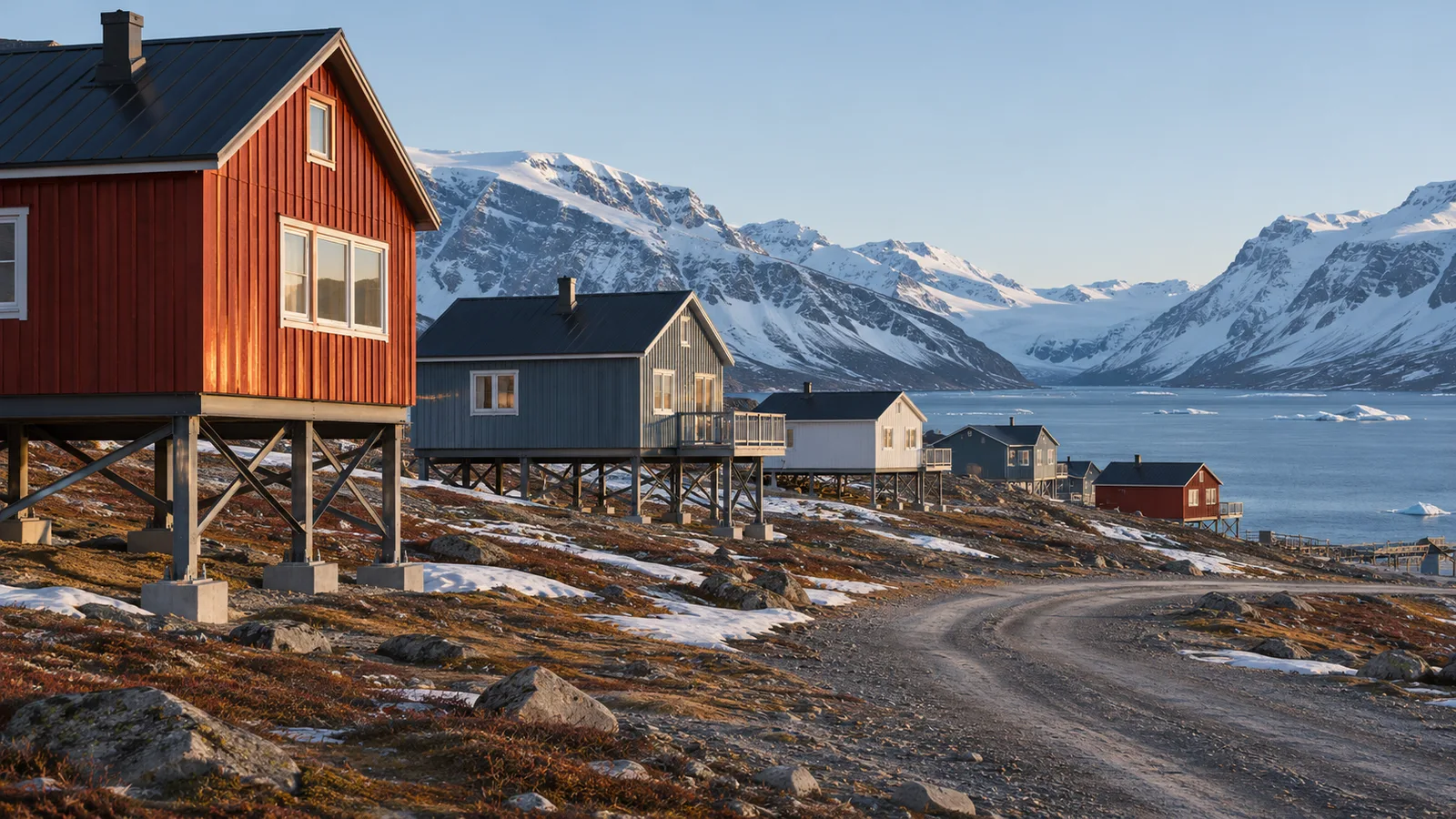
Situated at 78° North latitude—roughly halfway between mainland Norway and the North Pole—the High Arctic settlements of Longyearbyen and Ny-Ålesund on Svalbard serve as the world’s real-time engineering laboratory for extreme cold and thawing permafrost. Because Svalbard is warming at roughly six times the global average, foundations that stood solid for a century are failing: wooden pilings that never decayed in dry polar frost are now rotting in wet thawing soil, and steel pilings drilled directly into bedrock are still being jacked upward by expanding active-layer ice gripping the pile shafts.
To stabilize critical buildings, Scandinavian engineers deploy sleeved friction-isolated bedrock pilings, active sub-building winter cold-air ventilation blowers that refreeze the soil beneath floors, and low-temperature hot-water district heating grids (≤ 100°C / 212°F) backed by mobile emergency boilers.
Three-stage engineering verification workflow for Svalbard & Scandinavian Arctic Resilience: Permafrost : baseline sizing with a 20% reserve margin, grid-down isolation, and annual unplugged field testing.
High-Arctic Infrastructure Failures & Scandinavian Engineering Fixes
| Infrastructure Vulnerability | Physical Failure Mechanism in High Arctic | Engineered Scandinavian / Svalbard Solution |
|---|---|---|
| Timber Foundation Pilings | Deepening summer thaw active layer activates dormant soil fungi, rotting wood piles | Replace wood with hot-dip galvanized steel pilings isolated from active soil |
| Bedrock-Drilled Steel Piles | Freezing water in upper active soil grips bare steel piles and jacks the building upward | Fit steel piles with greased HDPE slip-sleeves through the active freeze-thaw zone |
| Sub-Building Ground Warming | Building heat radiates downward, thawing permafrost slab beneath structures | Install active winter cold-air fans blowing -30°C air beneath elevated floors to refreeze soil |
| High-Pressure Steam Grids | Steam traps freeze and water-hammer ruptures pipes during sub-zero shutdowns | Use low-temperature hot-water district loops (≤ 100°C / 212°F) + mobile trailer boilers |
| Single-Source Water/Energy | Longyearbyen’s coal-plant exit + 2025 glacial heavy-metal water contamination | Multi-fuel boiler redundancy + point-of-use reverse osmosis / heavy-metal filtration |
Key Lessons for Homeowners in Cold & Frost-Heave Climates
Even if you do not live on continuous Arctic permafrost, the civil engineering physics refined in Svalbard and Scandinavia directly protect homes across the northern United States and Canada:
- Frost-Heave Slip Sleeves for Decks & Porches: Across Minnesota, Maine, Montana, and Ontario, standard concrete deck footings poured above the 1.2-to-1.8-meter (4-to-6-foot) frost line get pushed upward every spring by frost heave. Using smooth plastic-lined footing tubes (Sonotubes) with a flared bell base prevents frozen soil from gripping the sides of the concrete pier.
- Closed-Loop Hydronic Glycol Over Steam: Under International Energy Agency (IEA EBC Annex 73) cold-climate guidelines, closed-loop hydronic heating filled with an inhibited propylene glycol / water mixture (protected down to -45°C / -50°F) prevents catastrophic radiator and boiler freeze-ups during multi-day winter blackouts—even if backup power fails completely.
- Never Trust a Single Municipal Utility: In 2025, Longyearbyen faced simultaneous energy transition strain (retiring its coal power plant) and sudden heavy-metal leaching in its glacial municipal water supply. Always maintain independent household water filtration (NSF/ANSI 53 certified for lead and heavy metals) alongside backup heating.
Cold-Climate Foundation & Hydronic Checklist
- Check hydronic boiler glycol concentration every autumn: If your home uses radiant floor heating or hydronic baseboards, have your HVAC technician test the propylene glycol freeze point with a refractometer before winter.
- Maintain positive sub-floor ventilation or encapsulation: In temperate/cold US climates, ensure crawlspaces are either properly encapsulated and conditioned or kept dry so moisture cannot rot floor joists.
Operational Boundaries & When to Skip: Svalbard & Scandinavian Arctic Resilience
Active sub-floor cold-air ventilation is engineered specifically for continuous permafrost zones where the soil must remain permanently frozen year-round; in temperate continental climates (like the US Midwest or Northeast), blowing sub-zero winter air under an uninsulated floor will freeze your domestic water pipes immediately.
Worked Sizing Math, Dual-Unit Tolerances & Field Diagnostics: Svalbard & Scandinavian Arctic Resilience
Designing a dependable residential setup for svalbard scandinavia permafrost foundations district heating requires verifying physical tolerances under worst-case grid-down conditions rather than relying on optimistic nameplate ratings. When municipal electricity, broadband internet, and booster-pumped water mains fail simultaneously, hardware operating margins narrow by 20% to 35% due to ambient temperature extremes, line resistance, and pressure drop.
- Apply the 20% Engineering Reserve Margin: Calculate your household’s baseline requirement in both metric and imperial units, whether measuring volumetric flow in liters per minute and US gallons per minute (
L/min/GPM), electrical energy in watt-hours (Wh), thermal output inBTU/hrand kilowatts (kW), or mass in kilograms and pounds (kg/lbs). Multiply that baseline figure by 1.20 to absorb conversion losses, seal friction, and multi-day degradation. - Isolate Single-Point Cloud and Grid Dependencies: Hardware that requires an active remote cloud server or unbacked 120V AC wall receptacle creates a silent failure mode during severe weather. Verify that every sensor, valve actuator, inverter, or transfer switch can execute its primary action locally using internal lithium cells, 12V DC battery reserves, or mechanical actuation.
- Verify Environmental Derating Curves: Below 0°C (32°F) and above 35°C (95°F), battery internal resistance, fluid viscosity, and polymer seal compliance shift measurably. Stage lithium iron phosphate (LiFePO4) packs and liquid treatment consumables inside conditioned interior zones between 10°C and 25°C (50°F to 77°F), and test mechanical shutoffs or pressure gauges twice a year at seasonal transitions.
| Verification Stage | Target Engineering Tolerance | Primary Field Diagnostic Tool | Recommended Inspection Interval |
|---|---|---|---|
| Baseline Capacity & Flow | Minimum +20% reserve above calculated household demand | Calibrated inline meter, pressure gauge, or watt-hour monitor | Every 6 months (Spring / Autumn) |
| Grid-Down / Offline Trigger | 100% local actuation with router and AC breaker switched off | Live unplugged blackout simulation test | Annually before peak storm season |
| Thermal & Mechanical Seals | Zero seepage or voltage drop across 5°C to 35°C (41°F to 95°F) | Visual seal inspection, torque check, and terminal cleaning | Every 12 months |
Related Guides, Equipment & Planning Tools: Svalbard & Scandinavian Arctic Resilience
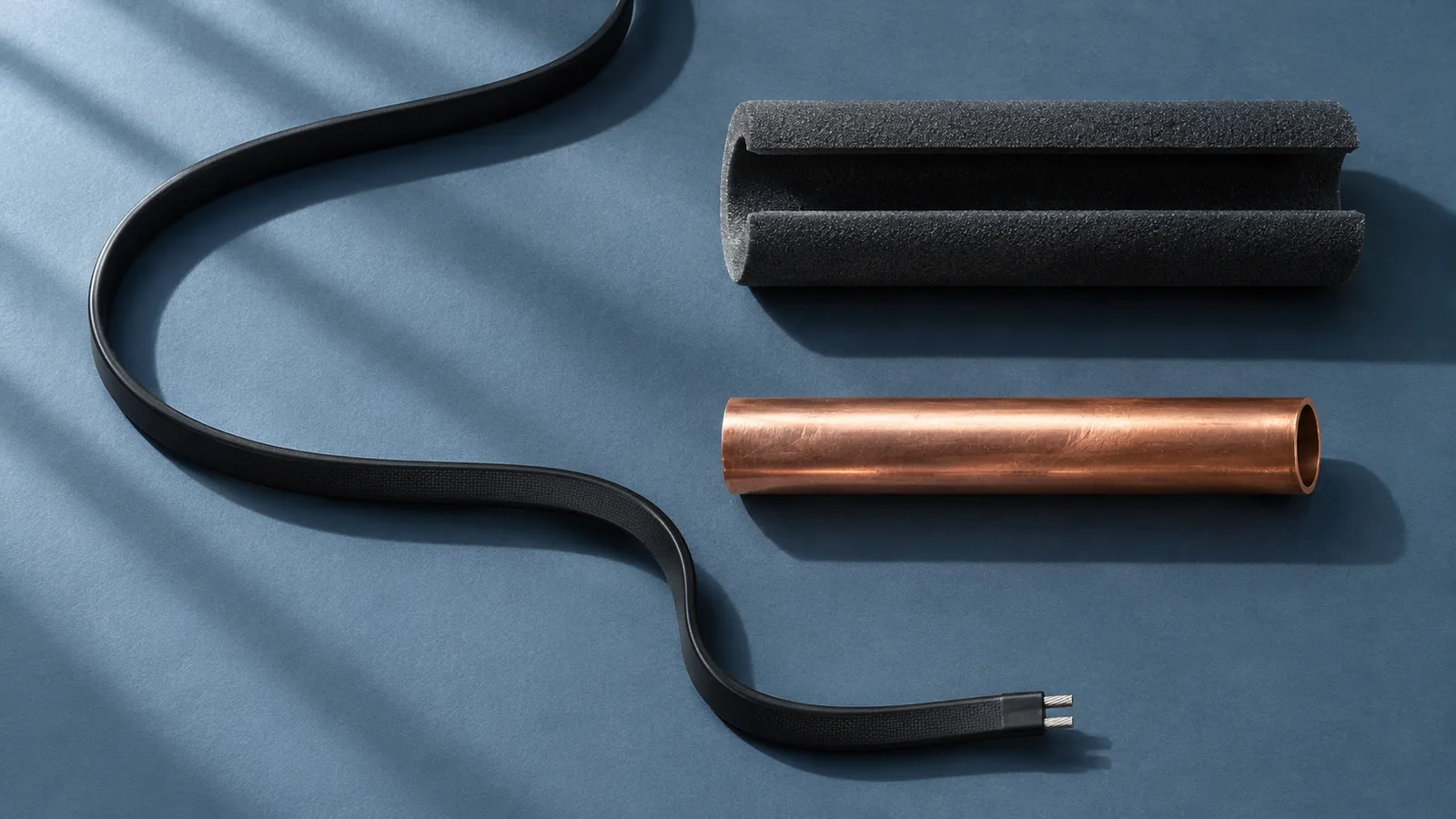
Use our browser-local Calculate Backup Heater Fuel, Battery Wh & Fresh-Air Ventilation to model your exact household numbers before purchasing hardware. Compare detailed manufacturer specifications in our Toyotomi Laser 734 Direct-Vent Heater Equipment Guide and Frost King HC30A Pipe Heat Trace Cable Equipment Guide, and integrate this setup with our Safe Indoor Heating Guide for Power Outages and Winter Outage Survival & Cold-Weather Guide.
Mr. Heater Big Buddy (MH18B)
- Stated heating area
- 450 sq ft
Why it fits Documented specification match for svalbard scandinavia permafrost foundations district heating planning, verify exact model compatibility, dimensions, and household capacity before ordering.
Key trade-off Using a 20 lb propane tank indoors is prohibited by fire codes; bulk tanks must remain outside with hose routed through an aperture.
Specifications & research
Model alternative. Source records checked on 2026-11-04. Manufacturer research, not hands-on testing.
- Heat output
- 4,000 / 9,000 / 18,000 BTU/hr · Source checked 2026-11-04
- Stated heating area
- 450 sq ft · Source checked 2026-11-04
- Fuel type
- Propane · Source checked 2026-11-04
Manufacturer documentation. Confirm exact Mr. Heater model specifications and household safety limits before buying.