During an extreme heat wave or summer blackout, indoor thermometers tell only half the story. An indoor reading of 88°F feels sharply different when dry versus when stagnant indoor humidity climbs to 70 percent from human breathing, cooking, or humid outdoor air. At the same time, no equation or thermometer reading can verify that an individual person is medically safe inside a warming home.
Always prioritize human symptoms, high-risk health factors, and early access to air conditioning first, while using Heat Index and wet-bulb physics to understand why stagnant indoor humidity suppresses the body’s ability to shed heat.
What to do during indoor heat
CDC heat-illness guidance draws a sharp triage line between heat exhaustion and life-threatening heat stroke:
| What You Notice | Clinical Meaning | Immediate Action |
|---|---|---|
Confusion, fainting, seizure, difficulty waking, 103°F+ body temp, hot red (dry or damp) skin, fast strong pulse | Suspected heat stroke (medical emergency) | Call 911 immediately. Move the person to a cooler space, lower body temperature with cool wet cloths or a cool bath, and do NOT give anything to drink. |
| Heavy sweating, cold pale clammy skin, fast weak pulse, weakness, dizziness, nausea, headache, muscle cramps | Heat exhaustion warning | Move to a cooler space, loosen clothing, apply cool wet cloths or take a cool bath, and offer sips of water if alert. Get medical help right away if vomiting occurs, symptoms worsen, or signs last over one hour. |
| No symptoms yet, but room is hot or AC power is out | Rising heat stress hazard | Check local heat alerts, reach an air-conditioned site before symptoms develop, and check frequently on neighbors or older relatives. |
Adults age 65+, infants and young children, pregnant occupants, and people managing heart disease, kidney illness, or heat-sensitizing prescriptions face elevated risk well before others notice strain. Never stop or adjust prescribed medication on your own; review a hot-weather plan with a clinician ahead of summer.
Scroll sideways to read the enlarged diagram.
Why humidity blocks human cooling: Heat Index vs. wet-bulb physics
Even at rest, an adult body sheds roughly 100 watts of metabolic heat (300 to 600 watts during chores) to stay near 98.6°F (37°C). When room temperatures climb close to skin temperature (roughly 95°F / 35°C), passive heat loss by radiation, conduction, and air contact drops sharply, leaving sweat evaporation (absorbing roughly 2,260 kJ per kg of evaporated water) as the body’s main cooling channel.
- Heat Index (
HI): Combines shaded dry-bulb air temperature and relative humidity into an apparent temperature index (originally modeled for light-wind outdoor shade). Inside a still room—with glass trapping sunlight and indoor cooking or bathing raising moisture—apparent heat strain often feels hotter than local outdoor weather station numbers. - Wet-Bulb Temperature (
Twb): Measured using a thermometer wrapped in a wet wick in moving air, indicating the lowest temperature achievable by pure water evaporation. When indoor vapor pressure approaches skin saturation, sweat rolls off skin rather than evaporating, providing little cooling while draining water and electrolytes.
Although controlled laboratory chamber studies frequently note uncompensable heat strain emerging around 30°C to 31.5°C (86°F to 88.7°F) wet-bulb for healthy adults and lower for older or chronically ill occupants, do not treat wet-bulb or Heat Index numbers as an indoor safety clock. Hydration status, age, medications, stagnant airflow, and room heat buildup vary too widely for any single meter cutoff to promise safety.
| Indoor Dry-Bulb Air Temp | Relative Humidity | Approximate NWS Heat Index (Shaded Reference) | Psychrometric Impact on Sweat Cooling |
|---|---|---|---|
86°F (30.0°C) | 40% RH | ~85°F | Normal sweat evaporation (fans remain useful below 90°F) |
86°F (30.0°C) | 70% RH | ~95°F | Elevated vapor pressure slows sweat cooling; monitor vulnerable occupants |
90°F (32.2°C) | 45% RH | ~93°F | CDC electric-fan cutoff reached (90°F); plan transition to air conditioning |
90°F (32.2°C) | 70% RH | ~106°F | Sweat cooling heavily impaired; high risk of exhaustion—seek AC promptly |
96°F (35.6°C) | 65% RH | ~121°F | Air exceeds skin temperature; dangerous thermal strain—relocate immediately |
Use room readings and humidity control carefully
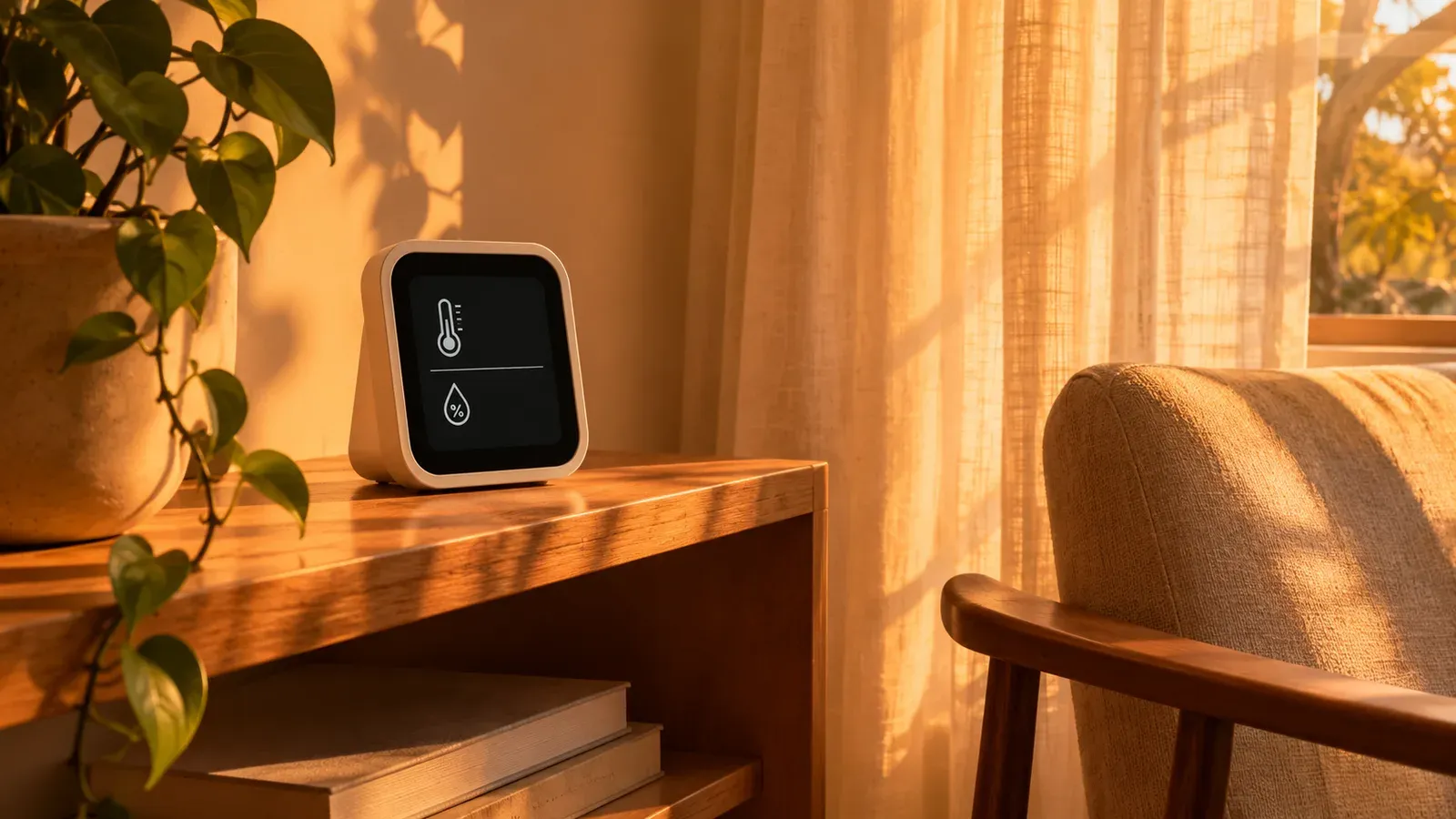
A digital thermo-hygrometer is a practical warning tool showing whether a closed room is steadily warming or growing muggy, never a substitute for medical assessment. Check local NWS HeatRisk forecasts and heat alerts, and call 2-1-1 or contact local emergency management ahead of heat waves to locate air-conditioned shelters, libraries, or transit options.
Fans (CDC 90°F limit) and when dehumidifiers actually apply
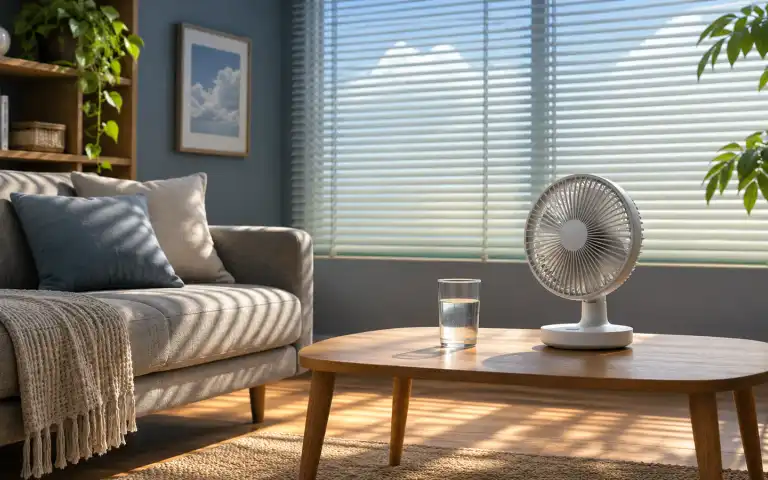
- CDC electric fan cutoff: CDC heat guidance advises running electric fans indoors only when indoor air stays below
90°F. Above90°F, blowing hot room air across skin can raise body heat rather than cooling it. Even below90°F, do not rely on a fan alone in place of air conditioning during severe heat waves—take cool showers, mist or sponge skin with cool water, close sunlit blinds, and prepare to relocate. - Dehumidifiers before vs. during outages: A portable compressor dehumidifier pulls moisture (
latent heat load) from sticky rooms when utility AC power is available, helping your air conditioner or damp basements stay comfortable (for instance ENERGY STAR's 49.74 pints/day rated Midea MAD50C1AWS-A). Crucially, a dehumidifier does not cool air—its compressor exhausts warm waste heat into the room—so do not run a dehumidifier off backup batteries inside an unconditioned blackout room trying to cool it down. Also note whether your unit uses a collection bucket or continuous gravity drain hose without a built-in condensate pump, which requires a floor drain below outlet height.
Midea 50-Pint Energy Star Dehumidifier
- Energy efficiency
- ENERGY STAR certified; not ENERGY STAR Most Efficient
Why it fits Rated by ENERGY STAR at 49.74 pints/day (model MAD50C1AWS-A) to cut indoor humidity when utility power and AC are active; uses a collection bucket or gravity hose (no built-in condensate pump) and adds compressor heat, so never rely on it to cool an unconditioned blackout room.
Key trade-off Gravity hose drainage cannot pump condensate upward into a utility sink or elevated standpipe without adding an external condensate pump.
Specifications & research
49.74-pint ENERGY STAR portable dehumidifier (gravity drain / bucket). Source records checked on 2026-11-13. Manufacturer research, not hands-on testing.
- Moisture removal
- 49.74 pints/day · Source checked 2026-11-13
- Energy efficiency
- ENERGY STAR certified; not ENERGY STAR Most Efficient · Source checked 2026-11-13
- Drainage options
- Internal collection bucket or continuous gravity hose connection (no built-in condensate pump) · Source checked 2026-11-13
Manufacturer documentation. Confirm exact Midea model specifications and household safety limits before buying.
Indoor heat monitoring and relocation checklist
- Track local NWS HeatRisk alerts and confirm nearest cooling center hours, transit, and pet rules before temperatures peak.
- Watch occupants closely for heat-illness symptoms (
dizziness, weakness, heavy sweating, nausea, cramps, or confusion) rather than waiting for a specific thermometer number. - Shut off standalone electric fans blowing warm air when indoor temperatures reach or exceed
90°Fper CDC guidance, and transition occupants to air conditioning. - Keep cool damp cloths, misting bottles, drinking water, and backup power for essential medical devices ready if grid power drops.
- Call
911at once for confusion, fainting, seizure, or core heat-stroke signs, cooling skin externally and withholding drinks until responders arrive.
For passive daytime shading and safe night-flush rules when utility cooling fails, see our heat-wave room cooling physics guide and extreme-heat power outage plan. Renters can also review our renter-friendly apartment cooling guide and home climate and indoor-air resilience guide.
Indoor heat safety FAQs
Can Heat Index or wet-bulb math tell me when to evacuate my home?
No. NWS Heat Index assumes shaded light-wind outdoor conditions, and controlled lab wet-bulb thresholds (such as 30°C to 31.5°C) do not account for individual age, dehydration, medications, or stagnant room air. Leave early for air conditioning whenever rooms feel stifling or alerts escalate.
Why is an unconditioned indoor room often hotter than the outdoor weather forecast?
Weather stations measure shaded, ventilated outdoor air. Closed rooms accumulate greenhouse solar radiation through bare windows, moisture from cooking, showers, and breathing, and stagnant warm air trapped near ceilings.
When should I call 911 versus treating heat exhaustion?
Call 911 immediately for confusion, slurred speech, fainting, seizures, difficulty waking, or hot flushed skin (103°F+ suspected heat stroke); cool skin with wet cloths or a cool bath and give nothing to drink. For heavy sweating, cramps, weakness, or nausea with intact alertness, move to cool air, apply wet cloths, sip water, and seek medical care if vomiting develops or symptoms persist beyond an hour.
What is the CDC temperature limit for electric fans?
CDC advises using electric fans indoors only when ambient air temperature stays below 90°F (32°C). Above 90°F, forced air across dry skin can accelerate core warming rather than cooling the body.