In this guideJump to a section
- Start with the alert and an open destination
- Identify who may need earlier action
- Reduce heat entering the home
- Decide before sunset whether the overnight plan still works
- Plan water without prescribing one amount for everyone
- Match backup power to one defined cooling job
- Protect food and temperature-sensitive supplies
- When extreme heat and smoke happen together
- Include pets and service animals
- Leave or seek help when the plan stops protecting people
- Primary sources
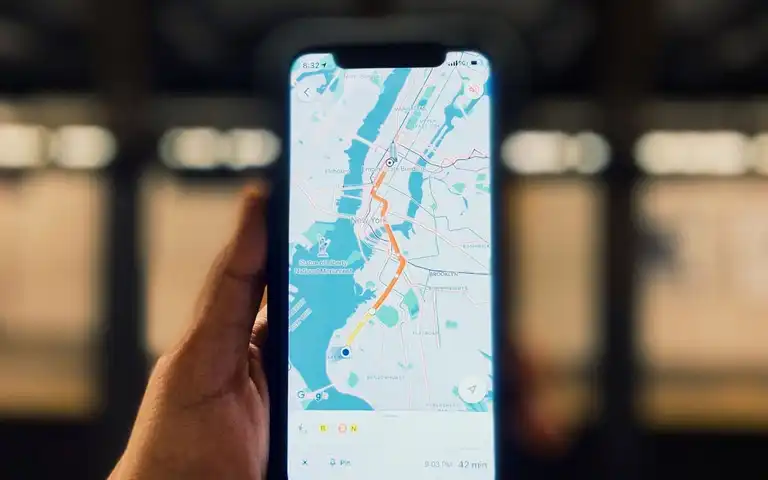
An extreme-heat outage is a cooling problem before it is a backup-power shopping problem. The first decision is where the household can reliably cool down if utility power does not return. Write down that destination, confirm its hours and accessibility, and arrange transportation before the hottest part of the day.
The National Weather Service heat guidance uses local conditions when issuing heat products, and the CDC HeatRisk guidance connects the local forecast to protective actions. Do not copy a temperature threshold from another city or use one indoor reading as proof that everyone can safely remain home.
Start with the alert and an open destination
If forecast fields seem inconsistent, the heat-index and air-temperature comparison helps match the location, hour and field before using them in this cooling plan.
Check four sources, because one app does not answer the whole problem:
- The local National Weather Service forecast and heat alert
- Local emergency-management or health-department messages
- The utility outage map or recorded outage line
- The current Air Quality Index when smoke or ozone may be present
Then identify at least two cooling options. A public cooling center, library, community center, mall, hotel, workplace, faith facility, or trusted person’s air-conditioned home may be useful only if it is open, reachable, accessible, welcomes pets or service animals as needed, and can support the household’s care requirements. Call or use an official local listing before traveling.
Record the address, route, hours, accessibility contact, transportation method, and what each person needs to bring. Keep a paper copy in case mobile service or phone power fails. The household communication guide helps assign check-ins and an out-of-area relay.
Identify who may need earlier action
Anyone can become ill in extreme heat. CDC notes that older adults, infants and young children, pregnant people, people with some chronic conditions, people working or exercising outside, and people taking certain medicines may need additional action.
Make a household-specific list without trying to diagnose risk:
- Who has trouble noticing, describing, or responding to overheating?
- Who lives alone or may be unreachable during the day?
- Which medicines have heat or refrigeration instructions?
- Which mobility, breathing, communication, or medical devices need power?
- Who has been told to limit fluids or follow a specific care plan?
- Which pets or service animals need transport, cooling, water, or medication?
Do not stop or change medication because of a heat forecast. CDC advises making a plan for refrigerated medication and electronic medical devices; FDA advises checking the exact label and contacting a pharmacist, clinician, or manufacturer when heat or refrigeration loss may have affected a product.
Write down the pharmacy, clinician, equipment supplier, utility medical-support program, and backup destination contacts. Review medication supply and refill eligibility with the pharmacy or clinician before the event when possible.
Reduce heat entering the home
Passive measures buy time, but they do not guarantee a safe indoor environment. Use the measures that fit the building, lease, fire rules, and current air quality:
- Shade sun-facing windows before direct sun arrives
- Close blinds or curtains without blocking required exits or ventilation
- Turn off ovens, clothes dryers, unnecessary lighting, and other indoor heat sources
- Move activity to the coolest usable room, often on a lower shaded level
- Use cool showers, baths, or damp cloths when safe and practical
- Open windows only when outdoor air is cooler and air quality and security permit
- Close windows again as outdoor heat rises or smoke returns
Apartment residents should ask management how common areas, elevators, access systems, fire doors, and any cooling room behave during an outage. Do not block fire-rated doors, sleep in an unsafe common area, or improvise access to a roof, mechanical room, or electrical space.
Fans are comfort tools, not a complete heat plan
Air movement may improve comfort and evaporation. CDC’s guidance says to use a fan only when the indoor temperature is below 90°F; that is a fan-use limit, not a universal safe-stay threshold. A fan also needs power and does not lower room temperature. If the household cannot maintain safe cooling, move to an air-conditioned location rather than treating a battery fan as the primary protection.
Decide before sunset whether the overnight plan still works
Check the overnight forecast, indoor conditions, air quality, utility estimate, transportation, and cooling-destination hours before people settle in to sleep. Do not depend on a sleeping person to notice worsening heat or a failed fan, battery, air conditioner, or medical device. Set a check-in plan for anyone who may not recognize or communicate symptoms, and keep phones, lights, water, and the exit route accessible.
Never use a parked vehicle, unsafe common area, roof, mechanical room, or blocked exit as an improvised sleeping location. If reliable cooling, care support, or transport may not last through the night, move to the confirmed cooler destination while it is open and the trip is still workable.
Plan water without prescribing one amount for everyone
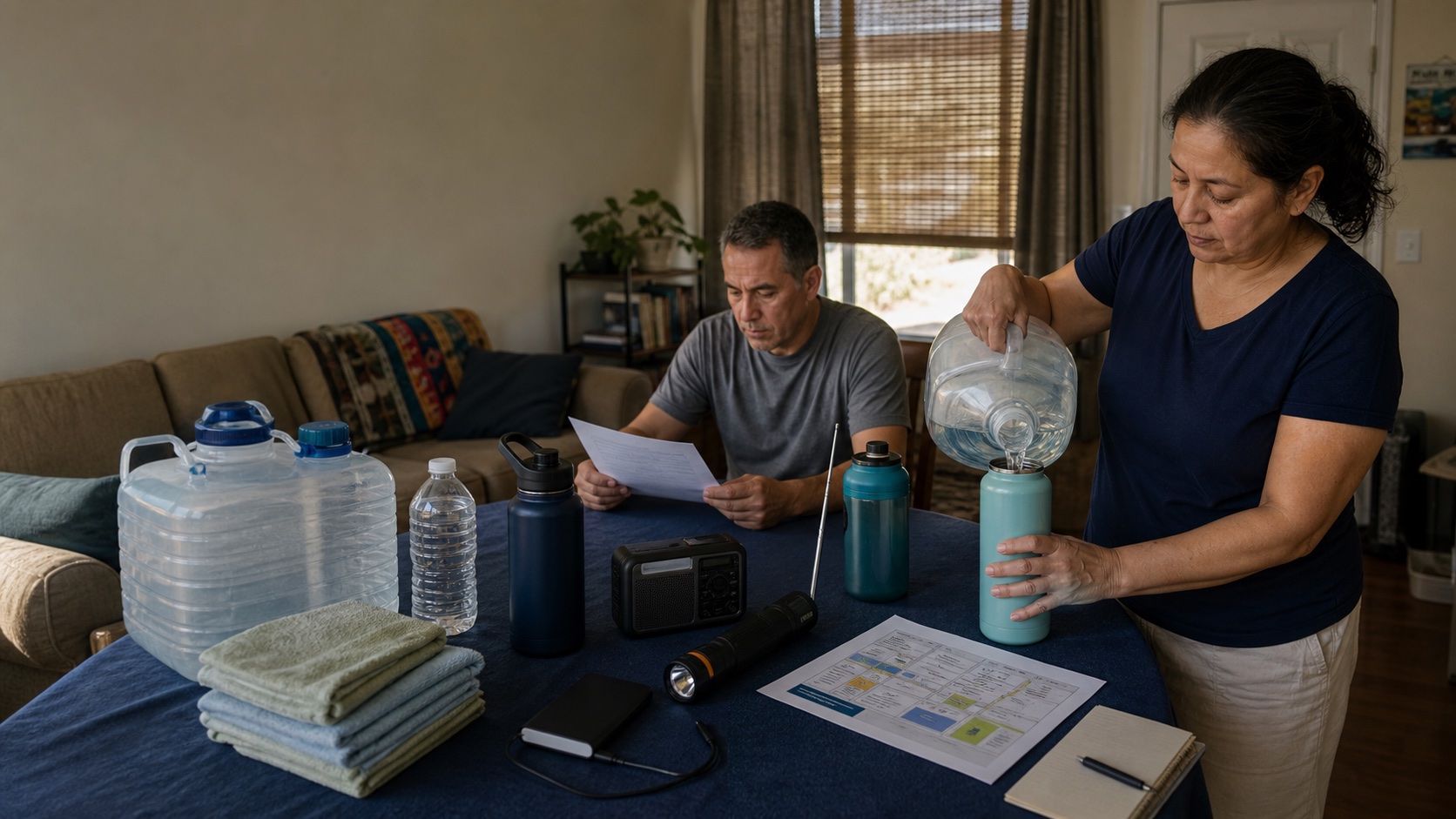
Keep drinking water available before the outage and place it where household members can reach it. CDC advises drinking fluids and paying attention to hydration during hot weather, but fluid needs and restrictions differ. A person with a clinician-directed fluid or electrolyte plan should follow that plan.
Use the emergency-water quantity guide to establish a household planning baseline, then add a clearly separate hot-weather reserve based on known use, local guidance, transport weight, and refill options. Replace the calculator’s separate pet-water field with the animal’s known intake or veterinary guidance; the pet choice alone does not add gallons.
Store water out of direct sun and away from fuels or chemicals. Do not ration water so aggressively that people avoid drinking during heat, and do not give salt tablets or concentrated electrolyte products unless a qualified clinician has advised them for that person.
Match backup power to one defined cooling job
Measure the exact device instead of starting with a product category. The useful questions are:
- Is the job phone charging, a small fan, a refrigerator, a window air conditioner, or medical equipment?
- What are the running and starting power requirements in the exact manual or label?
- How many hours of usable battery energy are available after reserve and conversion loss?
- Where and how will the system recharge if the grid remains down?
- Can the equipment operate within its temperature limits?
- What happens when the battery, fuel, inverter, cord, or charging path fails?
The battery-runtime planning guide explains how to estimate an energy window; it cannot confirm motor starting, medical-device compatibility, wiring, installation, or a safe indoor temperature. The backup-power guide explains the full load-to-system decision.
Never run a portable generator in a home, garage, basement, shed, or near an opening. CDC says to operate it outdoors more than 20 feet from windows, doors, and vents, and to use working battery or battery-backup carbon-monoxide alarms. Follow the exact manual and site conditions as well.
Protect food and temperature-sensitive supplies
Place appliance thermometers in the refrigerator and freezer before an outage. FoodSafety.gov says an unopened refrigerator keeps food cold for about four hours; a full unopened freezer for about 48 hours, or about 24 hours when half full. These are planning windows, not permission to keep every item. Starting temperature, door opening, appliance condition, food type, ice crystals, and a measured temperature of 40°F or below determine the next step.
Keep doors closed, note when power failed, and use the current FoodSafety.gov chart for specific foods. Never taste food to decide whether it is safe. Keep medication and medical supplies separate from food decisions; follow their exact label and professional or manufacturer instructions.
When extreme heat and smoke happen together
Closing windows may reduce smoke but trap heat. Opening windows may cool the home but increase smoke exposure. A particle filter may reduce some particles; it does not cool the room or remove every gas.
EPA recommends a cleaner-air room during wildfire smoke when it remains safe to stay home. It also says to keep the room cool and notes that some cooling systems can pull smoke inside. Use recirculation settings when the exact equipment allows it, choose filters the system can handle, and avoid adding indoor pollution from smoking, candles, aerosol sprays, or combustion cooking.
If the household cannot stay both cool enough and protected from smoke, seek a safer building with air conditioning and cleaner air. Follow an evacuation order immediately; a home air cleaner is never a reason to remain in danger.
Include pets and service animals
Ready.gov advises cool water, comfortable shade, and protection from hot pavement, and warns never to leave people or pets in a closed vehicle. Add:
- A transport method and destination that accepts the animal
- Water, food, bowls, medication, leash or harness, carrier, and cleanup supplies
- A backup caregiver and veterinary contact
- A plan for surfaces too hot to walk on
- Cooling instructions appropriate to the species, health, coat, and current veterinary guidance
Do not assume human cooling products are safe for every animal. Contact a veterinarian or emergency animal service for signs of heat illness or questions about a specific animal.
Interactive checklist
Extreme-heat outage plan
0 of 10 complete. Save status appears when this checklist starts.
Leave or seek help when the plan stops protecting people
There is no single indoor temperature that answers this for every household. Act on symptoms, official instructions, care needs, cooling reliability, and the conditions actually present.
Call 911 for suspected heat stroke. NIOSH lists confusion, slurred speech, loss of consciousness, seizures, high body temperature, and hot skin that may be dry or accompanied by heavy sweating as warning signs. Move the person to a cooler place and begin rapid cooling while emergency help is on the way, following dispatcher instructions.
Get medical advice promptly when symptoms worsen, vomiting prevents fluids, a person cannot follow their care plan, or there is uncertainty about medication or equipment. Move to the confirmed cooler destination before transport, mobility, communication, phone power, or the destination itself becomes harder to use.
The goal is not to prove the household can stay home. It is to notice when shade, water, air movement, backup power, air cleaning, care support, or nighttime cooling is no longer reliable and make the safer move while options remain.
Primary sources
- National Weather Service: Heat Safety and Alerts
- CDC: About Heat and Your Health
- NIOSH: Heat-related illnesses
- Ready.gov: Extreme Heat
- CDC: What to Do During a Power Outage
- FoodSafety.gov: Food Safety During Power Outages
- EPA: Create a Clean Room During Wildfire Smoke
- FDA: Safe Drug Use After a Natural Disaster