In this guide Jump to a section
- Engineering Baseline & Primary Fit: Greenland Arctic Household Engineering
- Greenlandic Passive Envelope & Sleep Architecture
- The Greenland 3-Tier Bedding System (Maximum Warmth Per Kilogram)
- The Historical Lesson of the Greenland Norse
- Arctic-Inspired Winter Resilience Checklist
- Operational Boundaries & When to Skip: Greenland Arctic Household Engineering
- Worked Sizing Math, Dual-Unit Tolerances & Field Diagnostics: Greenland Arctic Household Engineering
- Related Guides, Equipment & Planning Tools: Greenland Arctic Household Engineering
Engineering Baseline & Primary Fit: Greenland Arctic Household Engineering
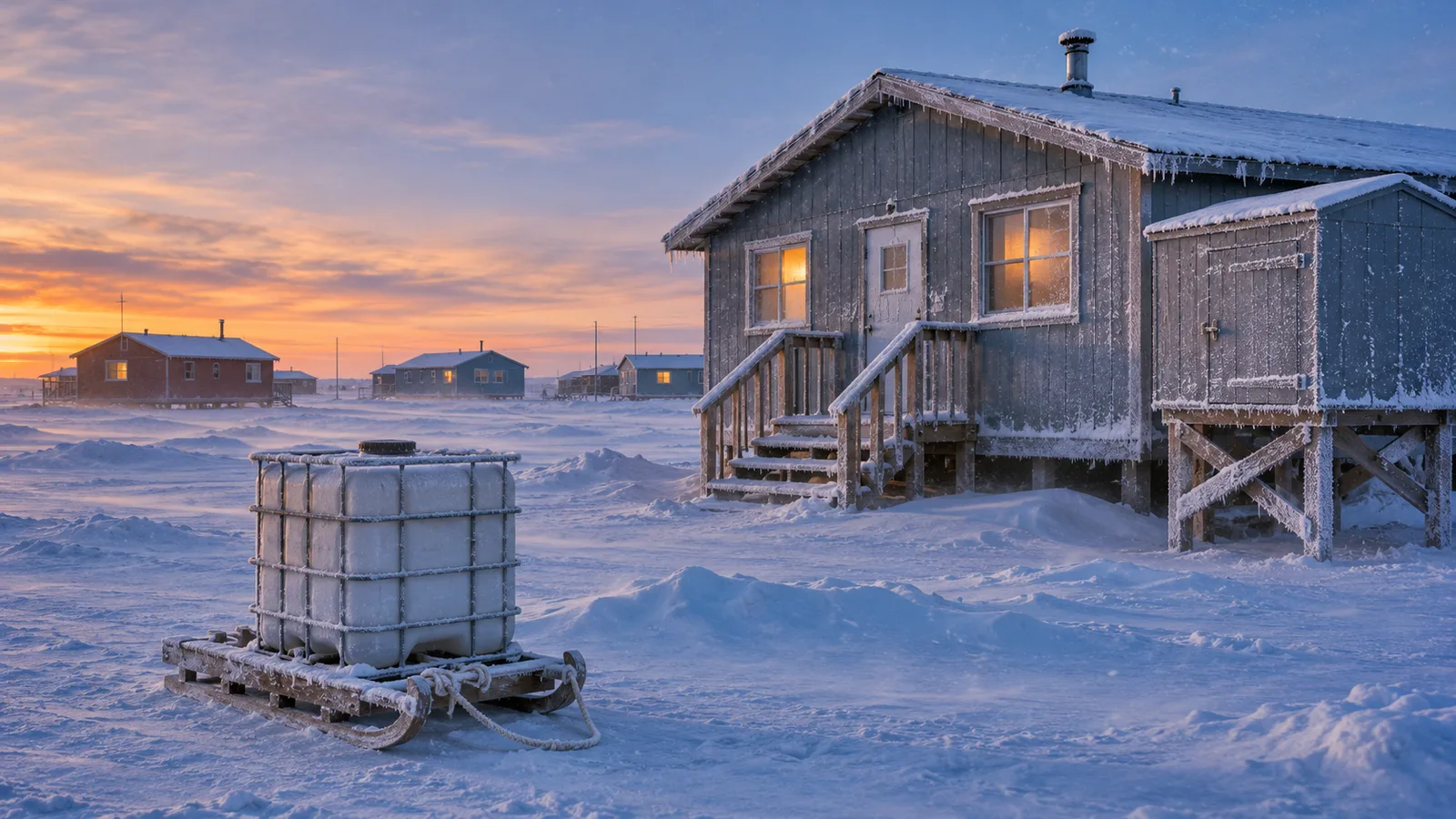
In Greenland—where coastal settlements from Nuuk to Ilulissat and Qaanaaq endure -30°C to -50°C (-22°F to -58°F) winter storms alongside weeks of 24-hour polar night—residential resilience relies on extreme passive thermal efficiency paired with micro-climate body insulation.
Rather than burning massive amounts of fuel to keep every room at 22°C (72°F), Greenlandic homes combine 35 cm (14-inch) continuous vapor-sealed insulation, unheated entry airlock mudrooms, and triple-pane argon windows with a traditional three-tier modular bedding system that lets residents sleep comfortably in cool 14°C (57°F) bedrooms. Historically, Greenland also offers preparedness’s sharpest warning: while the medieval Greenland Norse engineered thick turf-and-stone walls capable of surviving -25°C (-13°F) winters, their colonies perished when cooling seas severed European supply ships and settlers failed to adapt local storage habits.
Three-stage engineering verification workflow for Greenland Arctic Household Engineering: -50°C Thermal : baseline sizing with a 20% reserve margin, grid-down isolation, and annual unplugged field testing.
Greenlandic Passive Envelope & Sleep Architecture
| Building / Household Layer | Greenland Arctic Design Standard | Thermal Physics Principle | How Lower-48 Homes Can Replicate It in a Blackout |
|---|---|---|---|
| Entryway Airlock (Cold Porch) | Unheated double-door vestibule separating outdoors from living room | Prevents a single door opening from dumping 100% of warm indoor air to -40°C gales | Hang a heavy wool blanket or 4-mil plastic curtain across your front hallway during outages |
| Window Glazing | Triple-pane low-E argon windows recessed deep into insulated wall frame | Cuts conductive/radiative heat loss by 65% vs. standard dual-pane glass | Apply 3M clear heat-shrink window film + insulated blackout curtains over glass |
| Foundation Anchoring | Steel/timber posts bolted directly to exposed granite bedrock | Bypasses active permafrost freeze-thaw movement without cracking slabs | Keep crawlspace vents sealed in winter and insulate rim joists with rigid foam |
| Bedroom Thermal Strategy | Cool bedroom air (14°C / 57°F) + 3-tier modular down/wool bedding | Heating 2 m³ under a duvet takes 1% of the energy required to heat a 40 m³ room | Lower night thermostat / conserve propane by layering Merino base + down duvet + wool blanket |
| Circadian Light Control | Full blackout shades + warm-spectrum 2200K–2700K dimmable indoor lamps | Preserves melatonin & sleep architecture across 24-hour dark/light seasonal extremes | Use warm-amber LED lanterns at night during multi-day blackouts to reduce stress and fatigue |
The Greenland 3-Tier Bedding System (Maximum Warmth Per Kilogram)
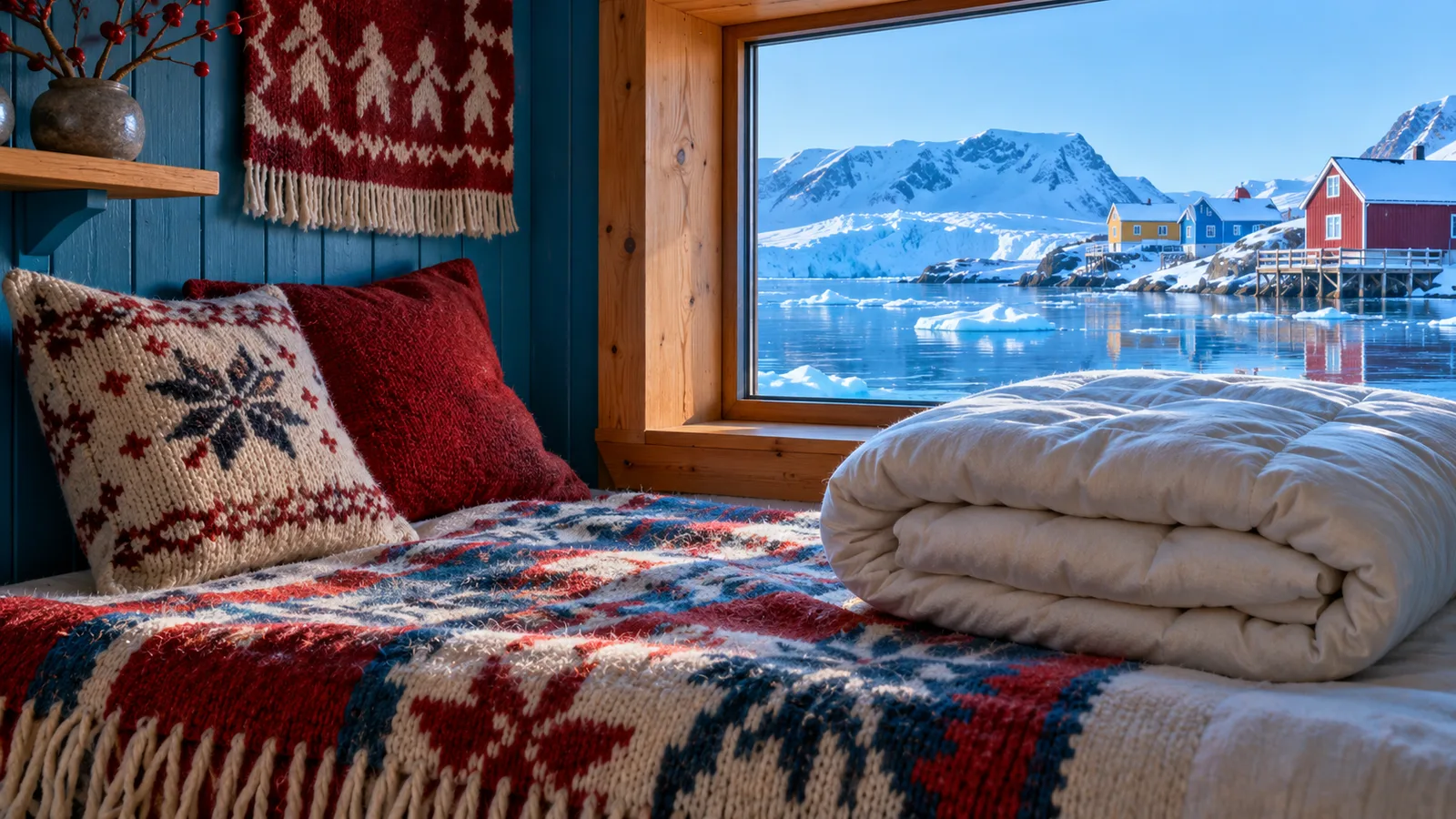
Evolved directly from traditional Inuit caribou- and seal-skin sleeping platforms, modern Greenlandic households avoid single ultra-thick electric blankets (which fail in power outages and trap sweat) in favor of three adjustable breathable layers:
- Moisture-Managing Base Layer: Cotton flannel or brushed percale fitted sheet paired with 250g/m² Merino wool sleepwear that wicks nocturnal perspiration away from skin so evaporative cooling never chills you at 3:00 AM.
- Primary Lofted Insulator: A baffled 750+ fill-power down comforter (or high-loft synthetic equivalent) that traps dead air pockets around the body with minimal weight.
- Wind-Blocking Outer Shell: A tightly woven heavyweight wool blanket or fleece throw draped over the top—acting as a convective lid that stops warm air from escaping when you roll over.
The Historical Lesson of the Greenland Norse
Archaeological records from Greenland’s Eastern and Western Settlements provide a sobering case study in household preparedness. The Norse built stone-and-turf longhouses with 1.5-meter (5-foot) thick walls providing extraordinary thermal inertia around central peat hearths. Physically, their buildings could withstand severe sub-zero cold. Yet when the Little Ice Age expanded sea ice around 1400 AD, cutting off imported iron, timber, and grain from Norway, the Norse starved while neighboring Inuit communities thrived, because the Norse refused to adopt local marine food preservation and blubber-lamp heating methods. Lesson for modern households: Never depend on a single fragile supply chain (such as grid electricity or just-in-time grocery delivery) without local redundant backups.
Arctic-Inspired Winter Resilience Checklist
- Create an interior cold-air airlock during winter blackouts: If you have to open an exterior door to check a generator or clear snow, hang a heavy blanket across the interior hallway doorway so sub-zero wind doesn’t sweep through your warm living room.
- Insulate windows before the storm hits: Installing clear plastic shrink-film creates a trapped dead-air pocket that mimics triple-pane glazing for under 4 USD per window.
- Stage a dedicated 3-tier cold-weather bed kit: Keep Merino wool base layers, wool socks, a knit beanie (up to 10–15% of resting heat loss occurs from an uncovered head/neck), and a heavyweight wool top blanket ready in every bedroom.
Operational Boundaries & When to Skip: Greenland Arctic Household Engineering
Passive super-insulation and 3-tier bedding keep humans warm down to sub-zero indoor temperatures, but cannot protect interior water pipes from freezing once indoor air drops below 0°C (32°F). If your backup heat fails completely during a multi-day polar vortex, drain your home’s plumbing immediately rather than relying on passive house insulation alone.
Worked Sizing Math, Dual-Unit Tolerances & Field Diagnostics: Greenland Arctic Household Engineering
Designing a dependable residential setup for greenland arctic home insulation bedding survival requires verifying physical tolerances under worst-case grid-down conditions rather than relying on optimistic nameplate ratings. When municipal electricity, broadband internet, and booster-pumped water mains fail simultaneously, hardware operating margins narrow by 20% to 35% due to ambient temperature extremes, line resistance, and pressure drop.
- Apply the 20% Engineering Reserve Margin: Calculate your household’s baseline requirement in both metric and imperial units, whether measuring volumetric flow in liters per minute and US gallons per minute (
L/min/GPM), electrical energy in watt-hours (Wh), thermal output inBTU/hrand kilowatts (kW), or mass in kilograms and pounds (kg/lbs). Multiply that baseline figure by 1.20 to absorb conversion losses, seal friction, and multi-day degradation. - Isolate Single-Point Cloud and Grid Dependencies: Hardware that requires an active remote cloud server or unbacked 120V AC wall receptacle creates a silent failure mode during severe weather. Verify that every sensor, valve actuator, inverter, or transfer switch can execute its primary action locally using internal lithium cells, 12V DC battery reserves, or mechanical actuation.
- Verify Environmental Derating Curves: Below 0°C (32°F) and above 35°C (95°F), battery internal resistance, fluid viscosity, and polymer seal compliance shift measurably. Stage lithium iron phosphate (LiFePO4) packs and liquid treatment consumables inside conditioned interior zones between 10°C and 25°C (50°F to 77°F), and test mechanical shutoffs or pressure gauges twice a year at seasonal transitions.
| Verification Stage | Target Engineering Tolerance | Primary Field Diagnostic Tool | Recommended Inspection Interval |
|---|---|---|---|
| Baseline Capacity & Flow | Minimum +20% reserve above calculated household demand | Calibrated inline meter, pressure gauge, or watt-hour monitor | Every 6 months (Spring / Autumn) |
| Grid-Down / Offline Trigger | 100% local actuation with router and AC breaker switched off | Live unplugged blackout simulation test | Annually before peak storm season |
| Thermal & Mechanical Seals | Zero seepage or voltage drop across 5°C to 35°C (41°F to 95°F) | Visual seal inspection, torque check, and terminal cleaning | Every 12 months |
Related Guides, Equipment & Planning Tools: Greenland Arctic Household Engineering
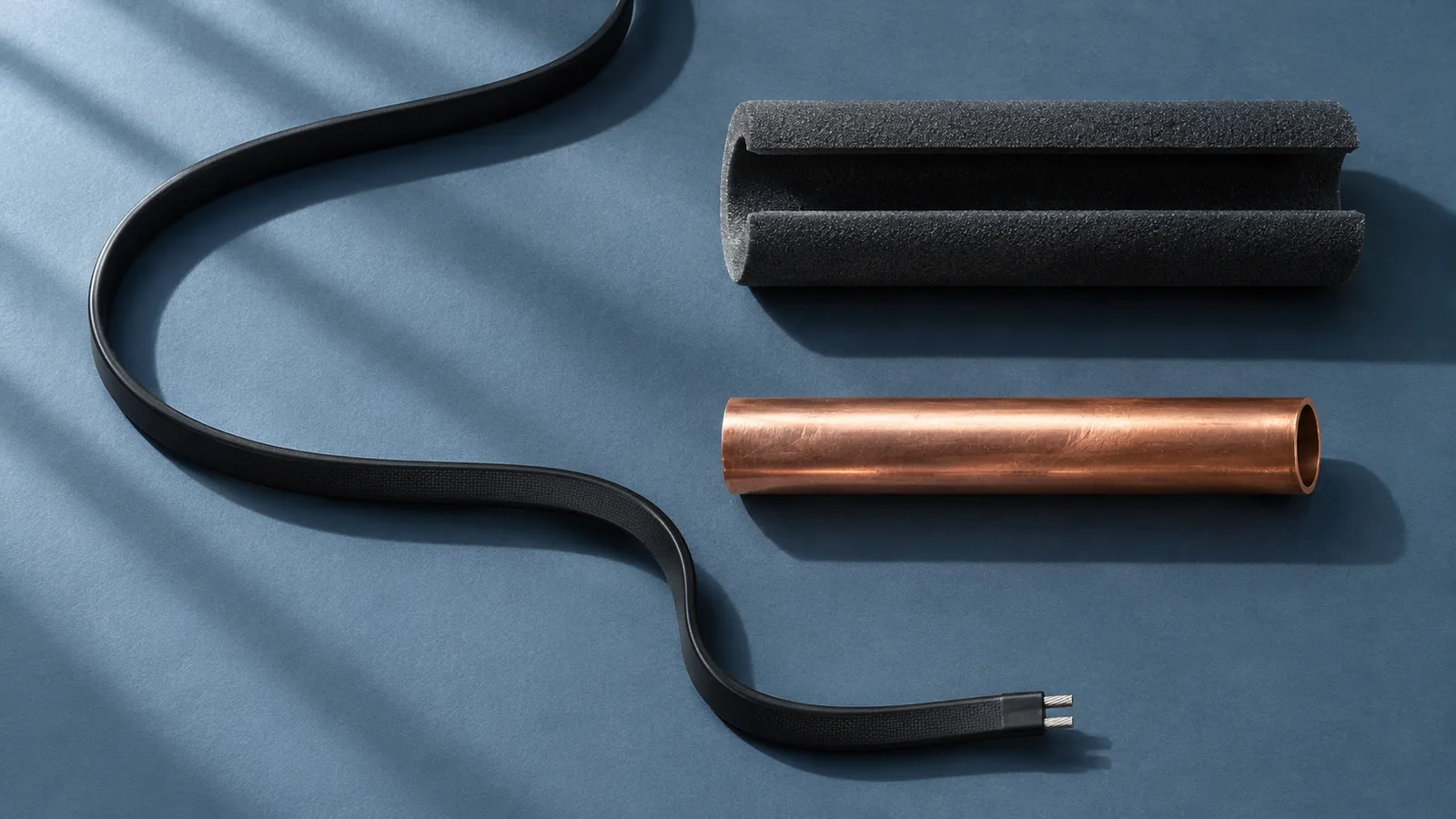
Use our browser-local Calculate Backup Heater Fuel, Battery Wh & Fresh-Air Ventilation to model your exact household numbers before purchasing hardware. Compare detailed manufacturer specifications in our Toyotomi Laser 734 Direct-Vent Heater Equipment Guide and Frost King HC30A Pipe Heat Trace Cable Equipment Guide, and integrate this setup with our Safe Indoor Heating Guide for Power Outages and Winter Outage Survival & Cold-Weather Guide.
Ignik Topside 12V DC Heated Bed Blanket (48W)
- Power input max draw
- 12V DC (4.0 Amps max / 48 Watts peak)
Why it fits Documented specification match for greenland arctic home insulation bedding survival planning, verify exact model compatibility, dimensions, and household capacity before ordering.
Key trade-off The Ignik Topside is a personal/bed micro-climate heater (183 x 112 cm)—it warms human bodies inside a bed or indoor tent, not ambient room air, and cannot keep kitchen or bathroom water pipes from freezing.
Specifications & research
Model alternative. Source records checked on 2026-11-16. Manufacturer research, not hands-on testing.
- Dimensions weight
- 183 x 112 cm (72" x 44") / 1.45 kg (3.2 lbs) · Source checked 2026-11-16
- Power input max draw
- 12V DC (4.0 Amps max / 48 Watts peak) · Source checked 2026-11-16
- Heat control settings
- Digital Push-Button Controller (Low / Med / High + Auto-Off) · Source checked 2026-11-16
Manufacturer documentation. Confirm exact Ignik model specifications and household safety limits before buying.