In this guide Jump to a section
- Engineering Baseline & Primary Fit: Midwest & Central US Polar Vortex Guide
- Polar Vortex Blackout Thermal Decay & Survival Timeline
- How to Run Your Gas Furnace on a Portable Power Station
- Polar Vortex Readiness Checklist
- Operational Boundaries & When to Skip: Midwest & Central US Polar Vortex Guide
- Worked Sizing Math, Dual-Unit Tolerances & Field Diagnostics: Midwest & Central US Polar Vortex Guide
- Related Guides, Equipment & Planning Tools: Midwest & Central US Polar Vortex Guide
Engineering Baseline & Primary Fit: Midwest & Central US Polar Vortex Guide
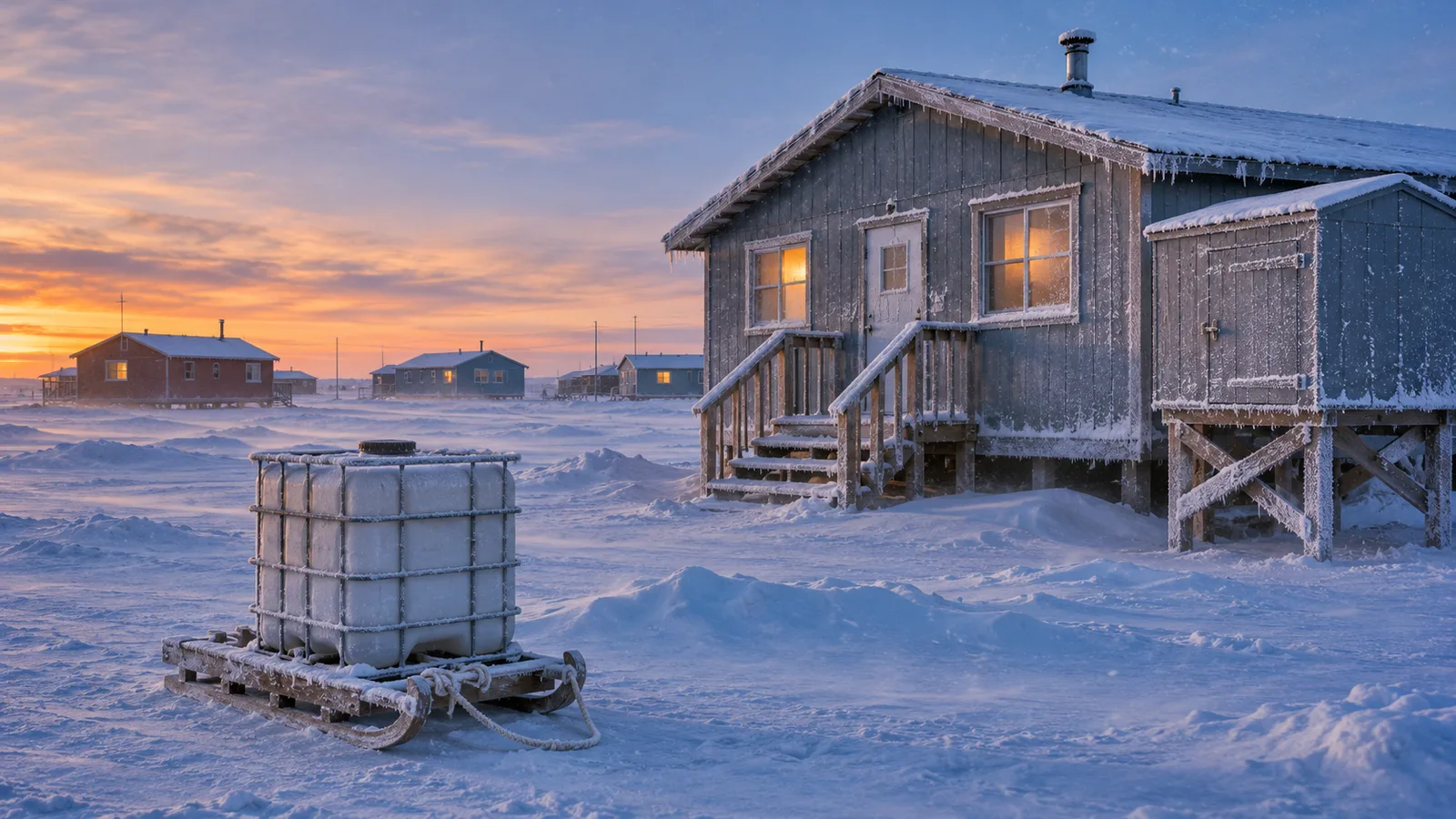
When freezing rain coats overhead transmission lines in 1.5 cm (0.6 inches) of glaze ice followed by a -25°C (-13°F) polar vortex, utility crews across the Midwest and Great Plains often need 48 to 96 hours to restore power. Without heat, a standard 2,200 sq ft home drops from 20°C (68°F) to freezing (0°C / 32°F) in just 12 to 18 hours.
Your survival strategy depends on your primary heating system:
- If you have a Natural Gas or Propane Furnace: Your furnace still has fuel—it just needs 400W to 650W of electricity to spin the air blower and ignitor. Install a 55 USD EZ Generator Switch on your furnace so you can plug it into a 2,000Wh LFP power station (running 15 minutes per hour to stretch battery life across 24+ hours).
- If you have All-Electric Heat (Heat Pump / Electric Baseboard): Do not try to heat the whole house. Shut off water at the main and drain your pipes before indoor air hits 2°C (36°F), seal off one small interior room, pitch a camping tent inside it to trap body heat, and use an indoor-rated Mr. Heater Buddy with a digital carbon monoxide detector.
Three-stage engineering verification workflow for Midwest & Central US Polar Vortex Guide: Surviving a -: baseline sizing with a 20% reserve margin, grid-down isolation, and annual unplugged field testing.
Polar Vortex Blackout Thermal Decay & Survival Timeline
| Hours Into Blackout (-25°C / -13°F Outdoor) | Typical Indoor Air Temp (Unheated) | Structural & Life-Safety Risk | Mandatory Household Action |
|---|---|---|---|
| Hour 0 – 4 | 20°C → 13°C (68°F → 55°F) | Rapid convective heat loss through windows | Close blinds/curtains; stuff towels at door thresholds; keep fridge shut |
| Hour 4 – 10 | 13°C → 4°C (55°F → 39°F) | Exterior-wall & attic pipes approach freezing | Consolidate family into one small south-facing or interior room |
| Hour 10 – 16 | 4°C → 0°C (39°F → 32°F) | Critical Pipe-Burst Threshold | Shut main water valve & drain all pipes + water heater if no heat exists |
| Hour 16 – 72 | Below 0°C (Sub-freezing indoors) | Hypothermia risk without micro-climate shelter | Sleep inside indoor tent with closed-cell foam pads & zero-degree bags |
How to Run Your Gas Furnace on a Portable Power Station
Modern high-efficiency gas furnaces draw 350W to 650W while the blower fan runs (and ~850W surge for 1 second at startup), which is well within the 1,800W–2,400W continuous output of a 1kWh or 2kWh LiFePO4 power station.
- Why You Cannot Just Use an Extension Cord: Gas furnaces are hardwired into a dedicated 15-amp circuit breaker—there is no wall plug. Cutting the furnace wire and slapping on a male suicide cord is lethal and violates electrical code.
- The 55 USD UL-Listed Fix: Have an electrician (or confident DIYer following NEC rules) mount an EZ Generator Switch right next to the furnace service switch. During a blackout, you flip the toggle from
LINEtoGENand plug a standard 12AWG extension cord from your portable power station directly into the switch’s recessed inlet. - Neutral-Ground Bonding Plug: Many modern gas furnaces use flame-rectification sensors that refuse to ignite if the power station has a “floating neutral.” Keep a 12 USD Neutral-Ground Bonding Plug plugged into one of the power station’s unused AC outlets so the furnace control board lights cleanly every time.
Polar Vortex Readiness Checklist
- Test your furnace on your power station BEFORE winter: Unplug your home router, flip the furnace breaker off, connect your power station to the EZ Generator Switch, and confirm the burners ignite without a flame-sensor error code.
- Keep 4x 1 lb propane cylinders + a 20 lb BBQ tank adapter hose: Store the 20 lb tank strictly outdoors on a covered porch and run the hose through a foam-sealed window crack if using a Big Buddy heater.
- Never run a gasoline generator in an attached garage: Even with the garage door wide open, wind eddies push odorless carbon monoxide through the house door seal within 15 minutes. Keep generators at least 6 meters (20 feet) downwind from all windows.
Operational Boundaries & When to Skip: Midwest & Central US Polar Vortex Guide
Do not attempt to run an all-electric central heat pump or electric resistance furnace on a portable power station—they draw 3,500W to 15,000W at 240V and will drain a 2,000Wh battery in 12 minutes. If you have all-electric heating without a whole-home standby generator, focus 100% on draining your pipes and heating a single sealed room.
Worked Sizing Math, Dual-Unit Tolerances & Field Diagnostics: Midwest & Central US Polar Vortex Guide
Designing a dependable residential setup for central us midwest polar vortex 72 hour grid failure requires verifying physical tolerances under worst-case grid-down conditions rather than relying on optimistic nameplate ratings. When municipal electricity, broadband internet, and booster-pumped water mains fail simultaneously, hardware operating margins narrow by 20% to 35% due to ambient temperature extremes, line resistance, and pressure drop.
- Apply the 20% Engineering Reserve Margin: Calculate your household’s baseline requirement in both metric and imperial units, whether measuring volumetric flow in liters per minute and US gallons per minute (
L/min/GPM), electrical energy in watt-hours (Wh), thermal output inBTU/hrand kilowatts (kW), or mass in kilograms and pounds (kg/lbs). Multiply that baseline figure by 1.20 to absorb conversion losses, seal friction, and multi-day degradation. - Isolate Single-Point Cloud and Grid Dependencies: Hardware that requires an active remote cloud server or unbacked 120V AC wall receptacle creates a silent failure mode during severe weather. Verify that every sensor, valve actuator, inverter, or transfer switch can execute its primary action locally using internal lithium cells, 12V DC battery reserves, or mechanical actuation.
- Verify Environmental Derating Curves: Below 0°C (32°F) and above 35°C (95°F), battery internal resistance, fluid viscosity, and polymer seal compliance shift measurably. Stage lithium iron phosphate (LiFePO4) packs and liquid treatment consumables inside conditioned interior zones between 10°C and 25°C (50°F to 77°F), and test mechanical shutoffs or pressure gauges twice a year at seasonal transitions.
| Verification Stage | Target Engineering Tolerance | Primary Field Diagnostic Tool | Recommended Inspection Interval |
|---|---|---|---|
| Baseline Capacity & Flow | Minimum +20% reserve above calculated household demand | Calibrated inline meter, pressure gauge, or watt-hour monitor | Every 6 months (Spring / Autumn) |
| Grid-Down / Offline Trigger | 100% local actuation with router and AC breaker switched off | Live unplugged blackout simulation test | Annually before peak storm season |
| Thermal & Mechanical Seals | Zero seepage or voltage drop across 5°C to 35°C (41°F to 95°F) | Visual seal inspection, torque check, and terminal cleaning | Every 12 months |
Related Guides, Equipment & Planning Tools: Midwest & Central US Polar Vortex Guide
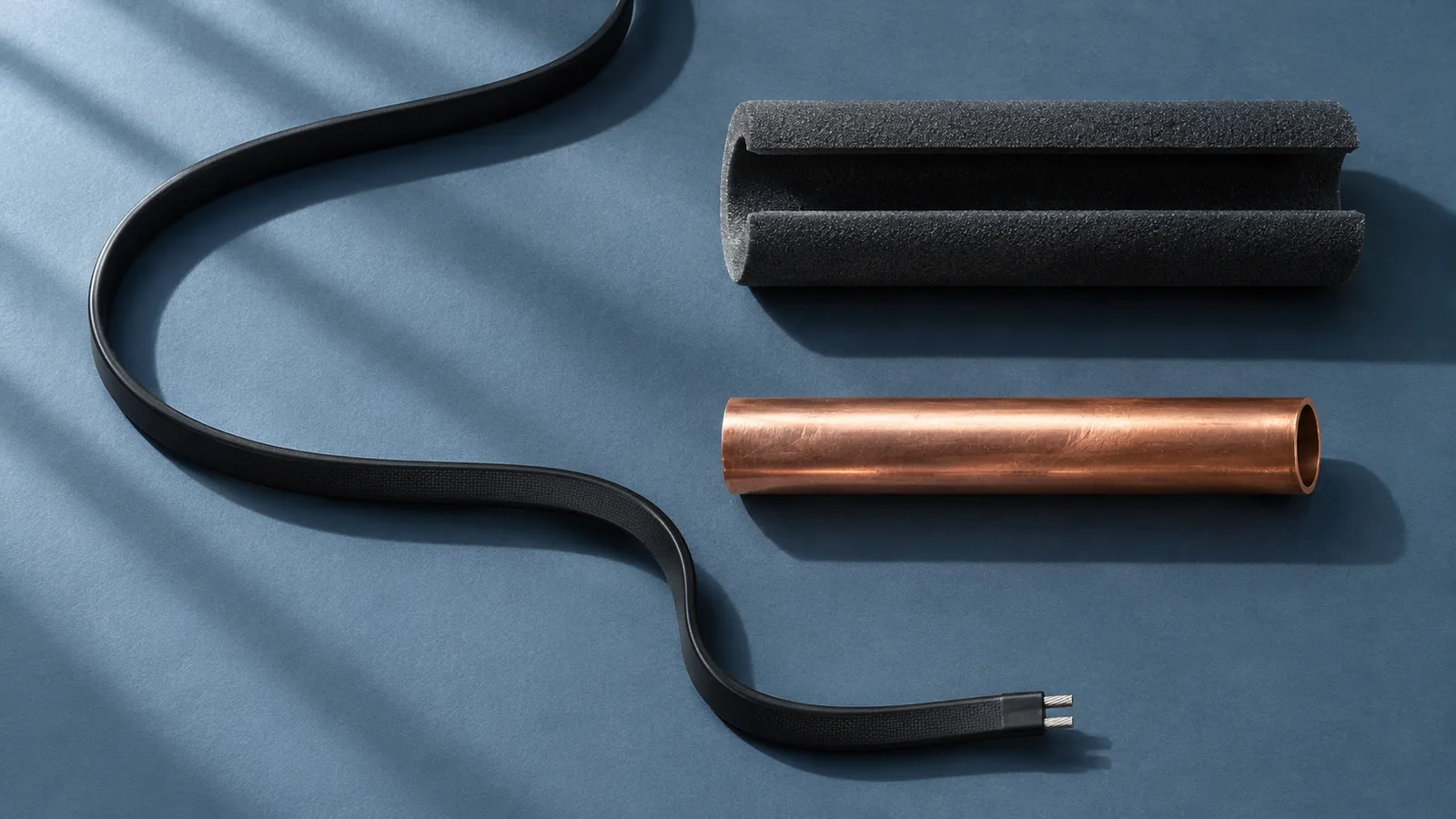
Use our browser-local Calculate Backup Heater Fuel, Battery Wh & Fresh-Air Ventilation to model your exact household numbers before purchasing hardware. Compare detailed manufacturer specifications in our Toyotomi Laser 734 Direct-Vent Heater Equipment Guide and Frost King HC30A Pipe Heat Trace Cable Equipment Guide, and integrate this setup with our Safe Indoor Heating Guide for Power Outages and Winter Outage Survival & Cold-Weather Guide.
Mr. Heater Big Buddy (MH18B)
- Stated heating area
- 450 sq ft
Why it fits Documented specification match for central us midwest polar vortex 72 hour grid failure planning, verify exact model compatibility, dimensions, and household capacity before ordering.
Key trade-off Using a 20 lb propane tank indoors is prohibited by fire codes; bulk tanks must remain outside with hose routed through an aperture.
Specifications & research
Model alternative. Source records checked on 2026-11-04. Manufacturer research, not hands-on testing.
- Heat output
- 4,000 / 9,000 / 18,000 BTU/hr · Source checked 2026-11-04
- Stated heating area
- 450 sq ft · Source checked 2026-11-04
- Fuel type
- Propane · Source checked 2026-11-04
Manufacturer documentation. Confirm exact Mr. Heater model specifications and household safety limits before buying.