5 Emergency Food Storage Mistakes and How to Fix Them
Audit a beginner emergency pantry for unusable food, missing water, unsafe cooking, poor rotation, and fragile storage, then fix each problem in one afternoon.
In this guideJump to a section
- Mistake 1: buying shelf life instead of meals
- Mistake 2: counting food without water
- Mistake 3: assuming any flame can become an indoor stove
- Mistake 4: setting food aside without a rotation system
- Mistake 5: storing everything in one fragile location
- The tools people forget
- A 30-minute pantry test
- Primary safety sources
A pantry can look full and still fail during an outage. The most damaging problems are usually operational: the food does not form meals, water was never counted, the cooking plan is unsafe, dates are invisible, or one leak can ruin the entire supply.
Use this as a five-part audit. If you are starting from zero, read emergency food storage basics first and use the food storage calculator for a planning baseline.
Mistake 1: buying shelf life instead of meals
A collection of long-dated ingredients is not automatically a food plan. A large supply of dry grain may require water, fuel, a pot, and complementary foods. A case of canned vegetables may add variety but not enough energy or protein. Specialty meals may be rejected by the people expected to eat them.
Audit: Put every stored item into a specific breakfast, lunch, dinner, or snack. Record the portion, opening tool, preparation water, fuel, and whether it creates leftovers.
Fix: Build three no-cook days from familiar food first. Then use the two-week emergency menu to assemble complete combinations. Buy one unfamiliar product and test it before buying a case.
Keep original ingredient and allergen labels. If someone has a medical diet or food allergy, separate and identify their supply clearly and ask an appropriate clinician about emergency substitutions.
Mistake 2: counting food without water
Water is needed for drinking, cooking, brushing teeth, and other essential uses. Dry food and rehydrated meals can consume part of the same supply. Salty food can also be a poor fit when drinking water is limited.
The CDC baseline is at least one gallon per person per day for three days, with a two-week supply encouraged when possible. More may be needed for hot climates, illness, pregnancy, pets, and other circumstances.
Audit: Estimate the household water baseline, then total the water printed in every planned recipe and meal instruction. Check that water containers can be safely moved and dispensed.
Fix: Add safe water before adding deeper food storage. Replace some water-intensive foods with ready-to-eat or quick-cooking options. Use the container selection guide and water storage safety guide for the physical system.
Mistake 3: assuming any flame can become an indoor stove
Camp stoves, charcoal grills, and generators create carbon monoxide. An open garage door, a cracked window, or a household fan does not make an indoor setup safe.
The CDC says never to use a portable gas camp stove indoors and never to use a generator inside a home or garage, even with doors and windows open. Generators belong outdoors, more than 20 feet from windows, doors, and vents. The CPSC says charcoal should be used outside only.
Audit: Mark every meal as no-cook, needs hot water, or needs cooking. Identify the exact safe location and weather limits for outdoor equipment.
Fix: Increase the no-cook meal layer. Read the off-grid cooking gear and safety guide, install and maintain carbon monoxide alarms as directed, and never use a fuel-burning device contrary to its instructions.
Mistake 4: setting food aside without a rotation system
Hidden food is easy to forget. Labels fade, packages change, pests go unnoticed, and people discover too late that they dislike the stored meals.
Audit: Pull every item forward. Read the package date and storage directions, inspect for damage, and identify missing labels. Never taste suspect food to decide whether it is safe.
Fix: Put use-first items at the front and record four fields: item, quantity, package date, and planned meal. Review the pantry every few months and before seasonal hazards. Use older food in ordinary meals, then replace it during a routine grocery trip.
For food repackaged into a smaller container, copy the product name, ingredients and allergens, preparation directions, lot information when available, and date. Do not let an unlabeled jar become a mystery ingredient.
Mistake 5: storing everything in one fragile location
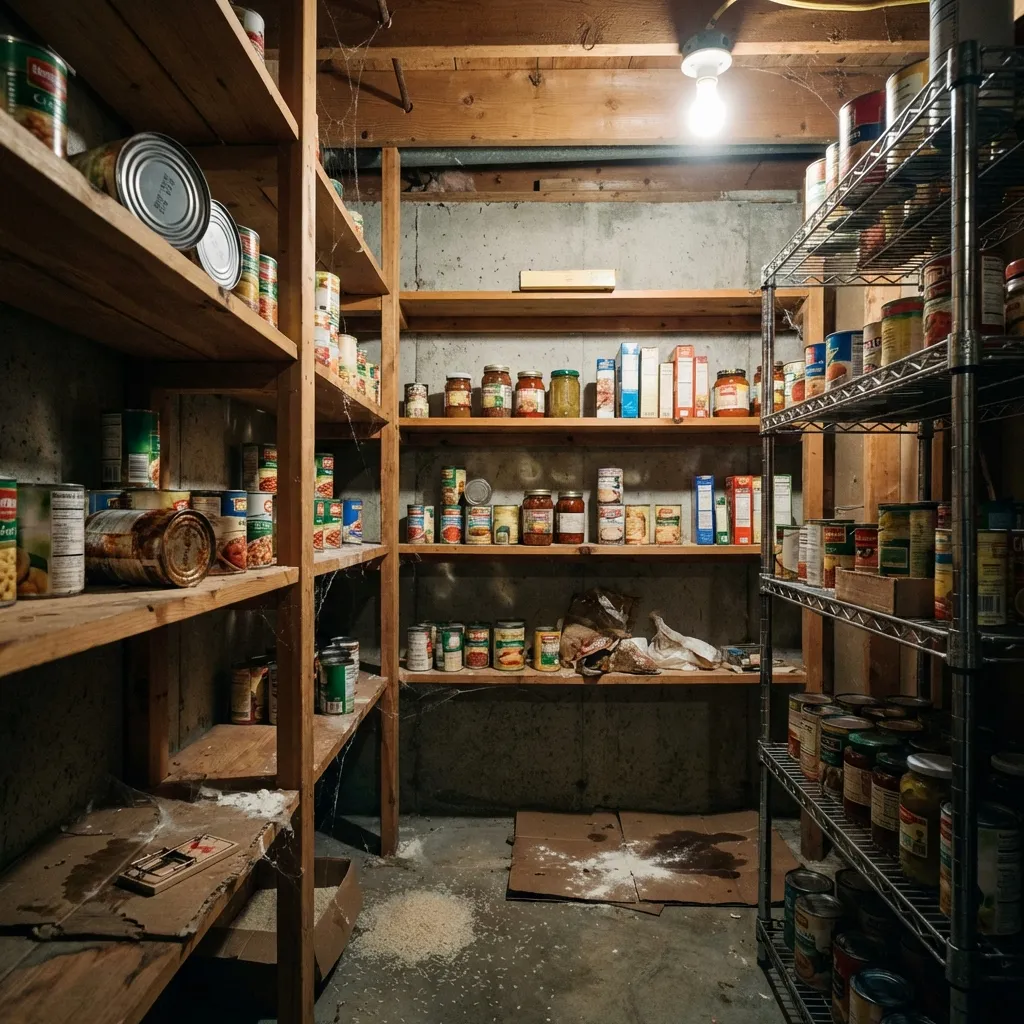
Heat, dampness, pests, floodwater, household chemicals, or a blocked doorway can compromise a supply. The solution is not to scatter untracked food everywhere. It is to choose stable, accessible storage and document any secondary cache.
Audit: Check the room for temperature extremes, sunlight, leaks, flood exposure, insects, rodents, and proximity to gasoline, pesticides, paint, or cleaners. Confirm shelves can carry the load and containers can be reached without climbing during an emergency.
Fix: Move food to a cool, dry, dark indoor space where it can be inspected. Keep it away from toxic chemicals. If local hazards justify splitting the supply, keep complete three-day food and water modules in each safe location and list them on one inventory.
The tools people forget
The low-cost gaps often matter most:
- manual can opener, plus a backup
- utensils, cups, and a pot appropriate to the menu
- appliance thermometers for the refrigerator and freezer
- flashlight or headlamp for reading labels
- printed menu and current food-safety charts
- soap, hand hygiene supplies, and trash bags
- pet feeding tools and medicines
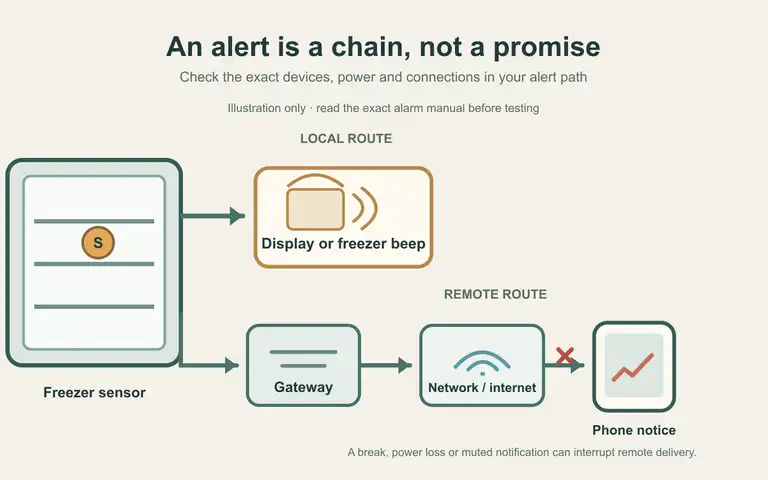
An appliance thermometer is especially useful. FoodSafety.gov says an unopened refrigerator keeps food safe for up to four hours. A full closed freezer holds a safe temperature for about 48 hours, or about 24 hours if half full. Never taste food to determine safety after an outage.
If a thawed package may return to the freezer, first identify how it thawed. The refreezing decision table separates planned refrigerator, cold-water, and microwave thawing from an outage with a different or unknown temperature history.
A 30-minute pantry test
Choose one planned no-cook meal and prepare it using only stored tools. Then answer:
- Could everyone eat it safely?
- Was the portion adequate?
- Did opening or serving require a missing tool?
- Did it create leftovers that need refrigeration?
- Was drinking and preparation water already available?
Fix the first failure before buying more food. Repeat with a low-fuel meal outdoors under the equipment manufacturer’s safe operating conditions.