In this guideJump to a section
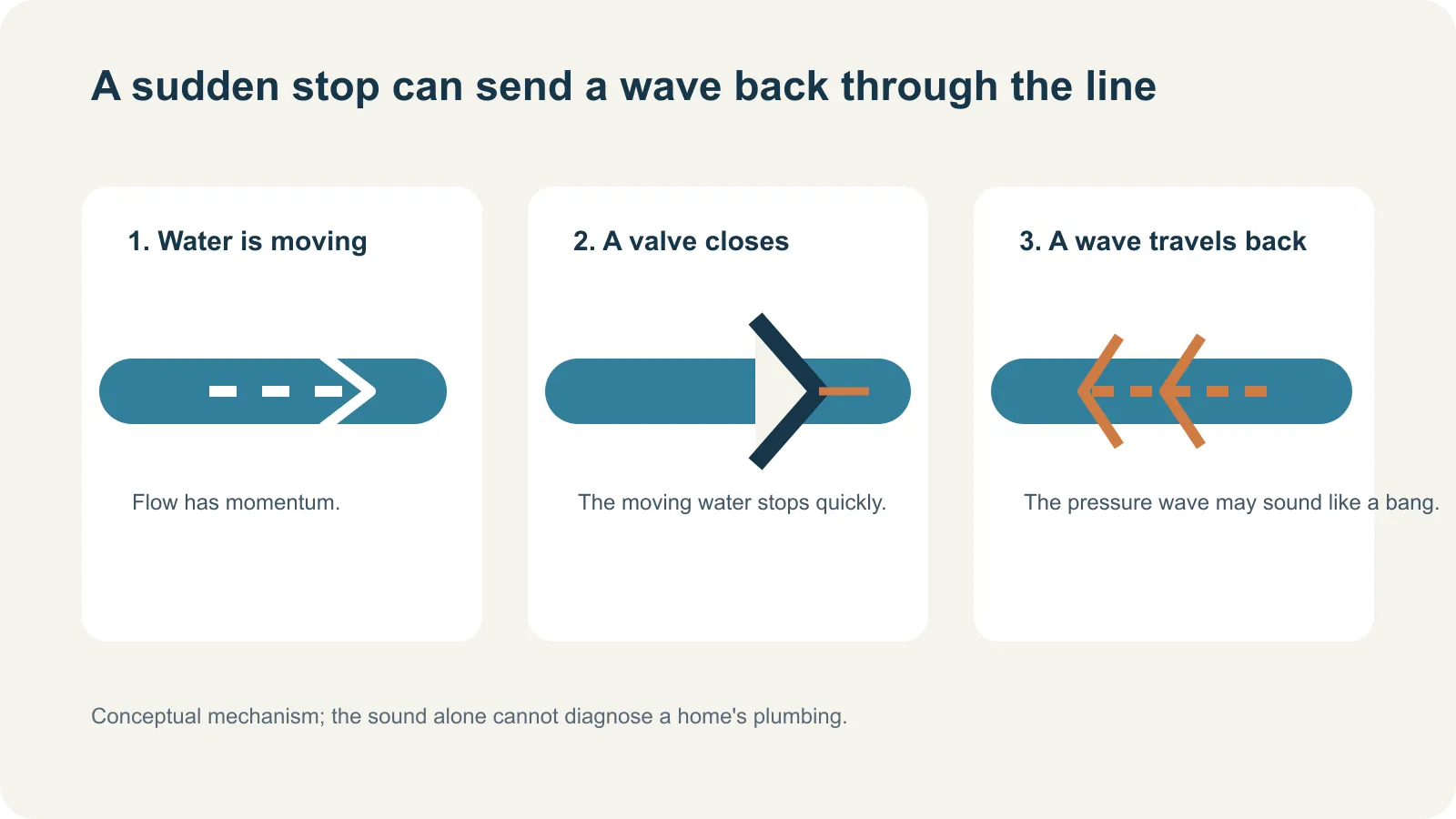
A single thump from behind a wall is hard to place. If it happens just as a washer, dishwasher, faucet, or toilet stops drawing water, note that timing before trying to name the cause. Oatey describes water hammer as a pressure wave created when moving water stops abruptly; quick-closing appliance valves are among the possible triggers.
That mechanism explains one pattern, not every pipe noise. A sound may travel through framing, and a bang does not tell you which fitting or part needs work. This page adds a trigger-and-sound record; the water shutoff plan covers valve access and permission if a leak needs a response.
Match the sound to the event you observed
Keep water use ordinary; do not repeatedly open and close fixtures to reproduce a bang. Record one event when it occurs naturally.
| What you notice | What the timing may help a professional assess | What to record |
|---|---|---|
| One sharp bang just as a faucet or appliance stops filling | Whether a quick-closing valve and abrupt flow stop are involved | Fixture, cycle stage, and whether it happened at stop or start |
| Several knocks or a shudder around an appliance cycle | Whether repeated valve actions or vibration may be involved | Number of knocks, approximate duration, and appliance cycle stage |
| Noise while water is still flowing, or with no clear fixture trigger | The sound may have another cause; do not label it water hammer | When it occurs, nearby equipment, and whether other taps are being used |
| Any new dampness, drip, or visible pipe movement | A separate leak or movement concern needs assessment | Location from a safe, dry place and whether it is changing |
The pressure-wave explanation is supported by Oatey’s overview and Watts’ description of fast-closing valves. Both are manufacturer sources; they describe mechanisms and products, not a diagnosis of your plumbing.
Pipe-noise event log
Copy one line for each naturally occurring event. If you rent or share a plumbing system, send the record to the property manager rather than inspecting shared equipment.
| Field | Record |
|---|---|
| Date/time | |
| Fixture or appliance | |
| Event just before noise | |
| Sound, duration and hot/cold if known | |
| Visible leak or movement from a safe place | |
| Contact and next step |
For example: “Evening; washer stopped filling; one short thump; water temperature unknown; no water seen; logged for the manager.” This describes an event without naming a failed part.
Describe where you heard it, not where you think the pipe is. A sound can travel, so avoid opening a wall or moving an appliance to find it. If the noise is frequent, grows louder, or comes with a leak, arrange a plumbing assessment. If water is near electrical equipment, keep away and follow the shutoff plan’s safety guidance.
When you call, give the event time, trigger, frequency, sound, any visible water, and whether this is a private home or shared building. Ask what the professional needs to inspect and whether the water utility or property manager owns the next step. Do not buy or size a water-hammer arrestor based on sound alone; Watts describes arrestors as products used for designed shock control, but selection and installation depend on the actual piping and application.