In this guideJump to a section
A strong shower or noisy pipe can make pressure feel high, but the sensation is not a measurement. If you have permission and a suitable gauge can be attached to an accessible outdoor hose bibb, a recorded reading gives a utility or plumber something specific to interpret.
This page adds an optional measurement step to the low-water-pressure guide, which compares fixture symptoms without a gauge. It does not tell you to adjust a pressure regulator.
Measure only at an accessible, authorized connection
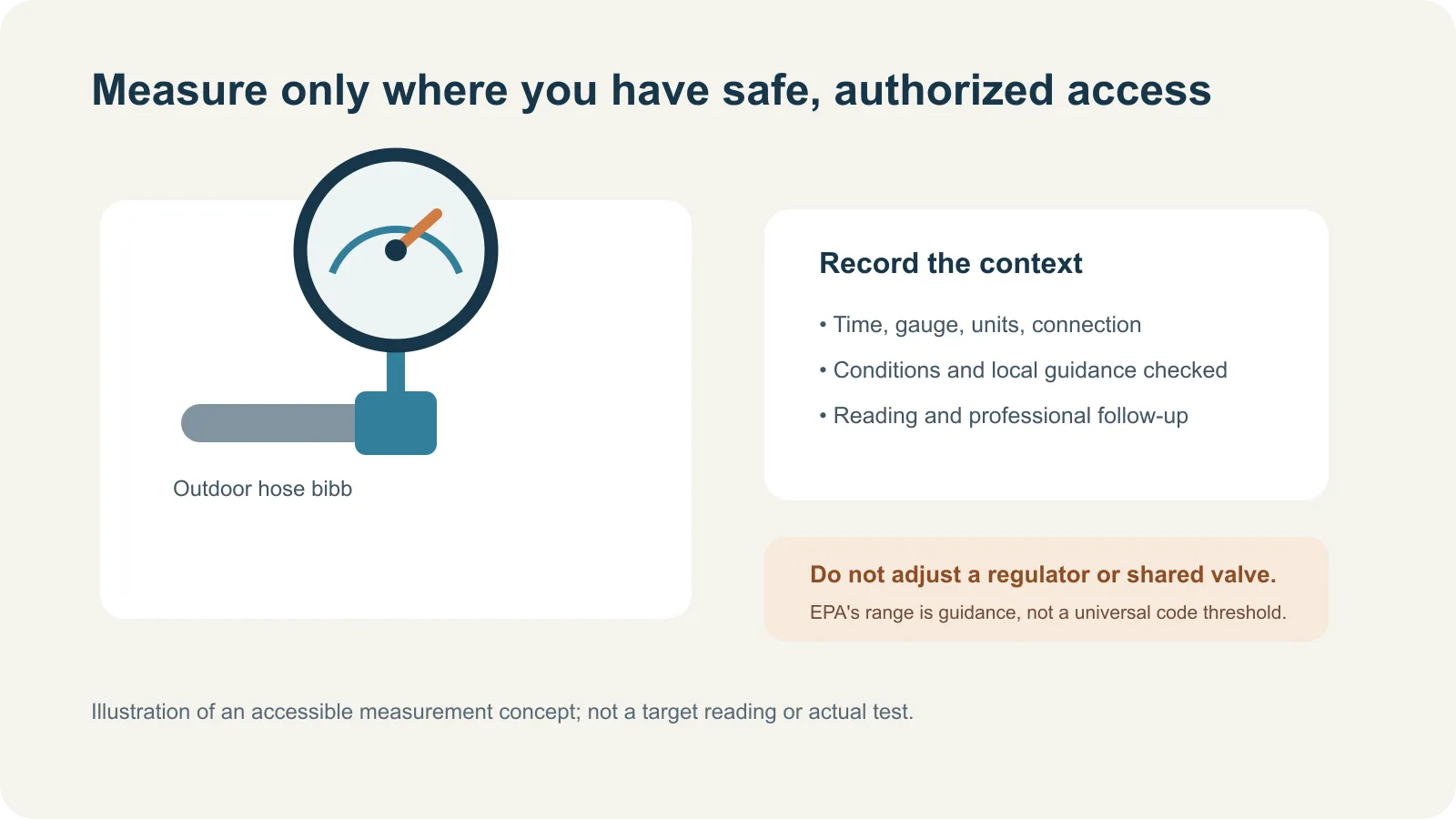
EPA WaterSense describes this method for measuring service pressure: turn off water-using fixtures and systems, attach the gauge to a hose bibb, and open the bibb fully. The EPA page says fixtures generally operate best with incoming pressure around 45–60 psi; that is EPA guidance, not a universal code limit or a target to set yourself. Local utility requirements, property type, and connected equipment matter. Read the EPA instructions and context before using a gauge.
Do not disconnect a washer, remove a fixture, enter a meter room, or use a connection that belongs to a landlord, shared building, or utility. If no safe hose bibb is available, ask the property manager or a licensed plumber to measure it. The City of Independence, Missouri provides one local example of customers using an outside hose connection and asking the water utility about service pressure; its regulator ownership and local process do not apply everywhere.
Pressure-reading record
Write down the conditions with the number. A gauge reading without its location, time, and units is difficult to compare later.
| Field | Record |
|---|---|
| Date/time | |
| Gauge type and displayed units | |
| Authorized connection | |
| Fixtures and systems off as instructed | |
| Reading | |
| Applicable utility guidance | |
| Contact and next step |
Hypothetical record: 2 pm; psi dial gauge; authorized exterior hose bibb; fixtures off; 68 psi. If no applicable local guidance is clear, ask the utility or plumber to interpret it. This is not a pass/fail result.
EPA’s range is a general consumer reference; this guide does not convert one number into a diagnosis. If a reading seems unexpected, repeat only if the first measurement method was correct and the connection remains safe, then contact your utility or plumber. Ask whether the home has a pressure-reducing valve, who maintains it, and what local guidance applies. Do not turn an adjustment screw or replace the regulator.
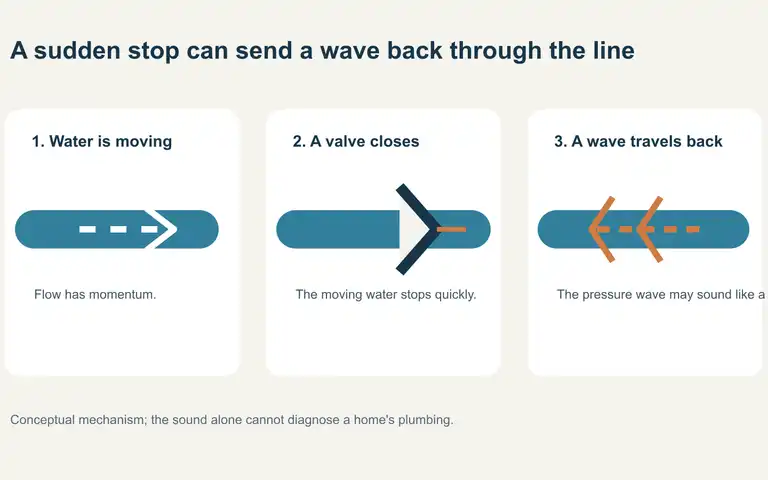
If a forceful stream is accompanied by banging, log that event separately using the pipe-noise record. Pressure can be one factor professionals consider, but noise alone cannot prove a pressure problem. For bill changes or unusual consumption, use the household water-use audit.