How to Audit Household Water Use and Find Practical Savings
Use your water bill, meter, and a simple fixture walk-through to find leaks and choose household water-saving steps you can verify.
In this guideJump to a section
A water bill is higher than usual, but the cause is not obvious. Begin with records you can compare: billing period, usage units, and meter readings. EPA WaterSense recommends comparing bills with the same month in the prior year and checking the meter when no water is being used.
This is a household measurement and prioritization exercise, not a drought-law guide. If your utility requests conservation or sets restrictions, follow its current notice first; the drought-aware checklist explains why utility guidance can matter even when local conditions are not obvious.
Water-use audit sheet
Copy the last two or three bills into a small record. Keep the units shown—often gallons or cubic feet—and note the service dates, because a longer billing period can make a total look larger even when daily use is similar.
| Bill period | Days billed | Usage and unit | Compared with same season? | Outdoor use or guests | Question to check |
|---|---|---|---|---|---|
| Example only | 30 | 4,200 gallons | No | Irrigation started | Compare a similar month before drawing a conclusion |
The example is fictional and not a target. Household size, weather, landscaping, meter units, and billing periods differ. Look for a change in your own pattern rather than comparing your home with a generic benchmark.
Compare daily use before comparing totals
Using the fictional 4,200-gallon, 30-day bill above gives 4,200 ÷ 30 = 140 gallons per day for the whole household. A later 4,650-gallon bill over 31 days is 150 gallons per day. The totals rose by about 11%, but daily use rose by about 7%. This arithmetic does not identify a leak or adjust for weather and guests; it simply avoids mistaking a longer billing cycle for the whole change.
If the bill uses cubic feet or CCF, retain that unit for both periods or use the conversion printed by the utility. Do not treat CCF as gallons or compare a household daily total with a per-person benchmark.
Check for leaks before changing routines
The EPA WaterSense leak checks below are observations for an accessible household meter and toilet, not instructions to enter a utility vault or disturb shared equipment. Renters and households without safe meter access can ask the utility or building manager for help.
- Look and listen. Check under sinks, around toilets, water heaters, washers, outdoor spigots, and irrigation controls for drips, dampness, or a running sound.
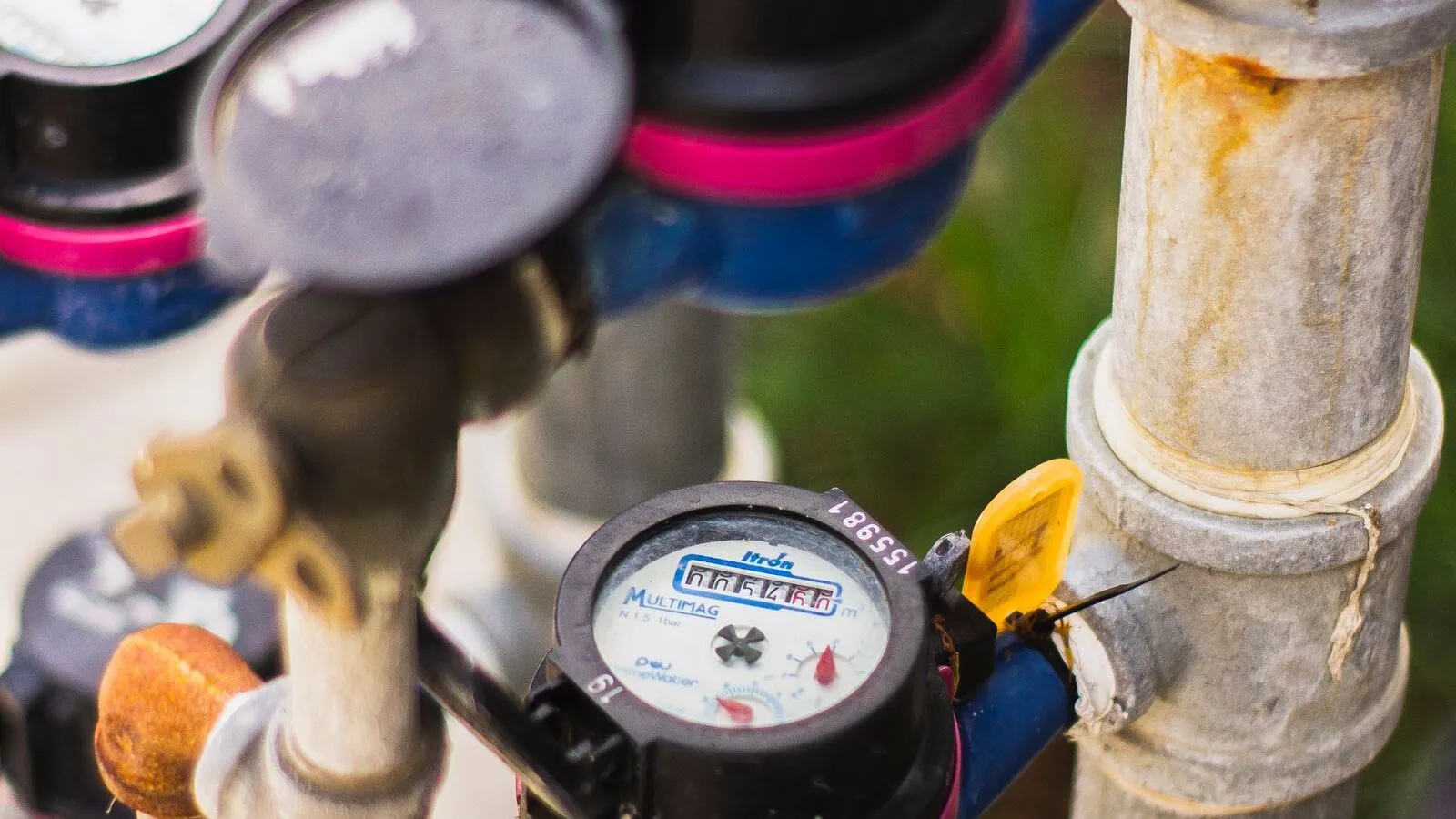
- Read the meter at rest. Find the water meter and record its reading. Avoid water use for two hours, then read it again. EPA says a changed reading during a no-use period can indicate a leak. Make sure automatic irrigation, ice makers, water softeners, and other scheduled equipment are not running during the check.
- Check toilets. EPA’s toilet test uses a few drops of food coloring in the tank; wait 10 minutes without flushing, and see whether color appears in the bowl. If it does, investigate the flapper or ask a plumber. Flush after the test to avoid staining.
- Confirm before repairing. A meter movement is a clue, not a diagnosis. If you cannot locate the source or the leak could involve buried or pressurized plumbing, contact the utility or a qualified plumber.
Choose one action, then measure again
Fix a confirmed leak first; then choose one routine change that fits your household, such as running full laundry loads when practical or turning off irrigation during rain. Record the action and date. Compare later bills using the same units and a similar number of billing days. Weather, guests, and seasonal outdoor use can mask a small change, so keep those notes beside the totals.
| Action | Why it fits this home | Start date | How to check | Result / next question |
|---|---|---|---|---|
| Example: repair toilet flapper | Tank-to-bowl color test showed a leak | Compare meter at rest and next bill | ||
If your bill includes a utility leak alert or hourly-use portal, use it as another clue, not proof of where water is going. Local restrictions can change, so check the utility before altering irrigation or other uses governed by a notice.