In this guide Jump to a section
- Start with the household: septic systems, private wells, and municipal alerts
- What dripping a faucet actually does: hydraulic pressure relief + thermal replacement
- Worked cost math: what does dripping a faucet actually cost?
- Which faucets to drip: hot vs. cold and furthest-fixture rule
- Faucet drip configuration checklist
- Frequently asked questions
Most homeowners have heard the winter rule to “let your faucets drip when temperatures drop below freezing,” and most assume it works because “moving water doesn’t freeze.”
Walk past any frozen mountain creek in January and you know moving water freezes readily. The real reason dripping a faucet saves thousands of dollars in plumbing damage is hydraulic pressure relief, combined with continuous thermal replacement from the underground water main. Understanding both physical mechanisms tells you which faucets to drip, whether to drip hot or cold water, what a 24-hour drip actually costs on your water bill, and when dripping can accidentally overflow your sink.
Start with the household: septic systems, private wells, and municipal alerts
Before opening faucets across your house, check three household boundaries:
- Private Septic Systems: If your home drains into a private septic tank and leach field, running four faucets at a fast trickle can dump
100 to 200+ gallonsof cold water per day into your septic system. In sub-zero weather, a very slow drip (1 drop every 5 seconds) trickling down an uninsulated exterior drain pipe can also freeze solid inside the1.5-inchPVC drain trap! - Private Well Pumps during a Power Outage: If your home is on a private electric well pump and the power goes out, dripping your faucets will empty your pressurized bladder tank (
typically 5 to 15 gallons of drawdown) in a few hours, leaving you with zero water pressure to flush toilets unless you have a 240V split-phase power station or generator. - Municipal Firefighting Pressure Advisories: During extreme regional freezes where hundreds of water mains break simultaneously, some municipal water utilities issue emergency requests asking residents to shut off and drain their own main valve rather than dripping millions of gallons down city drains so water towers retain enough pressure (
>= 20 PSI) for fire hydrants and hospitals.
Govee WiFi Water Leak Detector (3-Pack)
Why it fits A leak detector may alert you to water at its sensor; placement, power, and network connectivity affect notification.
Key trade-off App push notifications require functioning home Wi-Fi and internet connectivity; during power blackouts, only local 100 dB audible alarms trigger unless router is on battery backup.
Specifications & research
Early-warning water leak alarm and WiFi monitor. Source records checked on 2026-11-08. Manufacturer research, not hands-on testing.
- Alarm Volume Db
- 100 · Source checked 2026-11-08
- Connectivity
- 2.4 GHz Wi-Fi gateway connects to household router for push notifications and email alerts · Source checked 2026-11-08
- Sensor Probes
- Dual top and bottom brass sensing probes detect pooling water underneath and dripping water from above · Source checked 2026-11-08
Manufacturer documentation. Confirm exact Govee model specifications and household safety limits before buying.
What dripping a faucet actually does: hydraulic pressure relief + thermal replacement
Laboratory testing of frozen copper and plastic plumbing by building-science researchers (including the Insurance Institute for Business & Home Safety, IBHS) reveals two critical facts about how pipes burst:
- Mechanism 1: Downstream Hydraulic Pressure Relief (Primary Lifesaver)
Pipes almost never burst at the exact spot where the ice forms first. Instead, once an annular ring of ice freezes solid across the bore of the pipe (
blocking backflow toward the street main), any additional water that freezes expands in volume by~9%. Because liquid water trapped between that growing ice plug and your closed sink faucet is virtually incompressible, the downstream water pressure leaps from a normal60 PSIto2,000 to 4,000+ PSI, tearing open the copper wall or blowing apart a fitting. Leaving the faucet cracked open gives that displaced water an open escape path out of the spout so pressure never exceeds normal line pressure. - Mechanism 2: Underground Geothermal Heat Input (
45°F to 55°FSupply Water) Municipal water mains buried below the frost line (3 to 6 feetunderground) deliver water into your home at roughly45°F to 55°F, even when outdoor air is0°F. A slow trickle of1 gallon per hour(8.34 lbs/hrof50°Fwater cooling toward32°F) continuously injects8.34 lbs × 18°F = ~150 BTU/hrof sensible heat directly into the vulnerable pipe section, delaying the onset of freezing.
Worked cost math: what does dripping a faucet actually cost?
Many homeowners hesitate to let a faucet trickle overnight because they worry about a massive water bill. Let’s run the exact arithmetic for a 1-gallon-per-hour slow trickle (about 1 teaspoon per second or a thin pencil-lead stream):
- 24-Hour Water Volume:
1 gallon/hour × 24 hours = 24 gallons per dayper faucet - 24-Hour Cost at an Assumed
8.00 dollars per 1,000 Gallons(0.008 dollars per galloncombined water + sewer rate):(24 gallons / 1,000) × 8.00 dollars = 0.192 dollars(about19 cents per day)
Even if you dripped three exterior-wall faucets at 1 gallon per hour each (72 gallons/day) across a 4-day deep freeze (288 gallons total), your total water bill increase would be roughly 2.30 dollars, compared to an average homeowners insurance claim of 10,000 to 15,000 dollars+ for a single burst water pipe!
How to measure your exact drip rate in 60 seconds
Replace our 1 gallon/hour assumption with a 60-second kitchen test:
- Place a
1-cup(8 fl oz) measuring cup under your dripping faucet for 1 minute. - Since
1 gallon = 128 fluid ounces(16 cups), a flow rate of1.0 gallon per hourequals2.1 fluid ounces(~1/4 cupor4 tablespoons) per minute.
| Drip Rate Setting | Flow per Minute (fl oz) | Gallons per 24 Hours | Daily Cost (@ 8 dollars / 1,000 Gal) | Best Use Case |
|---|---|---|---|---|
Fast Drip (~120 drops/min) | ~0.4 fl oz / min | ~4.5 gal / day | 0.04 dollars per day | Mild freeze (20°F to 26°F) with house heat running |
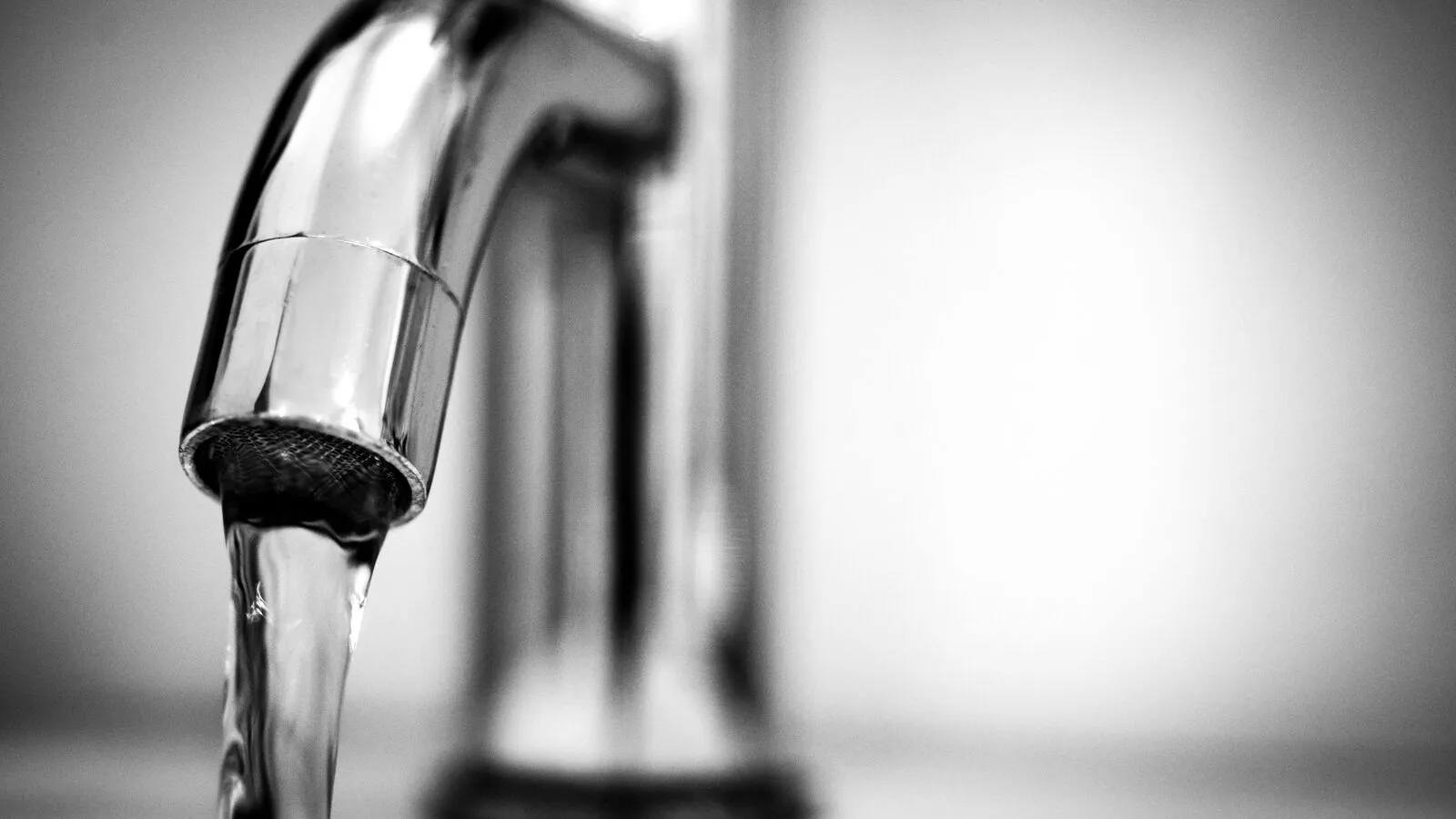
Steady Trickle (Pencil-Lead Stream) | ~2.1 fl oz / min (1/4 cup/min) | ~24.0 gal / day | 0.19 dollars per day | Hard freeze (5°F to 20°F) on uninsulated exterior walls |
Heavy Stream (2.5 Gal/Hr) | ~5.3 fl oz / min (2/3 cup/min) | ~60.0 gal / day | 0.48 dollars per day | Extreme sub-zero wind (< 5°F) over vented crawlspace |
Which faucets to drip: hot vs. cold and furthest-fixture rule
- You do NOT need to drip every faucet in the house: Water flows from your street meter through a trunk-and-branch (or manifold) pipe tree. Opening the faucet furthest from where the main water line enters your home, plus any faucet mounted directly on an uninsulated exterior wall, keeps water moving through the entire main trunk and the vulnerable branch.
- Drip BOTH the hot and cold handles (or set a single-handle mixer to warm): A very common mistake is dripping only the cold tap. Because the hot water pipe sits right next to the cold pipe inside the same freezing exterior wall (and because water sitting inside a hot-water pipe quickly cools to room temperature when not in use), leaving the hot side closed allows the hot pipe to freeze and burst! Open both handles slightly (or place a single-lever faucet in the center/warm position).
When Dripping Is Not Enough (And The Frozen Drain Trap Hazard)
- Uninsulated Drain Pipes Can Freeze Solid: If your sink drain pipe (
1.5-inchPVC) passes through an unheated, wind-blown crawlspace below10°F, a tiny slow drip can freeze layer-by-layer inside the cold drain line until the drain plugs up, causing your dripping faucet to overflow the sink onto your kitchen floor overnight! Check that the sink drains freely and make sure nothing (like a washcloth, sponge, or strainer plug) can slide over the sink drain hole. - When to Stop Dripping and Shut Off the Main Valve: If your home has lost heat during a winter blackout and indoor temperatures are falling toward
40°F(or if a dripping faucet suddenly slows down and stops flowing), stop dripping, close the main house water shutoff valve immediately, and open the faucets to depressurize the lines.
Faucet drip configuration checklist
Follow this 5-step checklist whenever the overnight forecast drops to 20°F (-6.7°C) or lower:
- Clear the sink basin completely: Remove dishes, sponges, and flat sink stoppers so a dripping faucet can never back up and overflow the counter.
- Open the cabinet doors underneath the sink: Let
68°Froom air circulate around the supply risers and drain P-trap inside the cabinet. - Set both hot and cold handles to a slow trickle (
~1/4 cup per minute/1 gal/hr): On a single-handle faucet, lift the lever slightly in the middle (warm) position so both supply pipes move water. - Catch the clean water in pitchers if a winter storm outage threatens: Before letting water go down the drain, fill clean water jugs and cooking pots so you have a drinking and toilet-flushing reserve if the city main breaks.
- Shut off the main house water valve if flow stops: If a faucet that was dripping stops producing water, an ice blockage has formed upstream—close your main water shutoff valve immediately and follow our safe frozen-pipe thawing steps.
For complete pipe-freeze risk scoring and pre-travel steps, read our how cold and how long before pipes freeze guide and our winterizing house plumbing before travel checklist.
Frequently asked questions
Does dripping a faucet prevent pipes from freezing?
Dripping a faucet reduces the risk of frozen and burst pipes in two ways, though it is not an absolute guarantee in extreme sub-zero cold. First, and most importantly, keeping the faucet valve slightly open relieves downstream hydraulic pressure between any forming ice blockage and the tap, preventing the 2,000+ PSI pressure spike that actually splits pipes. Second, a steady trickle continuously pulls 45°F to 55°F water from the underground street main through the cold wall cavity. Always combine dripping with open under-sink cabinet doors and pipe insulation.
How much water does dripping a faucet use, and what does it cost?
A slow, pencil-thin trickle of about 1 gallon per hour (roughly 1/4 cup per minute) uses 24 gallons over 24 hours. At a typical combined municipal water and sewer rate of 8.00 dollars per 1,000 gallons, running one faucet for 24 hours costs 24 / 1,000 × 8.00 dollars = about 0.19 dollars (19 cents per day). You can measure your exact flow rate by placing a measuring cup under the tap for one minute and multiplying by 60.
Should you drip hot or cold water to prevent frozen pipes?
You should drip both hot and cold water lines on exterior-wall fixtures. Even though the hot water line starts out warm inside the water heater tank, stagnant water sitting inside a hot supply pipe inside an exterior wall quickly cools to the same freezing temperature as the cold pipe. If you have a two-handle faucet, crack both the hot and cold taps slightly; if you have a single-handle mixer faucet, set the lever in the middle (warm) position.