Tenants and apartment dwellers face structural hurdles during wildfire season that single-family homeowners never encounter. Renters cannot install ASTM E2886 ember vents, clear surrounding vegetation, or replace leaky sliding glass doors. Smoke can enter through gaps around doors and other openings; airflow varies with the building and its ventilation.
Preparing for smoke and possible evacuation requires a renter-focused plan: choose a cleaner-air room, understand rental heating and cooling equipment, and know which local alerts and indoor conditions call for reducing exposure or leaving.
Scroll sideways to read the enlarged diagram.
How to set up an apartment clean room
In a rental unit, a smaller room with fewer windows may be easier to manage than trying to clean the air throughout the whole apartment. Choose a clean room where household members spend time, and use filtration there if available:
1. Select the right room
Choose an interior bedroom with the fewest exterior windows and exterior walls. Avoid rooms with wood fireplaces, exhaust flues, or exterior balcony doors. Choose a room with a door you can close; a solid door can help limit drafts.
2. Keep windows closed and address obvious gaps safely
Close the room’s windows and doors while smoke is outside, as long as doing so does not make it harder to exit in an emergency. Rental window and finish materials differ, so do not assume tape will remove cleanly or seal every sash. Ask the property manager before applying tape or other material to a window or door; use only a temporary option that is allowed and will not block an exit.
3. Keep interior doors closed
Keep the cleaner-air room door closed when practical. If smoke continues to enter through a noticeable gap, ask the property manager about a reversible option that is allowed for your unit. Do not block the apartment entrance, the room’s exit, or required ventilation openings.
4. Deploy high-capacity air filtration
Use a portable air cleaner sized using the AHAM two-thirds CADR formula or consider an EPA-described DIY box-fan cleaner. EPA advises using a box fan made since 2012 with a UL or ETL mark, and running cleaners on the highest setting as often as possible. A household PM2.5 sensor can help compare trends; it cannot certify safe air.
Filtrete 20x20x1 MERV 13 Air Filters (4-Pack)
- Pack quantity
- 4
Why it fits A MERV 13 pleated filter option for compatible systems. Confirm the exact size, fit, and HVAC compatibility in the system manual or with a qualified technician before use.
Key trade-off High-MERV 1-inch filters create higher static pressure drop than fiberglass filters; verify furnace blower compatibility or use in DIY Corsi-Rosenthal box fans.
Specifications & research
MERV 13 pleated air filter. Source records checked on 2026-11-08. Manufacturer research, not hands-on testing.
- Filtration rating
- MERV 13 equivalent (3M MPR 1900 Microparticle Performance Rating) · Source checked 2026-11-08
- Dimensions
- 20 × 20 × 1 in · Source checked 2026-11-08
- Pack quantity
- 4 · Source checked 2026-11-08
Manufacturer documentation. Confirm exact Filtrete (3M) model specifications and household safety limits before buying.
Renter cooling equipment: window AC and PTAC rules
Air conditioners differ in whether and how they bring in outdoor air. Check the unit manual or ask the property manager before changing a setting. Do not remove covers, force dampers, alter shared HVAC equipment, or block required openings.
| Equipment Type | Common Rental Setup | Air Intake Vulnerability | Required Tenant Action |
|---|---|---|---|
| Window AC Unit | Mounted in a window; some units have a user-accessible outdoor-air damper | A damper setting or a poor seal around the installation may allow outdoor air in | If the unit has an outdoor-air damper, close it according to the manual and seal the unit-to-window gap as tightly as possible. If the damper cannot be closed, EPA advises not using the unit during smoky conditions; consider another way to stay cool. |
| Through-the-Wall PTAC | Packaged terminal unit installed through an exterior wall; controls vary | Outdoor-air features and service access differ by model | Do not remove the cover or adjust an internal damper unless the unit manual explicitly identifies a user control. Ask the property manager how to reduce smoke intake and use the unit safely. |
| Portable AC (Single Hose) | One exhaust hose vents through a window kit | Can create negative pressure and draw outdoor air through gaps | EPA advises using a single-hose unit sparingly in smoky conditions. Keep the window-kit seal in good condition; do not convert or modify the unit. If heat makes the space unsafe, seek a cooler cleaner-air location. See renter cooling without AC. |
| Portable AC (Two Hoses) | Separate intake and exhaust hoses vent through a window kit | Smoke can enter through a poor seal | Follow the manual and seal the window vent kit as directed; this does not guarantee smoke-free indoor air. |
| Central Building HVAC | Shared system serving multiple apartments | Outdoor-air settings and filtration are managed at building level | Ask management how the building responds to smoke. Do not adjust shared dampers or assume MERV 13 is compatible; building staff or an HVAC professional should balance smoke reduction with ventilation and system requirements. |
Renter wildfire triage framework
During a smoke event, combine local emergency instructions, changing indoor conditions, and air-quality information. A household PM2.5 sensor can help you compare rooms and see whether filtration appears to reduce readings, but it does not establish an official indoor AQI or a safe/unsafe cutoff. Sensor readings can be affected by placement, humidity, temperature, and device uncertainty; short-term readings should not be compared directly with 24-hour AQI categories. Follow official evacuation instructions regardless of a sensor reading.
| Environmental Indicator | What to check | Response |
|---|---|---|
| Official evacuation notice or immediate fire danger | The alert and instructions issued for your location; smoke and fire conditions can change quickly. | Follow the local authority’s instructions. Leave when ordered; prepare to leave if warned, while following any local warning instructions. |
| Indoor PM2.5 trend rising or staying elevated despite filtration | Sensor placement, trend over time, and how the reading compares across rooms. Symptoms matter even if the sensor reads low. | Reduce exposure: keep filtration running if available, check AirNow/local health guidance, and consider a cleaner-air location, especially for people at higher risk or experiencing symptoms. |
| Power loss or room becoming too hot to stay safely | Whether occupants can remain cool and whether clean-air filtration/cooling is available. | Seek relief at a clean-air shelter, another air-conditioned building with good filtration, or with friends/family when safe. |
| Indoor sensor reading appears low | Treat it as a relative reading, not proof that air is safe or equivalent to an official AQI. | Continue exposure-reduction steps and follow local alerts. Do not use one reading to decide that shelter is safe. |
Renter grab-and-go evacuation kit
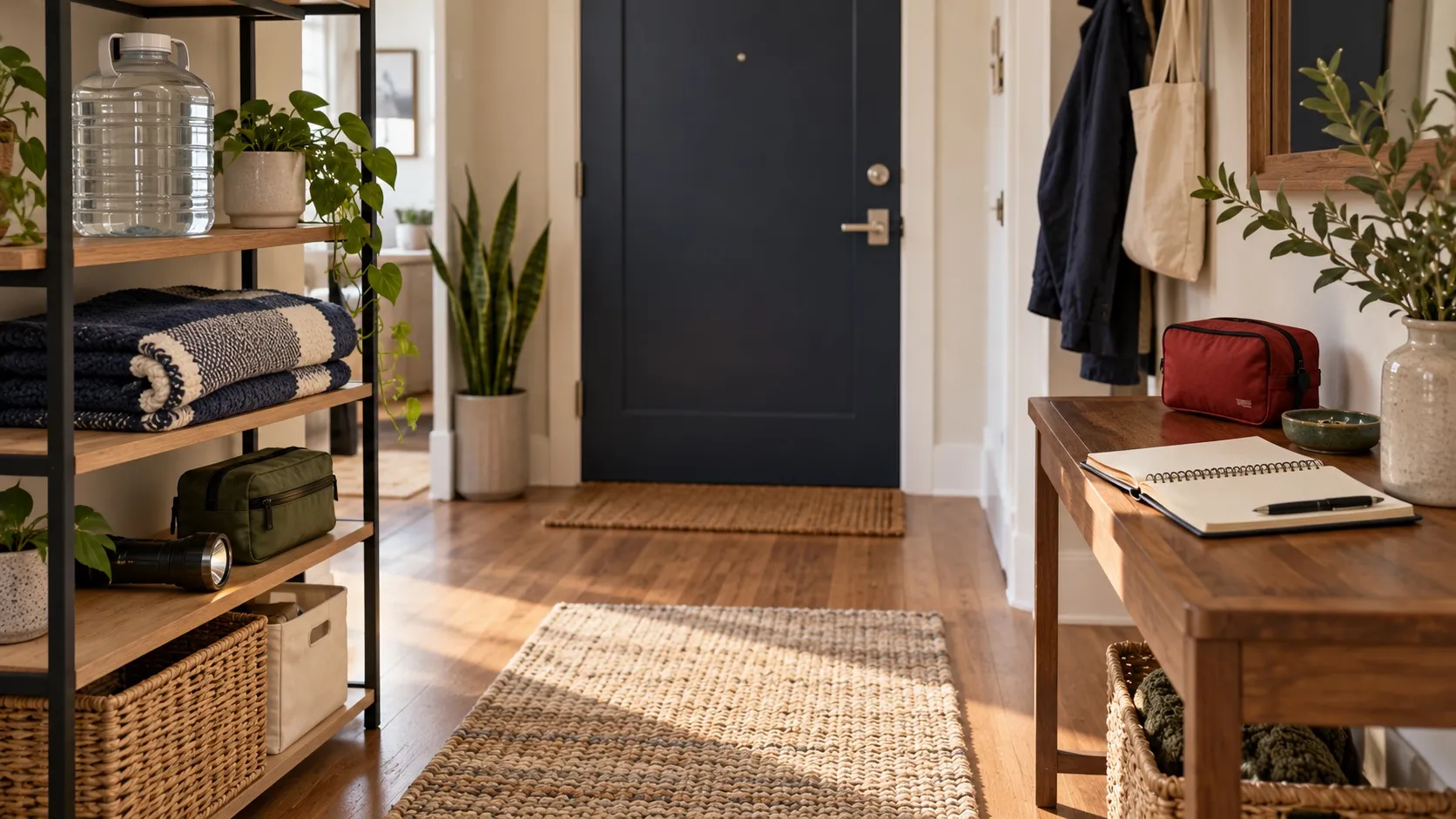
Keep a grab-and-go bag near the apartment exit. When practical, plan to take food and water for up to 72 hours, along with the supplies below; an evacuation can last longer, so follow local instructions and adapt the amount to your household, pets, mobility, and what you can safely carry.
- Vital Documents in Waterproof Pouch: Renter’s insurance policy declaration page, apartment lease copy, government IDs, passports, pet vaccination certificates, and cloud-backed home inventory records.
- Respiratory Protection: Keep NIOSH-approved N95 or P100 particulate respirators in sizes and styles that fit household members who may need to go outside. Follow the package instructions and check the seal each time; respirators filter particles, not gases.
- Prescriptions and Medical Supplies: Pack prescription medicines and medical supplies you use, plus glasses, contact lens supplies, and a medication list with dosages. Keep as much extra medication as practical and consistent with your prescription; ask your clinician or pharmacist about an emergency supply plan.
- Pet Evacuation Gear: Pack a suitable carrier, leash, food, water, medications, and records. CDC recommends maintaining a two-week reserve of pet food, water, and medications at home; carry what is practical for evacuation and replenish it as needed.
- Portable Power & Electronics: Bring a charged power bank that works with your devices, charging cables, a battery-powered NOAA weather radio, and a flashlight. Check and recharge battery-powered items regularly.
Frequently asked questions
How can renters protect themselves from wildfire smoke?
Renters can choose a room with few windows, reduce drafts where practical, and run a suitable portable air cleaner. Use an air-conditioner setting only as described in its manual; do not open a PTAC or change internal/shared controls. If a window AC’s outdoor-air damper cannot be closed, EPA advises not using it during smoky conditions.
When should renters evacuate due to wildfire smoke?
Follow the evacuation instructions issued for your location: an order generally means leave, while a warning calls for preparation and may advise some households to leave early. Do not wait for an indoor sensor threshold if authorities direct you to evacuate or the fire threatens your location. For smoke, use a sensor only to watch trends and compare rooms; it does not define a safe indoor concentration. If smoke is building indoors despite filtration, anyone develops symptoms, or the home becomes too hot to stay safely, reduce exposure by seeking a cleaner-air location when it is safe to do so.
Can I run a window AC during wildfire smoke?
Check the unit manual for an outdoor-air damper and close it as directed; seal the gap between the unit and window as tightly as possible. If the damper cannot be closed, EPA advises not using the window AC during smoky conditions. Window and wall-mounted air conditioners are generally designed for temperature control, not for removing fine particles, so use a separate suitable air cleaner if available. Do not remove a PTAC cover or adjust internal controls unless the manual identifies them as user controls.
What should renters pack in a wildfire evacuation bag?
Pack important household documents, respirators that fit, prescription medicines and medical information, pet carriers and supplies, a charged phone power bank and cables, and personal hygiene items. Keep as much medication reserve as practical and consistent with your prescription, and include the dosages and contact information needed to request refills.