In this guideJump to a section
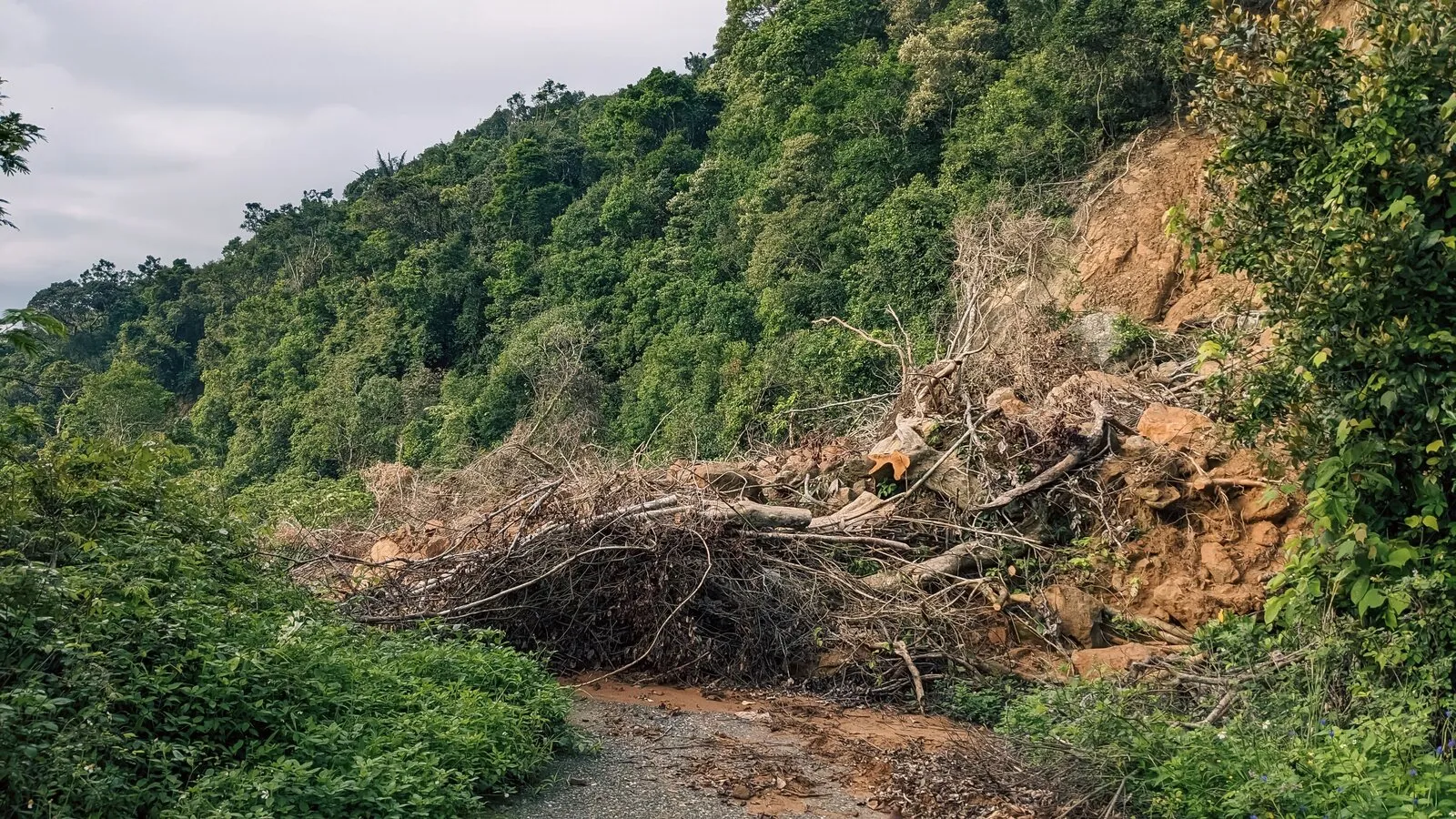
If you hear a new rumble or see the ground change, do not walk closer to find out what happened. Landslides are difficult to predict; USGS says some occur suddenly with no warning signs. The signs below are reasons to move away when safe and report what you observed—not a test that predicts exactly when or where ground will move.
A slide may already be moving
If movement is happening, stay out of the slide path and do not approach to take a photo. Move away from the area only if you can do so safely. If a building is being struck by a landslide, the response changes: USGS advises not to evacuate during the movement and to go to the highest floor or climb onto a countertop until it passes. Landslides may come in pulses. Report the event to local authorities; call 911 from a safe place if someone faces immediate danger.
Notice changes without investigating
USGS separates signs of possible development from signs that a slide may be moving. Some observations can have other causes. A new crack, for example, is not by itself a diagnosis. Record what changed and contact local authorities for evaluation; a geologist or engineer with landslide experience may be needed to assess a property.
| What you notice from a safe place | USGS describes it as | What to do |
|---|---|---|
| New cracks, bulges, or deformation in soil, road, or other surface | A possible landslide sign | Note where and when it appeared; report it to local authorities. Keep away from the slope and damaged area. |
| New flowing water on a slope or ponding where it has not appeared before | A possible sign | Do not walk up to trace the water. Report the change and any nearby property or road concern. |
| Leaning trees, deformed fences, or sagging/taut utility lines | Possible movement-related changes | Keep away from lines and the slope. Report damaged utilities to the relevant utility and possible slope movement to local authorities. |
| New sticking doors/windows, wall/ceiling/foundation cracks, foundation separation, or leaking water/septic/sewer lines | Possible building or utility signs | Do not enter a visibly damaged area to inspect. Tell the owner/manager and local authorities; seek a qualified assessment. |
| Abnormal well-level change | A possible sign | Record what changed and contact the responsible local authority or qualified professional. Do not use the well as a safety test. |
| Increasing cracking/breaking sounds, knocking boulders, groaning, loud rumble/vibration, or sudden stream-level change during or after intense/prolonged rain | Signs of a moving landslide | Treat it as urgent. Move away from the area only if there is a safe route that does not cross the movement; alert local authorities. |
These are not a complete inventory of every local hazard, and their absence is not reassurance. A slope can be hazardous without a visible warning sign. Weather, terrain, soil, past movement, and local conditions vary; do not use this list to clear a home, road, or property.
Write down what you saw
From a safe location, make a short report that helps another person find the observation. Do not return to the area to fill in missing details.
Landslide Observation Note
| Field | Note |
|---|---|
| Place and nearest landmark | Use a road, building, or public landmark; share a precise address only with responders or the responsible authority. |
| What changed | Describe the visible crack, deformation, water, sound, stream change, or building/utility issue without diagnosing it. |
| When first noticed | Date/time and whether it changed while you were already in a safe place. |
| Conditions | Note recent or current intense/prolonged rain if known; do not go outside to check. |
| Who was notified | Local emergency management/authority, property owner or manager, or utility as appropriate. |
| Instructions received | Record the source and exact local instruction; do not treat this note as clearance to remain or return. |
Home Resilience Hub • Record only what you can observe safely
If a local official directs evacuation, follow the route and timing they give you. Do not travel through moving debris, floodwater, or a closed road. For household route planning and flood-related alerts, the flood alert and evacuation guide has a separate route-planning task. For seasonal slope and burn-scar exposure questions in California, see the California home-preparation guide.