In this guide Jump to a section
Holiday sales create aggressive retail discounts on portable power stations and dual-fuel generators, but a promotional price tag cannot overcome an undersized inverter or insufficient battery capacity during an extended power outage. Buying backup power without verifying continuous running watts, inductive motor surge ratings, and real-world conversion losses frequently leaves households with an expensive battery that trips the moment a refrigerator compressor cycles on.
Before adding a unit to your cart, separate promotional marketing from electrical fundamentals. Sizing home resilience begins with calculating the kilowatt-hours required to protect food, power essential medical equipment, and keep communication channels open.
Sizing rule of thumb: power output vs. energy capacity
The most frequent buyer mistake during holiday sales is confusing running watts (instantaneous electrical power) with watt-hours (stored energy capacity over time).
- Continuous Output (Watts, W): Dictates the size and number of appliances you can operate simultaneously. A 1,800 W inverter can easily power a 150 W refrigerator and a 1,200 W microwave at the same instant.
- Surge Output (Peak Watts, W): The brief burst of current—lasting from a few milliseconds to two seconds—required to start electric motors, such as those inside refrigeration compressors, sump pumps, and furnace blowers. Starting surges can demand three to five times the motor’s running wattage.
- Storage Capacity (Watt-Hours, Wh): Dictates how long your equipment runs before the battery is fully drained. A 1,024 Wh battery supplying an average continuous draw of 100 W does not last 10 hours; once you account for the 15% inverter conversion and battery management system (BMS) parasitic loss, real-world runtime is approximately 8.7 hours.
Medium · 1 kWh Core Baseline
EcoFlow DELTA 3
- Continuous AC output
- 1,800 W
Delivers 1,800 W continuous AC output with six household plugs and a 10 ms transfer speed, maintaining critical refrigeration and medical loads during grid outages.
Check first: Use the exact DELTA 3 (EF-DL-H10-3) manual; do not transfer specifications from DELTA 3 Plus or DELTA 3 Classic variants.
Specifications & research
1,024 Wh LiFePO4 Battery Station with 1,800 W Pure Sine Output. Source records checked on 2026-10-04. Manufacturer research, not hands-on testing.
- Nominal capacity
- 1,024 Wh · Source checked 2026-10-04
- Continuous AC output
- 1,800 W · Source checked 2026-10-04
- Base-unit weight
- 27.6 lb · Source checked 2026-10-04
Manufacturer documentation. Confirm the exact model, connections, and load requirements before buying.
Worked calculation: 24-hour critical load energy budget
To determine whether a 1 kWh or 2 kWh station meets your emergency threshold, calculate the real electrical demand of an average residential refrigeration and communication circuit over a 24-hour winter outage.
Refrigerator duty cycle and thermal loss math
A standard modern residential refrigerator (20 to 25 cu. ft. ENERGY STAR certified) consumes between 400 and 600 kWh annually, which equates to 1.1 to 1.64 kWh per day under normal household conditions.
- Running power: 120 W to 180 W when the compressor and circulation fans run.
- Compressor duty cycle: Cycles on roughly 35% of the time in a 68°F (20°C) ambient room, provided the doors remain closed.
- Hourly baseline consumption: 150 W × 0.35 = 52.5 watt-hours per hour.
- 24-hour baseline energy demand: 52.5 Wh/hr × 24 hr = 1,260 Wh.
- Inverter efficiency derating (85% pure sine conversion efficiency):
Required Battery Capacity = 1,260 Wh / 0.85 = 1,482 Wh
Under this verified load profile, a single 1,024 Wh station provides approximately 14 to 17 hours of refrigeration runtime. If the outage extends past 24 hours, you require either a companion 1 kWh expansion battery, an auxiliary solar array, or a dual-fuel inverter generator to recharge the system.
Medium · 1 kWh Rapid-Charge LFP
Anker SOLIX C1000 Gen 2
- Continuous AC output
- 2,000 W
Provides 2,000 W continuous pure sine output and rapid 600 W solar capture, allowing full off-grid replenishment during short winter daylight windows.
Check first: The manual describes SurgePad up to 2,400 W, says it works better with heat-generating loads, does not support precision instruments or strict-voltage devices, and does not operate in bypass mode. Do not use this as a general motor-start or surge rating.
Specifications & research
2,000 W Inverter with 600 W Fast Solar Recharge Ceiling. Source records checked between 2026-10-04 and 2026-10-22. Manufacturer research, not hands-on testing.
- Nominal capacity
- 1,024 Wh · Source checked 2026-10-22
- Continuous AC output
- 2,000 W · Source checked 2026-10-22
- Base-unit weight
- 24.9 lb · Source checked 2026-10-04
Manufacturer documentation. Confirm the exact model, connections, and load requirements before buying.
Solar recharge constraints in winter
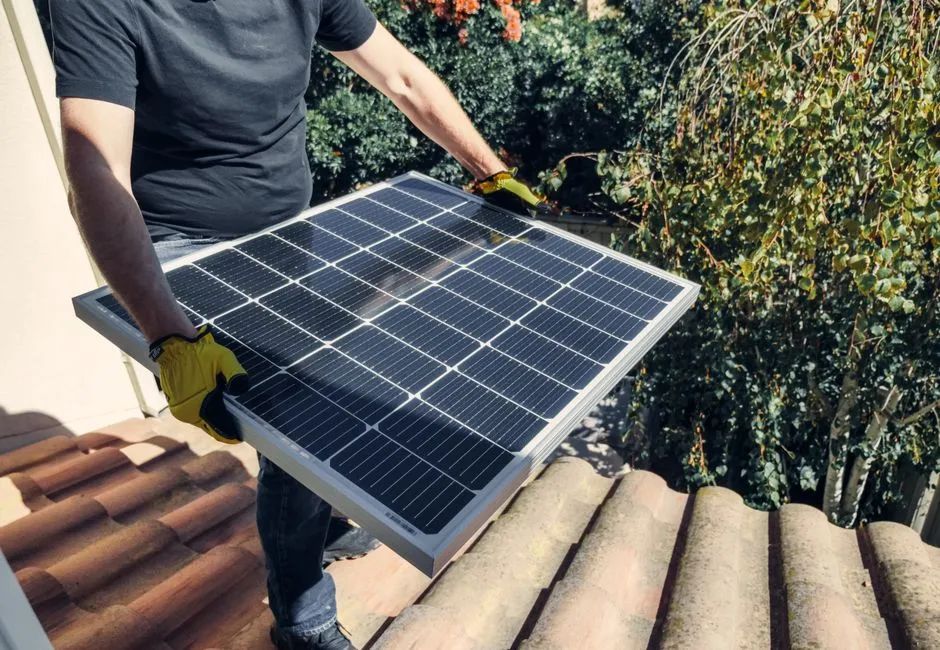
Many holiday promotional bundles package a portable power station with one or two 100 W or 200 W foldable solar panels. While solar panels provide zero-fuel replenishment, winter solar generation operates under strict physical limitations that buyers must factor into their resilience plan:
- Reduced Peak Sun Hours (PSH): In November and December across the continental United States, average peak sun hours drop to 2.5 to 3.5 hours per day, compared to 5.0 to 6.0 hours in midsummer.
- Sub-optimal Sun Angle: The low azimuth angle requires manual tilting toward the southern horizon (at an angle equal to your local latitude plus 15°) to capture rated panel output.
- Winter Solar Capture Math: A nominal 400 W solar panel array operating at typical 75% real-world efficiency generates approximately 300 W in direct midday sun. Over a 3.0-hour winter solar window:
300 W × 3.0 hours = 900 watt-hours of daily energyThis yields enough energy to replenish roughly 88% of a 1,024 Wh battery station under clear skies, but yields near zero during overcast, snow, or freezing rain conditions.
When batteries fall short: dual-fuel inverter generators
For multi-day grid collapses or homes with electric heat pumps, space heaters, and private well pumps, battery stations must be paired with an engine-driven generator. Dual-fuel inverter generators represent the gold standard for residential emergency backup because they burn both unleaded gasoline and liquid propane (LPG).
Champion 4500W Dual Fuel Inverter Generator
- Running Watts
- 3,500W (Gasoline) / 3,150W (Propane)
Provides clean electrical output with less than 3% THD on gasoline or propane, safely powering sensitive home electronics and heavy transfer-switch loads.
Check first: Never run a generator indoors, in a garage, or near open windows/vents; carbon monoxide from exhaust is fatal within minutes. Maintain at least 20 feet clearance from the home.
Specifications & research
4,500 W Peak / 3,500 W Running Inverter Generator. Source records checked on 2026-11-04. Manufacturer research, not hands-on testing.
- Starting Watts
- 4,500W (Gasoline) / 4,500W (Propane) · Source checked 2026-11-04
- Running Watts
- 3,500W (Gasoline) / 3,150W (Propane) · Source checked 2026-11-04
- Start Type
- Wireless Remote Key Fob, Push-Button Electric Start, and Recoil Backup · Source checked 2026-11-04
Manufacturer documentation. Confirm exact Champion Power Equipment model specifications and household safety limits before buying.
Propane vs. gasoline fuel storage economics
- Gasoline: Delivers higher energy density (approximately 114,000 BTU per gallon), producing maximum rated engine output. However, untreated ethanol-blended pump gas degrades in as little as 30 to 90 days, gumming up carburetors and causing hard-start failures during freezing weather.
- Propane (LPG): Contains roughly 91,500 BTU per gallon (producing roughly 10% lower continuous electrical wattage than gas), but liquid propane in sealed ASME cylinders never degrades, separates, or gums up engine fuel jets. A standard 20 lb (4.7 gallon) barbecue propane tank provides roughly 14 to 18 hours of runtime at a 25% electrical load (approx. 800 W to 1,000 W).
Safe generator operation rules
- Distance from Living Spaces: Never operate a combustion generator indoors, inside a garage, or beneath a carport. Carbon monoxide kills silently. Position the exhaust pointing downwind, at least 20 feet (6 meters) away from open doors, windows, and HVAC fresh air intakes.
- Transfer Switch vs. Direct Extension Cords: Never plug a generator directly into a household wall outlet (“suicide cord” backfeeding). Backfeeding can electrocute utility line workers attempting to repair downed neighborhood power lines. Run heavy-duty 10-gauge or 12-gauge outdoor cords directly to appliances, or install an interlock kit and manual transfer switch inspected by a licensed electrician.
Backup power architecture comparison
| System Type | Nominal Storage / Output | Primary Advantage | Operational Limit | Optimal Deployment Profile |
|---|---|---|---|---|
| 1 kWh LiFePO4 Battery | 1,024 Wh cap / 1,800 W AC | 100% indoor-safe; 10 ms instant UPS cutover; zero noise | Limited 14–18 hr refrigeration runtime without recharge | Apartments, urban residences, indoor essential circuits |
| 2 kWh LiFePO4 Battery | 2,048 Wh cap / 2,200 W AC | Powers refrigerator plus CPAP and lights for 36+ hours | Heavy carrying weight (40–55 lb); slow AC wall recharge | Single-family homes requiring 24+ hour food protection |
| 4.5 kW Dual-Fuel Inverter | Continuous runtime / 3,500 W | Indefinite multi-day power; handles well pumps & microwave | Requires outdoor placement; fuel rotation and oil maintenance | Multi-day regional outages, deep well pumps, rural homes |
Holiday buyer’s pre-purchase inspection checklist
Before committing funds to a holiday backup power deal, verify each specification against manufacturer technical manuals:
- Battery Chemistry: Ensure the unit uses Lithium Iron Phosphate (LiFePO4 / LFP) cells rated for 3,000+ full cycles to 80% capacity, rather than older ternary lithium (NMC) cells that degrade after 500 to 800 cycles.
- Pure Sine Wave Inverter: Confirm Total Harmonic Distortion (THD) is under 3%. Modified sine wave inverters damage variable-speed furnace blower motors, CPAP equipment, and modern digital appliance control boards.
- Transfer Speed (EPS/UPS): Verify the automatic cutover time. For home office networking gear, NAS servers, and desktop PCs, select units with a 10 ms to 20 ms transfer rating.
- Expansion Ports: Check whether the base station supports proprietary add-on expansion batteries. Purchasing a 1 kWh station with an expansion port allows scaling up capacity next year without replacing the primary inverter.
- Solar Input Voltage & Amperage: Confirm the Open Circuit Voltage (Voc) window. A station limited to 30 V cannot accept standard residential 400 W panels wired in series.