Freezer Burn: Is the Food Safe to Eat?
A dry patch on frozen food can look alarming. Learn what freezer burn says about quality, what you can trim, and when a separate temperature-history check matters.
In this guideJump to a section
You open a frozen package and find a dry, pale patch where you expected a smooth surface. That can be freezer burn: a quality change caused by air reaching the food. It may leave a portion dry or unpleasant, but that appearance alone does not tell you whether the food stayed cold or was handled safely before freezing.
Freezer burn starts when ice at the food’s surface passes directly into water vapor, a process called sublimation. The surface loses moisture and becomes dry; packaging that limits air exposure helps protect quality. Iowa State Extension explains this process. A photograph of a pale patch cannot identify every discoloration, mold, or contamination problem, so do not use the description as a visual clearance test.
Freezer-burn decision table
| What you notice | What it tells you | What to do next |
|---|---|---|
| Grayish-brown, dry, leathery spots on food that stayed frozen | This matches Iowa State Extension’s description of freezer burn. The affected area has lost quality; freezer burn itself does not make food unsafe. | Cut away the dry spots before or after cooking if you want. Use the rest if its handling history is sound, or discard it for quality if the result would not be worth eating. |
| Frost or loose ice crystals inside the package | This does not by itself identify freezer burn or establish a safe temperature history. | Check the package and the food separately. If the food thawed during an outage, use the item-specific FoodSafety.gov outage chart. |
| A torn or opened wrapper, with food known to have stayed frozen | Air exposure can reduce quality. Iowa State Extension recommends freezer-safe packaging that limits air exposure. | Check for contamination before replacing the damaged wrapper with suitable freezer packaging. If the package history is uncertain, resolve that first. |
| The package may have warmed, thawed, or contacted leaking raw juices | This is a temperature or contamination question, not just a freezer-burn question. | Follow current food-specific safety guidance. Do not taste the food to test it. |
The first row describes a quality defect, not a safety test. For food that remained continuously frozen at 0°F (-18°C), Iowa State Extension explains freezer storage time affects quality rather than safety. That statement assumes safe handling before freezing. It does not clear food with an unknown history or settle what happened during an outage.
Decide whether the quality is acceptable
Freezer-burned areas can be dry and taste poor. Iowa State Extension explains you may cut those portions away before or after cooking. If the damage is widespread and the remaining food would not make a meal you want, discarding it is a quality choice; you do not need to keep food you will not use.
A date on a package can help you understand how long it has been stored, but the freezer ranges in the FoodSafety.gov cold-storage chart are quality guidance for food kept continuously at 0°F (-18°C) or below. They are not a safety deadline for continuously frozen food, and they do not tell you whether a package warmed at some point.
Before cooking, ask:
- Does the visible damage match dry, leathery spots, or is the real concern that the food may have warmed or been contaminated?
- Was it handled safely before freezing, and do you have a reliable temperature history?
- If the history is sound, would trimming the dry areas leave food you are willing to eat?
If the answer to the history question is uncertain, pause the quality decision and resolve the safety question first. The refreezing guide covers food thawed by different methods. The refrigerator and freezer temperature guide explains what an appliance reading can tell you—and why a reading now cannot reconstruct earlier conditions. For a meal you still need to thaw, see safe thawing methods.
Reduce air exposure on the next freeze
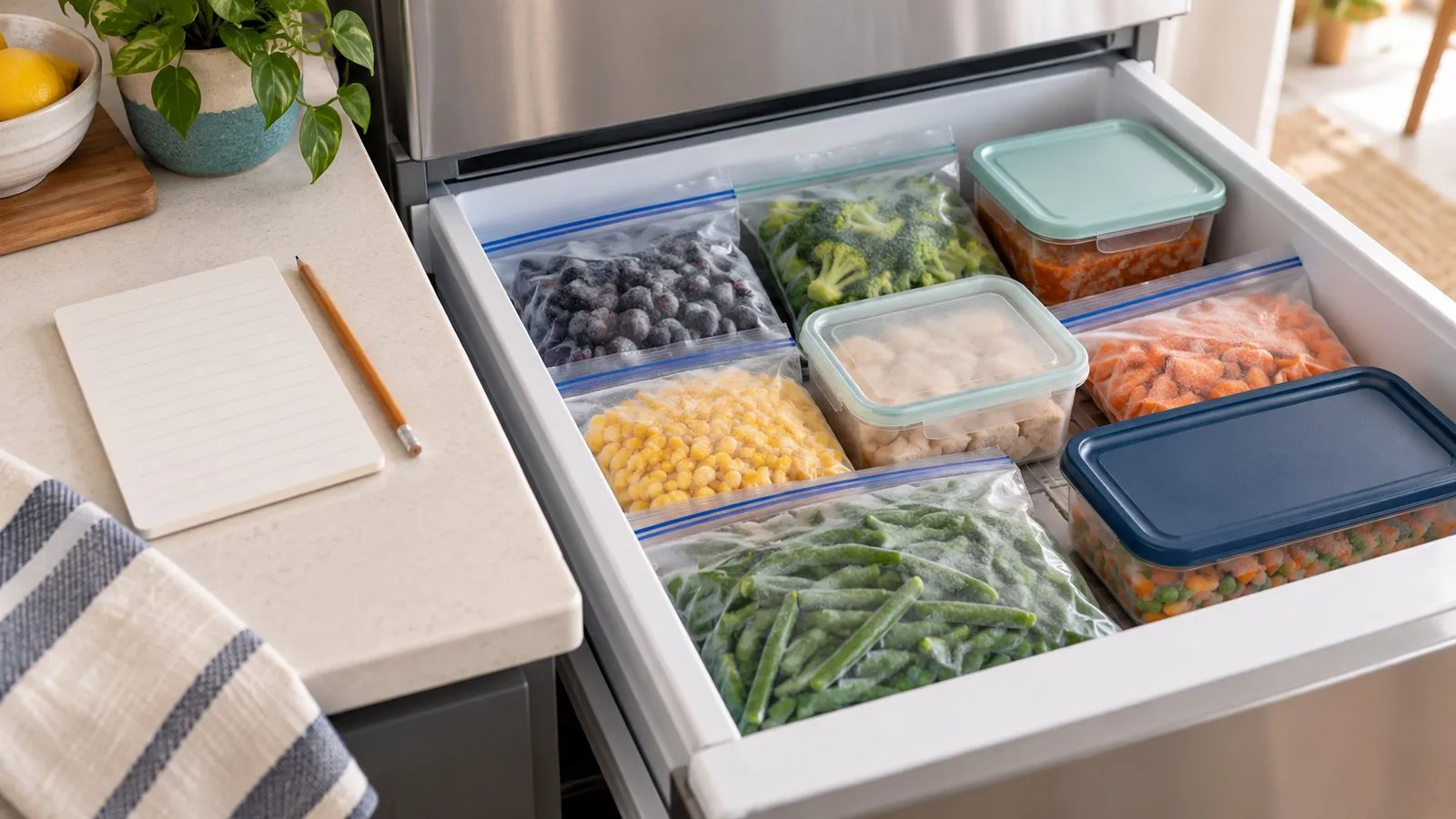
Use the package directions and packaging intended for freezer storage. Iowa State Extension notes that store-packaged meat can be overwrapped with suitable freezer packaging for longer storage. Keep packages closed tightly and label the food and date so you can identify what you have and choose older packages first.
When you find freezer burn, treat the dry area as a quality decision. Keep the food-safety decision tied to its handling and temperature history, where it belongs.