In this guide Jump to a section
The quietest setting on a bedroom purifier may be the only one you will actually use overnight. Before buying, find out which speed the advertised smoke CADR describes. A single maximum rating cannot tell you the output on sleep mode.
Measure the bedroom
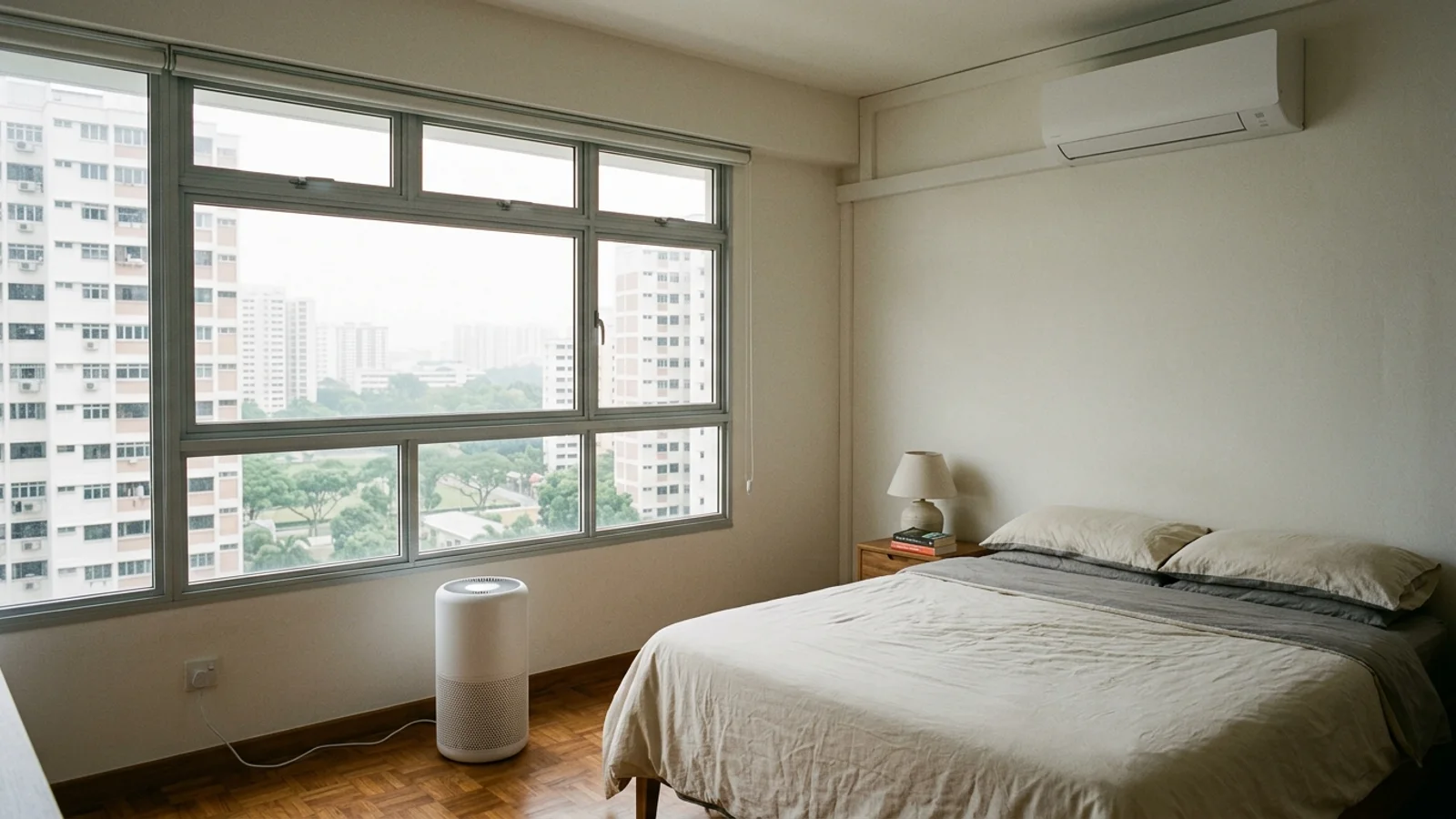
For a 12 m² bedroom with a 2.6 m ceiling, the room volume is 31.2 m³. Applying Singapore’s National Environment Agency estimate for filter-based particle removal gives 31.2 × 5 = 156 m³/h of smoke clean-air delivery. Measure your own room and keep the volume and airflow units beside the numbers.
NEA’s air-pollution FAQ also gives a higher overall smoke CADR estimate of room volume × 7 for specific situations, including spaces where ventilation cannot easily be improved, spaces hosting high-risk activities, or devices using electronic air-cleaning technology. Check which guidance fits your space before applying that multiplier.
Ask about the setting you can live with
| Detail to take to the supplier | What you need back |
|---|---|
| Room dimensions and calculated target in m³/h | Smoke CADR in the same units for the exact model |
| Where and when you intend to use the cleaner | The speed used for that rating and documented output at a quieter speed, if available |
| Filter model and expected availability | Replacement instructions and a local supply source |
If the supplier has no sleep-speed figure, leave it unknown. A measured room size cannot compensate for an unknown delivery rate. NEA’s portable air cleaner guidance explains why smoke CADR is relevant during haze.
During a haze episode
For a decision you need to make now, look at NEA’s one-hour PM2.5 reading for your part of Singapore alongside the applicable health advisory. The 24-hour PSI describes conditions over a longer period, so it can change more slowly when the haze worsens or clears. Neither reading measures the air inside your bedroom.
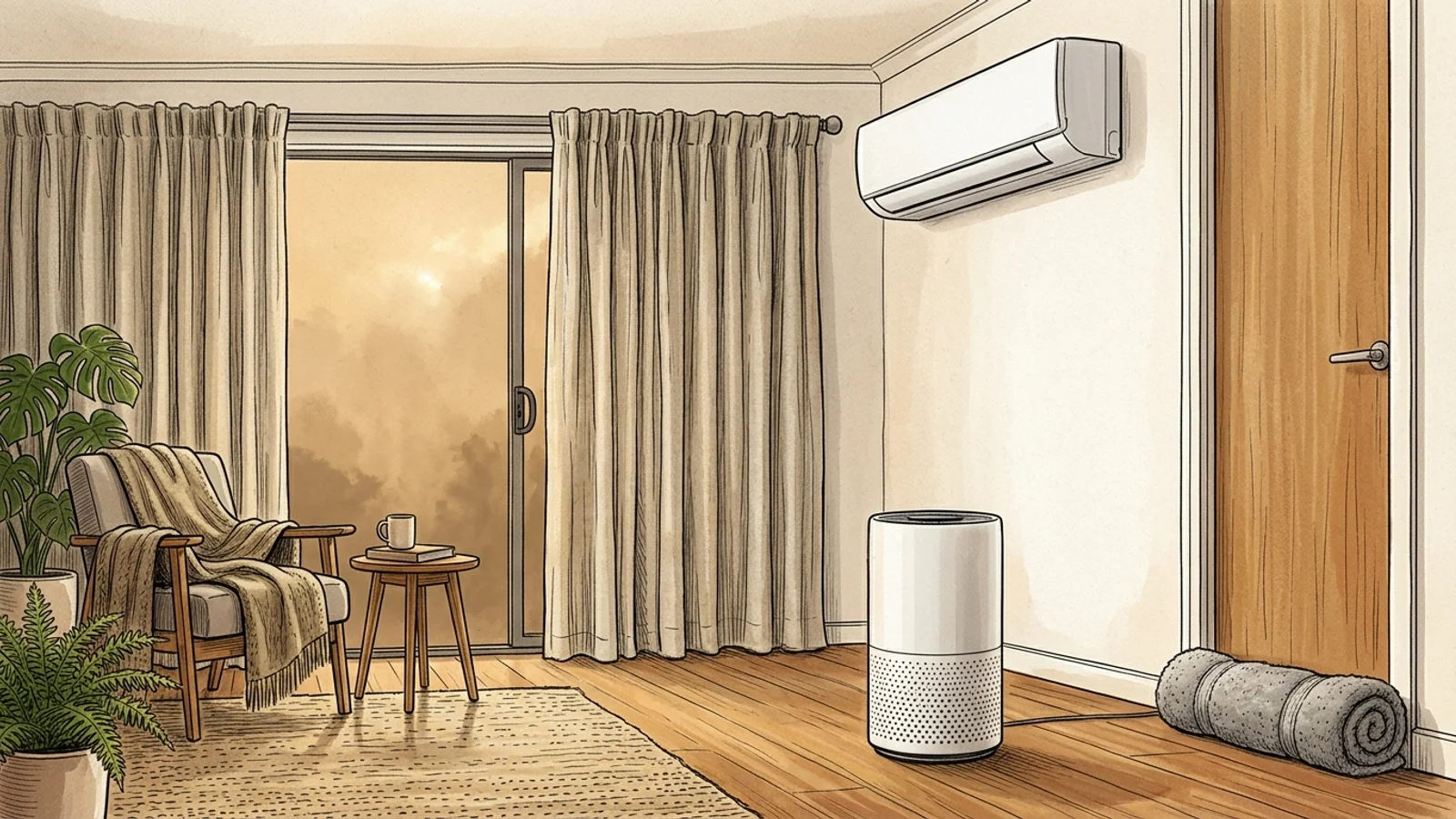
Use Singapore’s current air-quality readings and Ministry of Health haze advice for activity and health decisions. NEA advises closing doors and windows as outdoor air worsens, reducing indoor particle sources such as candles, and reopening when outdoor air quality improves. A purifier rating describes particle removal under test conditions. It cannot tell you the pollutant level in the room or whether a person with symptoms is safe there.