In this guideJump to a section
A UV system is easy to forget when its controls are quiet and the water looks normal. But a lamp, alarm, and flow limit matter only in relation to the exact device and its water conditions. Before a storm or service visit, write down what the installed model requires and where its manual is kept.
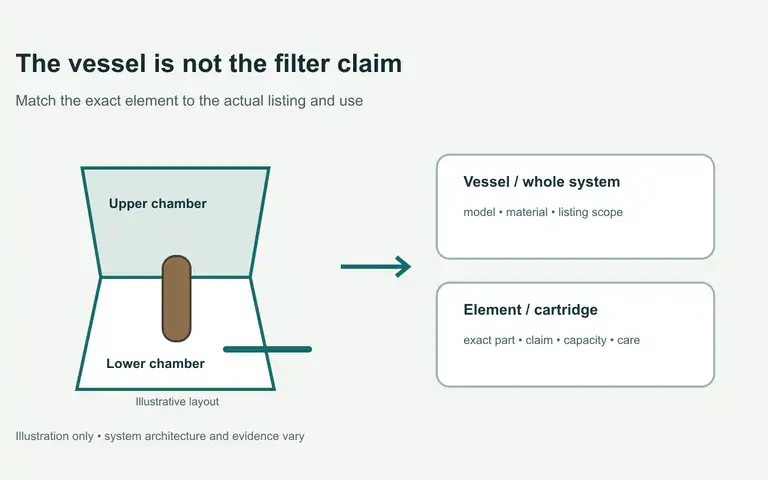
UV light is a microbial treatment method, not a chemical filter. CDC says systems that prefilter water work better than those that do not, and UV systems do not remove chemicals. A brand name or “UV purifier” label cannot tell you whether your particular source water and installation meet the unit’s operating conditions. Start with CDC’s overview of home water treatment systems.
Find the exact system information
Photograph or copy the model and serial number from a dry, safely accessible label. Do not remove covers or touch wet wiring or electrical parts to find it. Then locate the current manual from the maker’s support page. Record the model-specific details below rather than borrowing another unit’s specifications:
| Manual item | What to record | Why it matters |
|---|---|---|
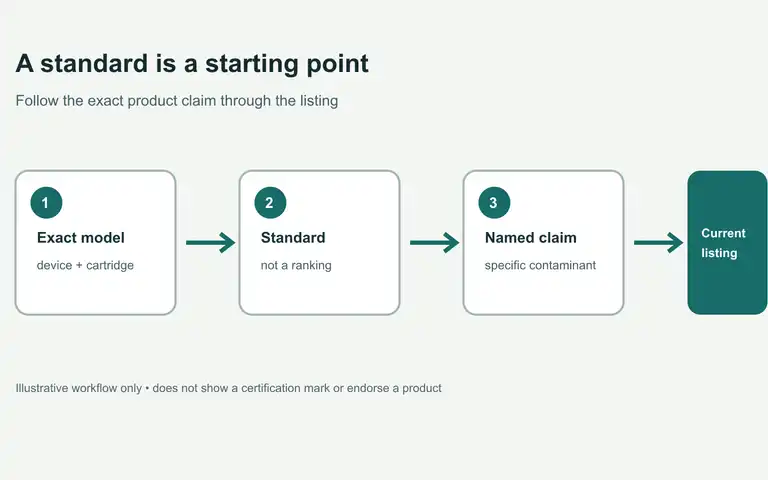
| Treatment class and listing | Standard/class and exact system model | A standard label is scoped to a model and use; classes are not interchangeable |
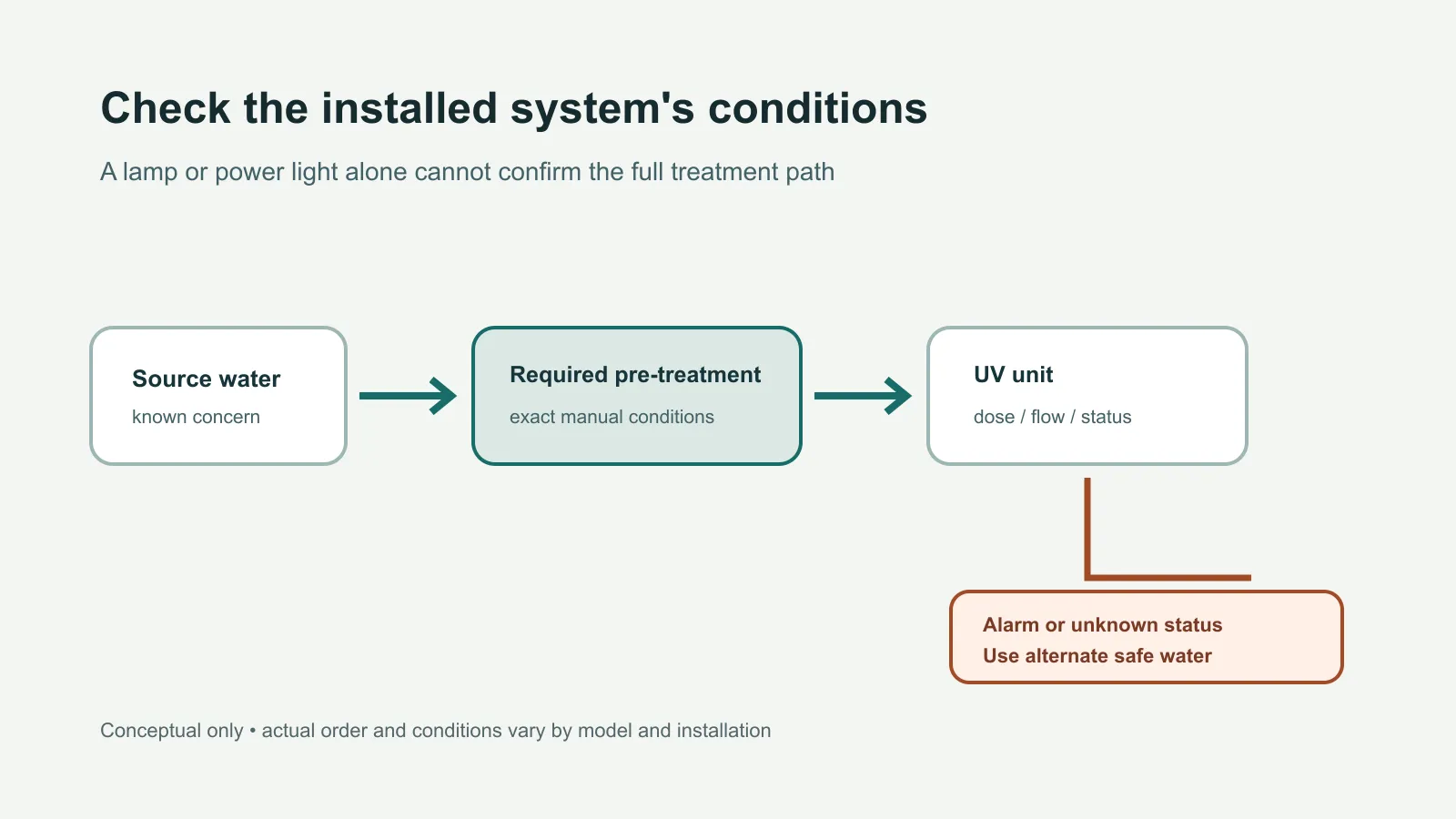
| Source-water prerequisites | Required pretreatment and any listed quality limits | Particles and other conditions may affect UV transmission or trigger alarms |
| Rated flow / operating range | Exact maximum flow, pressure, and any model-specific limit | A household demand above the documented rate can change dose delivery |
| Status indicators | Normal state, lamp-life reminder, warning or failure codes | A display needs the manual’s interpretation, not guesswork |
| Alarm response | Maker’s direction for each relevant message and lost power | Do not assume a lamp has restarted or water is treated after an interruption |
| Service and support | Lamp/service interval, installer, manufacturer phone | Use qualified help for maintenance or unclear conditions |
What an exact manual can show
UVDynamics provides one concrete example. Its product page identifies UVD8.40C as NSF/ANSI 55 Class A and lists 8.7 gallons per minute at 40 mJ/cm². The linked manual covers models 8.40C, 11.40C, 14.40C, and 20.40C. That figure applies only to the named model and its documented operating conditions, not to every UV purifier or every home installation.
The same manual requires source water to meet listed quality parameters and states that inadequate conditions can increase alarms and maintenance or prevent operation. It describes a lamp-failure alarm, including the status lights/display and what happens when an optional solenoid is connected. This is why a control panel’s green light by itself is not a whole-home safety test. If your installed model is not that exact family, do not use this example’s flow rating or alarm instructions for it.
The manual also contains electrical and lamp-maintenance procedures. This page does not reproduce those procedures. Never operate an exposed UV lamp; UV radiation can injure skin and eyes. The manufacturer warns against plugging in wet electrical equipment and directs users to contact the installer or maker for service when the unit is damaged or unclear.
If the unit loses power or alarms
Use another known-safe source while you confirm the condition. A power return does not, by itself, show that every model has completed its startup sequence or that the water was treated during the interruption. Keep a note of the time, display message, and whether the unit appears to have resumed its normal state.
Read the exact manual’s alarm section. Some models have a specified control response, sensor, flow shutoff, or restart path; others differ. Do not silence an alarm, bypass a shutoff, adjust flow, or dismantle a chamber to keep water moving. If the manual does not resolve the message, call the installer or manufacturer and ask what water source to use until the unit is cleared for service. For the named UVDynamics family, the manual also requires system and plumbing disinfection after a failure is resolved, and describes additional plumbing precautions after extended interruption. Ask the qualified installer how those requirements apply before resuming use; a green lamp alone does not clear downstream plumbing. If an advisory is active, follow the issuing utility or health department.
UV readiness record
- Manufacturer and full model / serial:
- Current manual URL and revision:
- Applicable certification listing/class:
- Water concern this system is intended to address:
- Required upstream pretreatment / source-water conditions:
- Rated flow and other operating limits copied from manual:
- Normal display / lamp status:
- Alarm code and maker-directed response:
- What to do if power is interrupted:
- Installer or service contact:
- Alternate known-safe water source:
- Next lamp or service date per maker:
The emergency treatment methods guide compares UV with filters, disinfection, and other methods. Use it to understand treatment boundaries, then use your own system manual for its exact operating requirements.