NSF 42 vs. 53: Check the Exact Water-Filter Claim
NSF/ANSI 42 and 53 are different standards, not quality grades. Match the exact system and cartridge to the named reduction claim in the current listing.
In this guideJump to a section
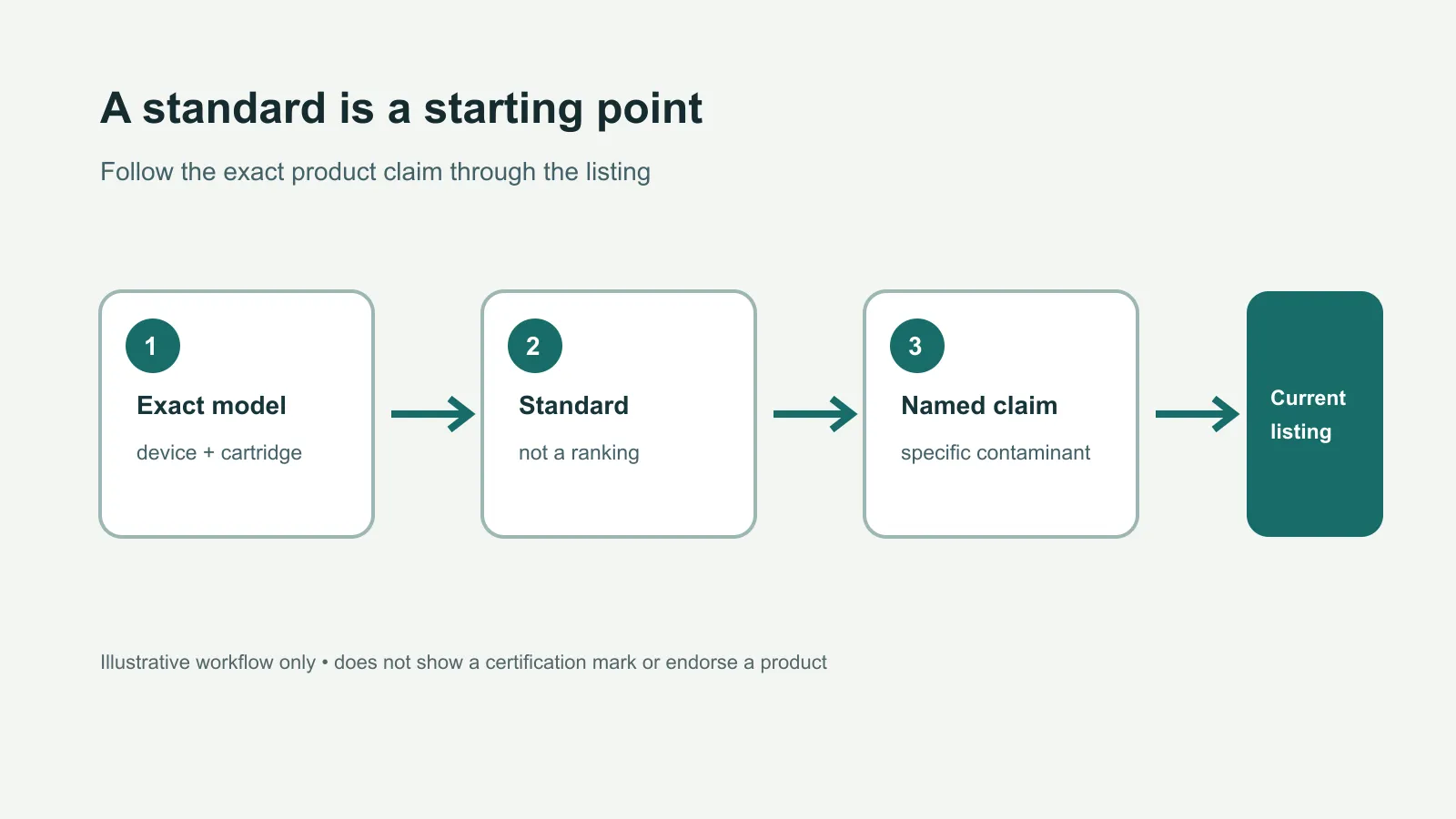
A filter box may say “NSF 42,” “NSF 53,” or both. The number alone does not tell you whether that particular system reduces the contaminant you care about. Match the entire product and its replacement cartridge to a current listing and a named claim.
NSF says Standard 42 covers specified aesthetic effects, while Standard 53 covers specified health-effect claims. The numbers reflect the order in which standards were developed; they are not grades or a quality ranking. A product can have one or several specific claims under a standard, and those claims differ by model. Check NSF’s standards overview for the distinction.
What the numbers can and cannot tell you
| Label or record | What it tells you | What you still need to check |
|---|---|---|
| NSF/ANSI 42 | The product may have specified aesthetic-effect claims | Which claim is listed for this exact model and cartridge? |
| NSF/ANSI 53 | The product may have specified health-effect claims | Which named contaminant claim, product configuration, and capacity appear? |
| NSF/ANSI/CAN 372 | Lead content requirements for wetted materials | This is not a lead-reduction claim for water passing through the filter |
| “Tested to” a standard | A maker reports testing against some requirements | Who tested it, which exact model, what contaminant, and whether it is certified/listed |
Even a Standard 53 listing is not a blanket claim for every health contaminant. NSF’s current certified-product search can be searched by brand/model and reduction claim. Read the exact entry rather than relying on a standard badge, product family name, or retailer description.
Follow one product through the listing
The NSF listings accessed on October 18, 2026 provide two examples of how claims differ. Brita’s CLARITY Taste 100 appears under Standard 42 with chlorine, nominal particulate Class I, and taste-and-odor claims. Brita Tidal pitcher model OB63 with replacement element OB06 appears under Standard 53 with a lead-reduction claim and a 120-gallon service cycle. These are different configurations; they are not a head-to-head performance comparison or a recommendation.
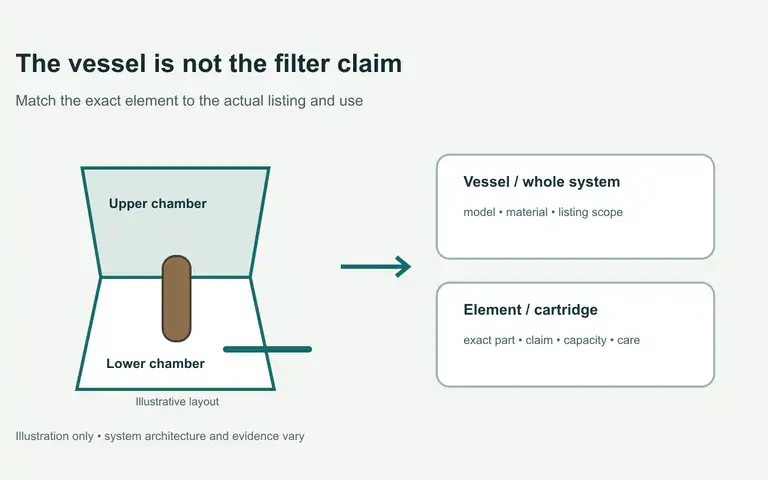
The record also shows why you should check the cartridge. For the Tidal example, the listing names both the pitcher model and element. If you own a similar pitcher or another product from the same brand, do not assume its cartridge or claim is identical. Check the model printed on your own device and the current NSF product entry.
A standard describing a health-effect claim does not mean every product listed to that standard reduces every listed contaminant. The actual claim line is the evidence to compare with a known water concern. If the listing does not show your exact product and concern, treat the claim as unverified and ask the certifier or manufacturer for the current documentation.
Certification match record
Copy the details from the product label and certification entry before you decide whether the filter fits a known need:
- Water concern named by the utility, lab, or health authority:
- System brand and complete model / suffix:
- Replacement cartridge or element model:
- Certification body and exact standard shown:
- Exact named reduction claim in the listing:
- Rated service capacity and any test conditions:
- Current listing date or confirmation date:
- Manual instructions for capacity, flow, installation, and replacement:
- Question still unresolved / contact to ask:
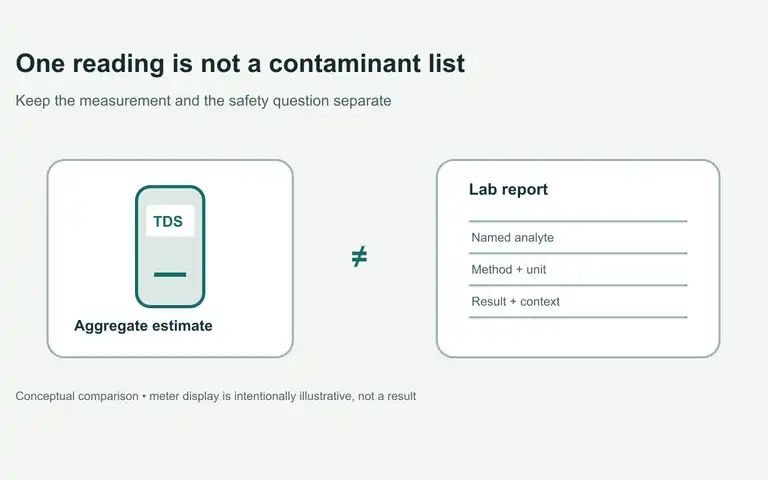
A filter indicator or improved taste cannot replace a contaminant-specific test. For a community water system, start with the water quality report reading guide. For a private well, ask the local health department and certified laboratory which tests fit your location. After selecting an exact filter, use the cartridge service record for the maker’s replacement schedule.
If a current advisory is active, follow the issuing authority. Do not infer that a residential filter is an approved substitute based on its standard number.