Gravity Water Filters: Verify the Vessel, Element, and Claim
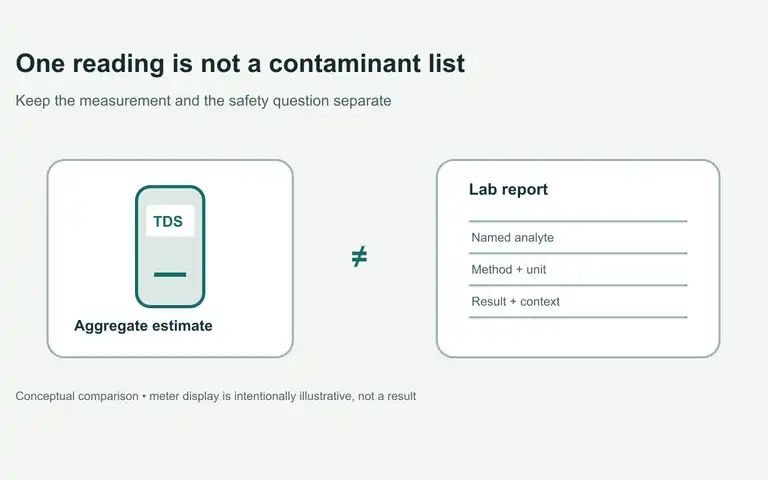
A gravity-fed container does not prove what its filter element removes. Match the vessel, cartridge, current listing, maintenance instructions, and actual water concern.
In this guideJump to a section
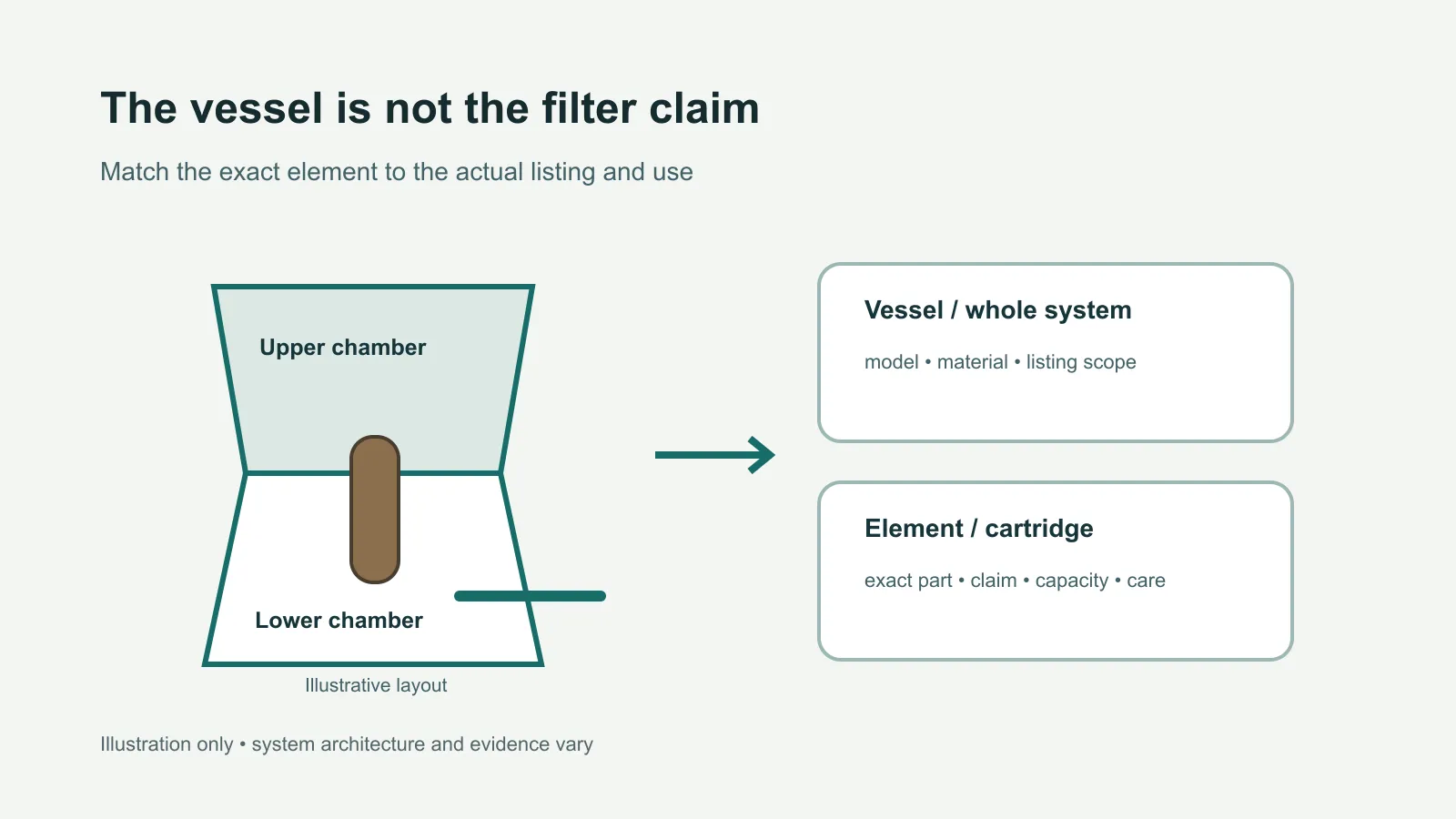
A countertop gravity filter may have a polished steel body, several cartridges, and a long list of claims on the box. Those are different pieces of evidence. The container’s material and fit do not tell you what the element reduces; an element’s testing does not automatically certify the complete system or every use.
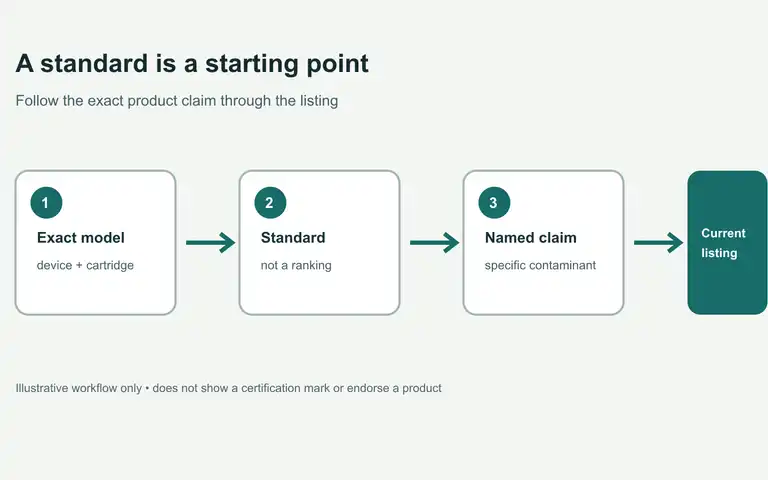
Start by separating the vessel from its cartridge. Then check the current listing for the exact model and the named claim. NSF explains that certification to a standard does not mean a system reduces every possible contaminant, so a standard number alone is not a product result. See NSF’s standards guide.
Compare the pieces separately
| Part | Record from the product and listing | Question to resolve |
|---|---|---|
| Vessel / complete system | Brand, model, material, spigot, seals, any full-system listing | Is the claim about the vessel, the assembled system, or just a component? |
| Filter element | Exact cartridge name, model, size, count, and compatible system | Does this element match the one named in the listing and manual? |
| Certification | Certifier, standard, listed product scope, and current status | Is it certified for performance, material requirements, or both? |
| Named reduction claim | Specific contaminant, organisms, or aesthetic purpose | Does that match the concern identified by a report, test, or authority? |
| Capacity and care | Rated service cycle, flow conditions, cleaning, replacement, storage | Which limits and maintenance instructions apply to this element? |
| Emergency use | Current advisory, water source, and allowed method | Does the local notice permit this device for this incident? |
A listing example: component is not the whole claim
The NSF listing accessed on October 18, 2026 names several ProOne G2.0 element sizes under “components: filter cartridges.” Its note says those entries conform to material requirements only. The ProOne manual also describes its included G2.0 elements as NSF/ANSI 42 component certified for material requirements only. This is evidence about the scope of that component listing; it is not evidence of a named contaminant-reduction claim for the complete gravity system.
The manual separately gives use, cleaning, and cycling instructions for its Traveler+, Big+, and Big II systems. Those instructions belong to those exact products. Do not transfer the manual’s care steps, cycle time, or replacement period to another company’s vessel or cartridge. Nor should you treat a manufacturer’s other laboratory report or claim as though it appeared in the NSF listing. Certification, component material compliance, independent laboratory testing, and marketing language are distinct records.
This example is not a product endorsement. It shows how to avoid expanding a narrow listing into a broader claim. When a seller says “tested to,” look for the actual report, the exact element, the test conditions, and the specific contaminant result. If you cannot match those details, leave the claim unverified.
Vessel-and-element evidence record
Copy these identifiers before relying on or purchasing a gravity-fed system:
- Water source and known concern / current advisory:
- Whole system brand and exact model:
- Vessel material and included components:
- Exact element / cartridge model and number installed:
- Current certification listing URL and date checked:
- Does the listing cover the full system or a component?
- Standard and exact listed claim:
- Separate laboratory report, if offered: exact element, analyte, conditions, and date:
- Rated capacity / flow and operating conditions:
- Maker’s cleaning, flushing, replacement, and storage instructions:
- Question for manufacturer or local water authority:
If you need a gravity filter because power is unavailable, remember that “works without electricity” describes a convenience, not a microbial or chemical claim. During an active advisory, follow the utility or health department’s instructions; do not assume a countertop product is an approved substitute. If the water may contain fuel or other toxic chemicals, use another source and contact the local health authority.
For emergency method limits, see the water purification comparison. After selecting and installing a specific system, record its replacement dates in the filter cartridge service guide.