Can a TDS Meter Tell You Whether Water Is Safe?
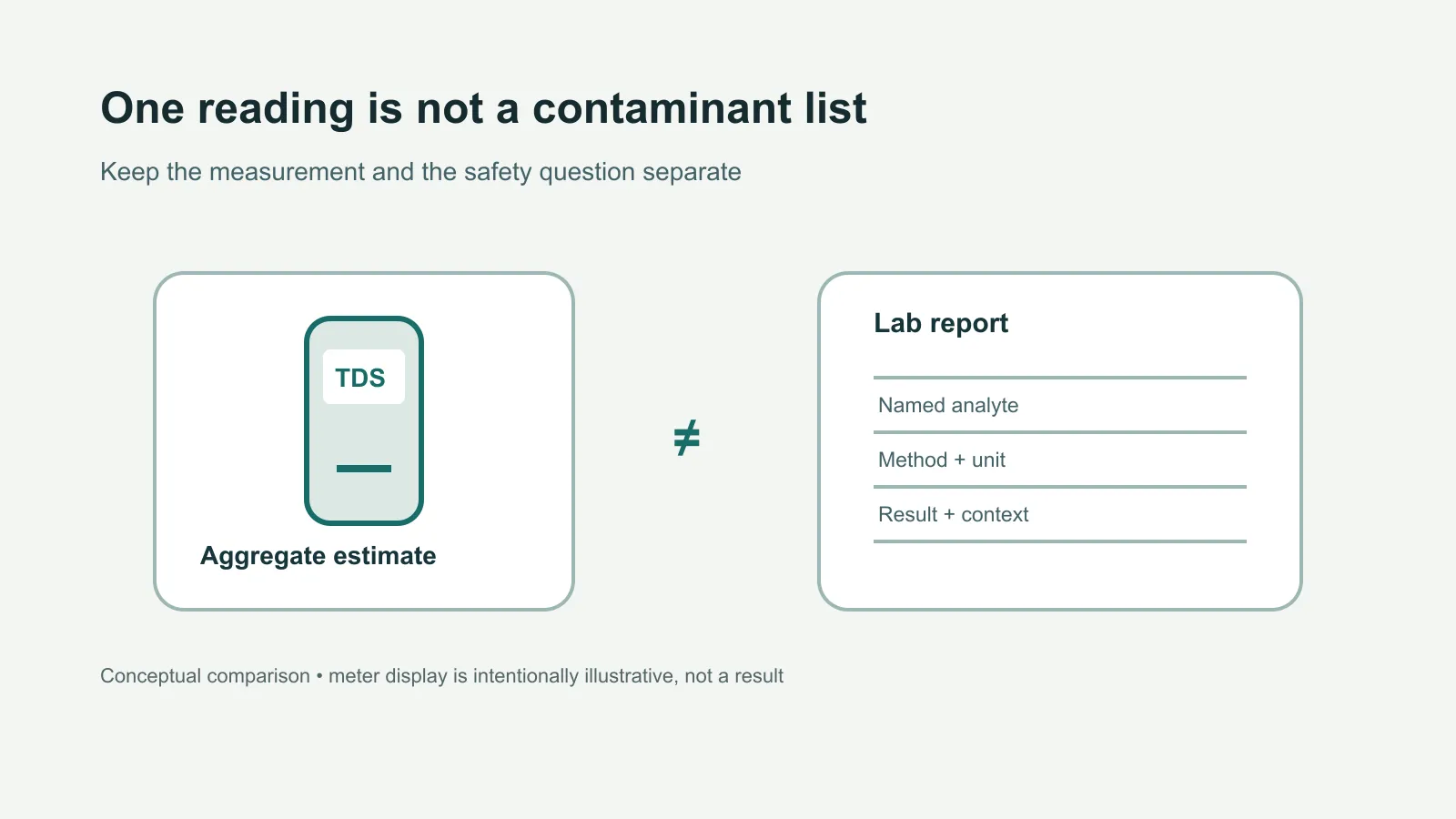
A handheld TDS number is an aggregate estimate, not a contaminant report. Learn what it measures, what it cannot establish, and what evidence to gather next.
In this guideJump to a section
A low number on a small TDS meter can feel reassuring. A high number can be alarming. Neither one, by itself, answers whether the water is safe to drink.
Most handheld meters measure how readily a sample conducts electricity and convert that result into an estimated total dissolved solids (TDS) value. EPA explains that conductivity responds to dissolved ions, changes with temperature, and can be used to estimate TDS using a conversion factor. The estimate does not identify the specific substances in the water; some organic compounds conduct poorly. See EPA’s conductivity method notes.
Read the display as a measurement, not a verdict
| What you have | What it can help you notice | What it cannot establish |
|---|---|---|
| One TDS display | A rough aggregate signal from conductive dissolved material in this sample | Which mineral, salt, metal, or other contaminant is present |
| Two readings at different sample points | A difference worth recording if samples and meter conditions are comparable | That a named contaminant was removed or that the treated sample is safe |
| A change over time | A reason to check the device manual or arrange the appropriate test | The cause of the change or whether it is a health concern |
| A laboratory report | The named analytes and results actually included in that test | Substances the lab did not test for, or a different sampling point |
A meter’s conversion method, temperature compensation, calibration, sample temperature, and user technique can affect the number. If you compare readings, use the same meter and follow its instructions for rinsing, temperature, and measurement. Record the result as the meter’s estimate; do not convert it into an individual contaminant concentration.
EPA lists TDS among secondary drinking-water standards, which are non-mandatory guidelines for aesthetic concerns such as taste, color, and odor. That context is not a universal health cutoff for a handheld reading. A number alone also cannot clear a well, a public-water advisory, or a treatment system.
For a hypothetical example, suppose the same meter shows 120 before treatment and 15 afterward under comparable measurement conditions. You have recorded a change in the meter’s aggregate estimate. You have not measured lead, identified germs or established that the treated sample is safe. A named contaminant needs its own evidence.
Choose the evidence for the question
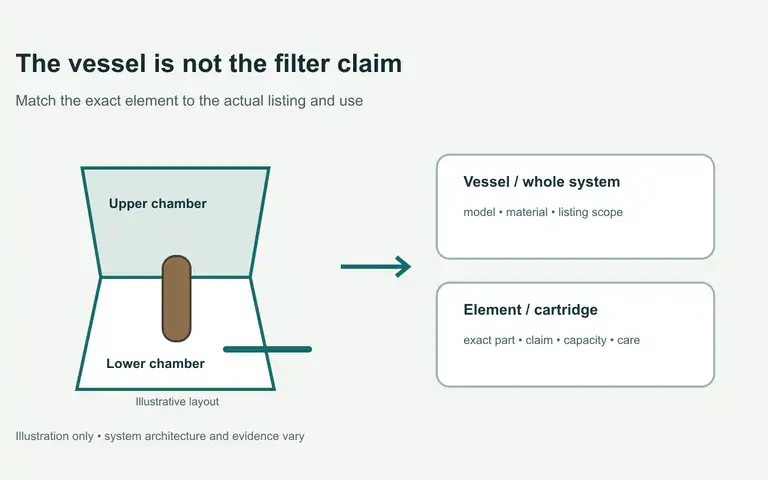
First name the question you are trying to answer. A change in mineral content, an RO-system trend, a suspected lead issue, and a possible microbial problem require different evidence. If a treatment manufacturer says to monitor a value, follow the exact model’s instructions and service limits; do not infer a target from another system’s reading.
For a private well, CDC recommends an annual laboratory baseline that includes total coliform, nitrates, TDS, and pH, with local health officials advising on additional analytes. That lab-measured TDS result is not interchangeable with a handheld conductivity-derived estimate. Use the private-well testing calendar to record the lab and locally recommended tests.
For community water, the annual report describes system monitoring, not a sample from every household tap. The report-reading guide helps interpret that separate evidence. If you suspect a specific contaminant in household water, ask the local health department or utility which sampling method and certified laboratory apply. Follow active advisories while you wait.
TDS measurement record
Keep this note beside the meter or appliance log:
- Why I measured:
- Sample point / device and whether it was before or after treatment:
- Date and time:
- Meter make/model and displayed units:
- Sample temperature / meter temperature instructions followed:
- Reading (label it an estimate):
- Comparable prior reading, if any, and how it was collected:
- What the meter cannot answer here:
- Next evidence needed (manual check, utility question, or named lab test):
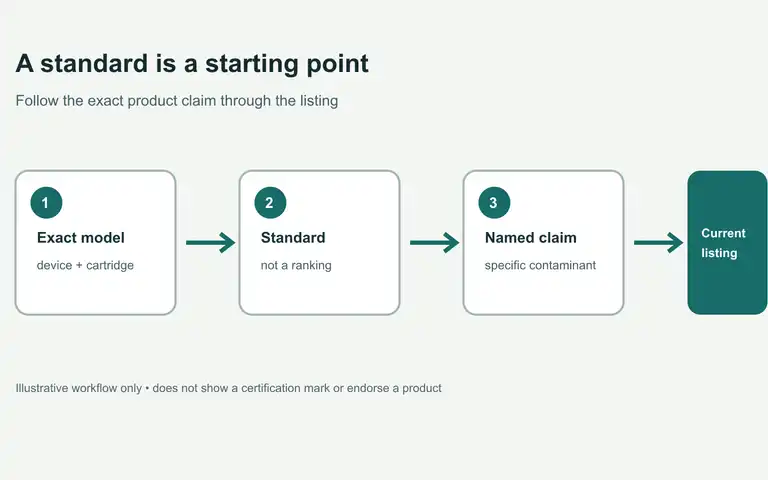
If the question is whether a filter addresses lead, PFAS, bacteria, or another named concern, the number on a TDS pen cannot substitute for the exact certification claim or laboratory result. Start with the treatment-method comparison and match evidence to the substance you need to investigate.