In this guide Jump to a section
- Engineering Baseline & Primary Fit: Emergency Rainwater Harvesting
- Roof Runoff Yield by Roof Footprint & Rainfall Depth
- Three Essential Rain Barrel Engineering Rules
- Operational Boundaries & When to Skip: Emergency Rainwater Harvesting
- Related Guides, Equipment & Planning Tools: Emergency Rainwater Harvesting
Engineering Baseline & Primary Fit: Emergency Rainwater Harvesting
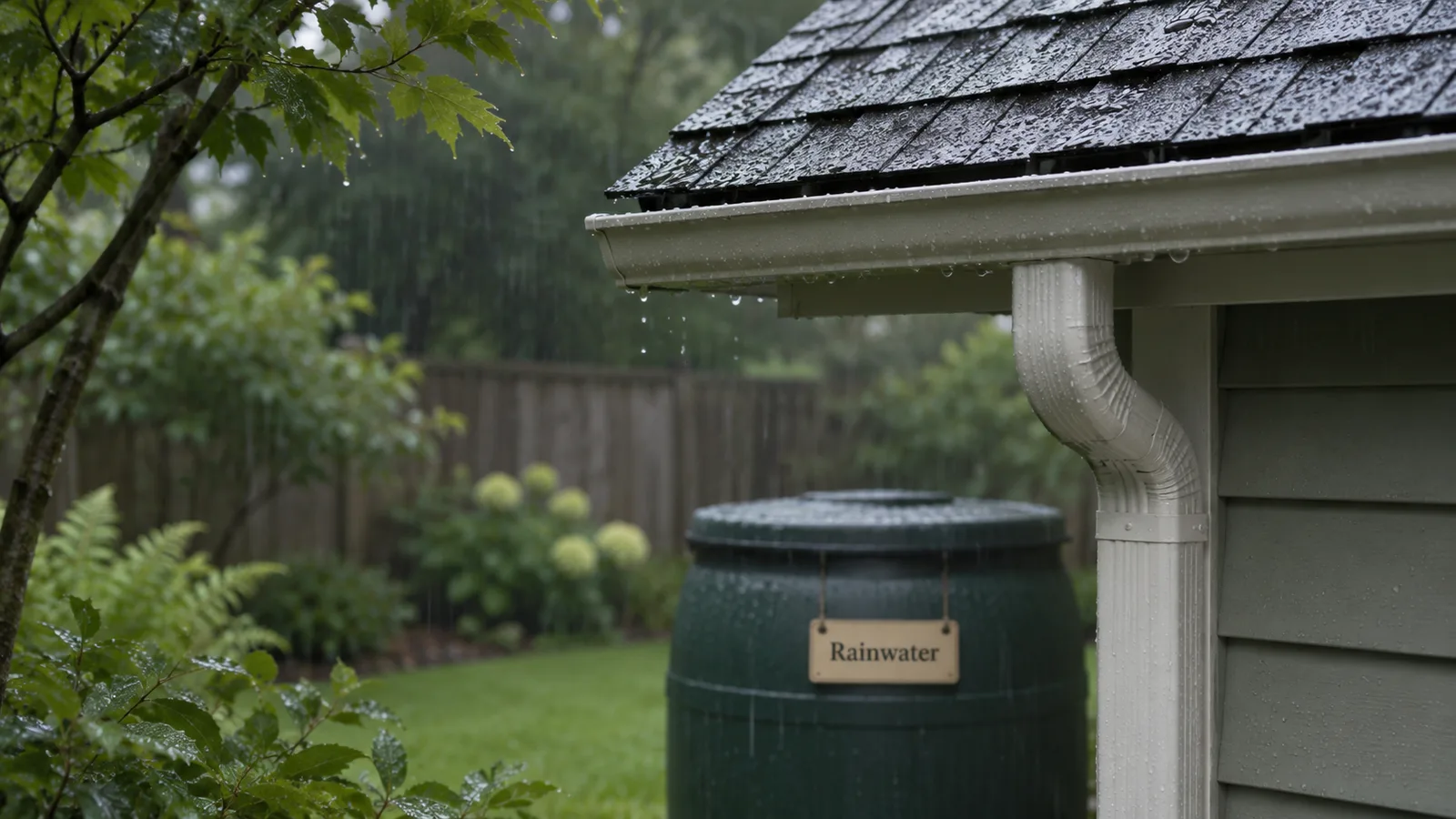
During hurricanes, atmospheric rivers, and severe thunderstorms, millions of liters of fresh water pour off your roof while municipal water treatment plants may be offline. A single 2.5 cm (1-inch) rainstorm over a 185 m² (2,000 sq ft) roof yields roughly 4,500 liters (1,200 gallons) of water—filling a 50-gallon rain barrel in under 15 minutes.
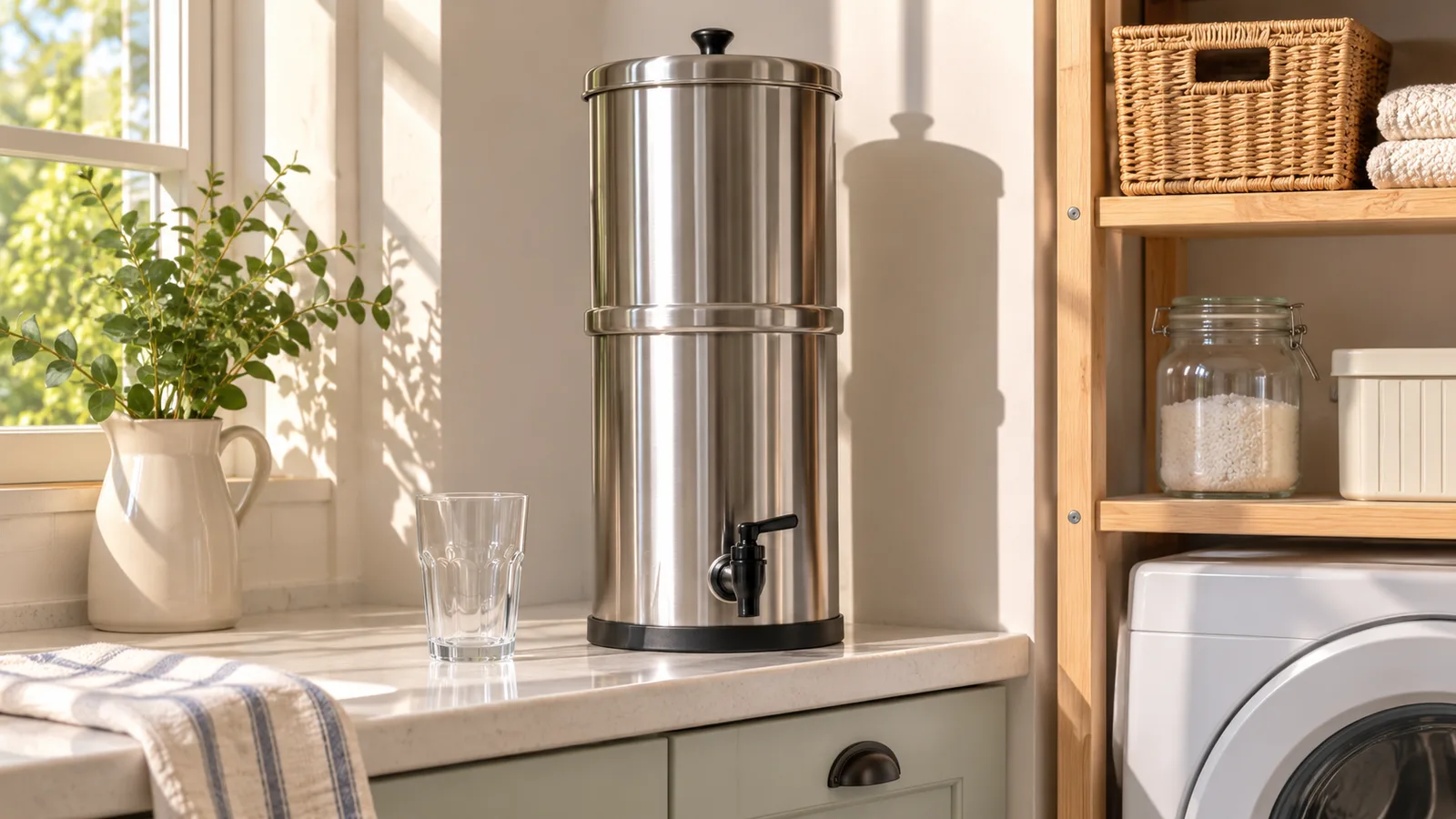
Use harvested roof runoff primarily as non-potable sanitation water (pouring 1.5 gallons directly into your porcelain toilet bowl to trigger a manual gravity flush when city water pressure is down), saving your pristine indoor bottled/tap water strictly for drinking and cooking. If you ever must drink rainwater in an extreme survival scenario, route it through a first-flush diverter, boil it for 1 minute (or dose with Chlorine Dioxide), and filter it through an NSF/ANSI 53 activated carbon filter (British Berkefeld / Grayl) to strip roof-shingle heavy metals and wildfire ash.
Roof Runoff Yield by Roof Footprint & Rainfall Depth
| Roof Area (Horizontal Footprint) | 1.25 cm (0.5 in) Light Rain | 2.5 cm (1.0 in) Moderate Storm | 7.5 cm (3.0 in) Heavy Atmospheric River |
|---|---|---|---|
| 110 m² (1,200 sq ft) | ~1,360 Liters (360 Gal) | ~2,725 Liters (720 Gal) | ~8,175 Liters (2,160 Gal) |
| 185 m² (2,000 sq ft) | ~2,270 Liters (600 Gal) | ~4,540 Liters (1,200 Gal) | ~13,625 Liters (3,600 Gal) |
| 280 m² (3,000 sq ft) | ~3,400 Liters (900 Gal) | ~6,810 Liters (1,800 Gal) | ~20,440 Liters (5,400 Gal) |
(Assumes 90% collection efficiency after minor splash and evaporation losses.)
Three Essential Rain Barrel Engineering Rules
- Install a Downspout Diverter With Automatic Overflow Return: Never cut a gutter downspout straight into the open top of a barrel without an overflow pipe—once a 50-gallon barrel fills in 10 minutes, overflowing water dumps right against your house foundation and floods your basement. Use a Fiskars or EarthMinded diverter that automatically routes excess water back down the original downspout once the barrel is full.
- Screen Every Opening Against Mosquitoes: Cover the top inlet with fine 1/16-inch aluminum window screen so mosquitoes cannot lay eggs inside standing water.
- Drain Barrels Before Hard Winter Freezes: A full 50-gallon plastic rain barrel freezing solid in January will crack its bottom brass spigot or split the polyethylene wall—open the bottom drain valve every November in freezing climates.
Operational Boundaries & When to Skip: Emergency Rainwater Harvesting
Never collect rainwater for drinking immediately after a nearby wildfire, roofs coated in ash and structural smoke fallout contain elevated benzene, polycyclic aromatic hydrocarbons (PAHs), and heavy metals that standard hollow-fiber camping filters cannot remove.
Related Guides, Equipment & Planning Tools: Emergency Rainwater Harvesting
Use our browser-local Calculate Your Household Emergency Water Storage Volume to model your exact household numbers before purchasing hardware. Compare detailed manufacturer specifications in our British Berkefeld 8.5L Gravity Water Filter Equipment Guide and Katadyn Micropur MP1 Chlorine Dioxide Tablets Equipment Guide, and integrate this setup with our How to Calculate Emergency Water Storage for a Family of 4 and Emergency Water Purification Methods Compared.
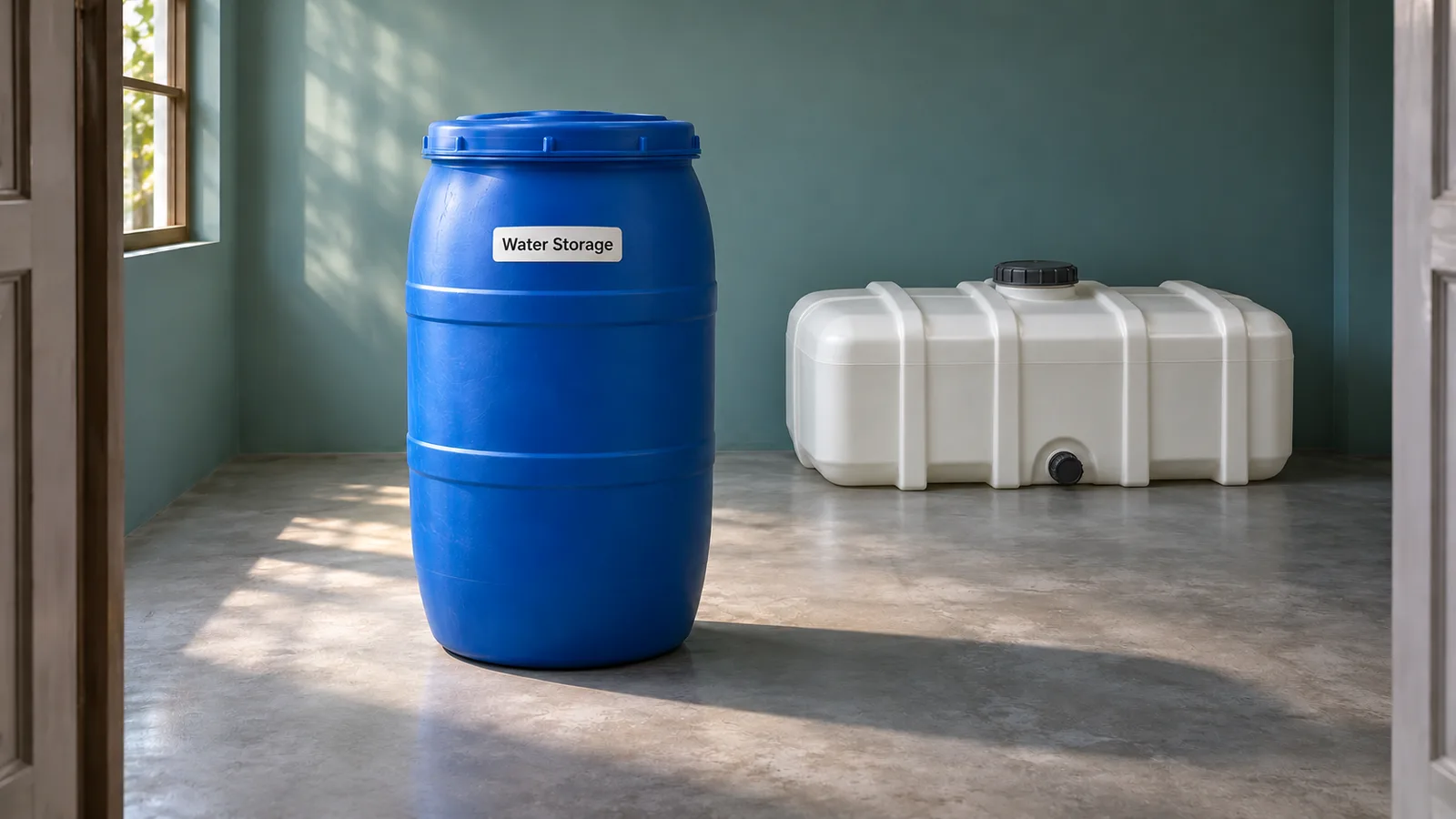
Augason Farms 55-Gallon Water Barrel
- Empty container weight
- 22 lb
Why it fits Documented specification match for rainwater harvesting emergency sanitation first flush planning, verify exact model compatibility, dimensions, and household capacity before ordering.
Key trade-off A filled 55-gallon drum is very heavy. Place it before filling, and verify that the floor and any supporting platform can safely carry the load.
Specifications & research
Model alternative. Source records checked on 2026-11-04. Manufacturer research, not hands-on testing.
- Listed water capacity
- 55 US gal · Source checked 2026-11-04
- Empty container weight
- 22 lb · Source checked 2026-11-04
Manufacturer documentation. Confirm the exact container, storage location, handling and cleaning instructions before buying.