In this guide Jump to a section
- Engineering Baseline & Primary Fit: Does Stored Water Expire? The 6-Month vs.
- Emergency Water Rotation Matrix by Container & Temperature
- How to Rotate Stored Water Without Wasting a Drop
- Operational Boundaries & When to Skip: Does Stored Water Expire? The 6-Month vs.
- Related Guides, Equipment & Planning Tools: Does Stored Water Expire? The 6-Month vs.
Engineering Baseline & Primary Fit: Does Stored Water Expire? The 6-Month vs.
Pure water ($H_2O$) never biologically or chemically “goes bad” on its own—what degrades over time is the container wall and the free chlorine residual keeping microbes dormant.
Follow a three-tier rotation schedule based on container material and storage temperature:
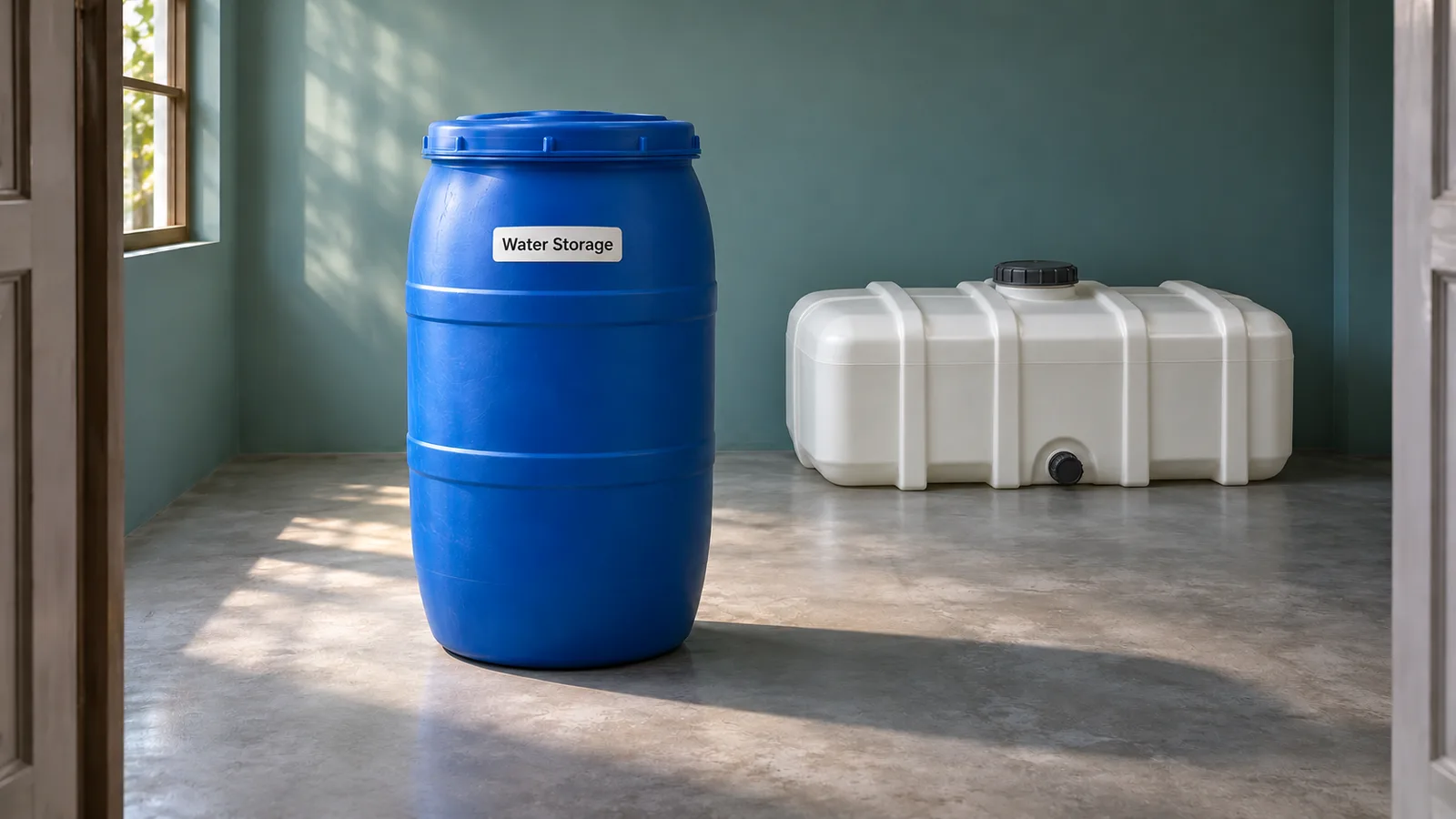
- Every 6 to 12 Months: Municipal chlorinated tap water stored in thick, opaque food-grade HDPE containers (Scepter jerrycans, WaterBricks, 55-gallon drums) in a cool, dark room below 21°C (70°F).
- Every 5 Years: Tap water treated at fill time with Aquamira Water Preserver (stabilized chlorine dioxide) inside sealed HDPE drums, or commercially sealed thick-walled PET bottles kept indoors.
- Every 50 Years (Zero Rotation): Hermetically sealed aluminum cans (Blue Can or Datrex pouches), which withstand -29°C to +65°C (-20°F to +150°F) inside parked car trunks and uninsulated garages without leaching plasticizers.
Emergency Water Rotation Matrix by Container & Temperature
| Storage Container & Treatment | Safe Rotation Interval | Safe Temperature Ceiling | Why It Fails If Held Longer |
|---|---|---|---|
| Thin Grocery 1-Gallon Milk/Water Jugs | 3 to 6 Months (Avoid for long-term) | 24°C (75°F) | Blow-molded HDPE seams split unpredictably, flooding closets |
| Municipal Tap Water in Heavy HDPE (Scepter / WaterBrick) | 6 to 12 Months | 25°C (77°F) indoor/shaded | Free chlorine dissipates; stagnant flat taste develops |
| HDPE Drum + Aquamira Water Preserver | 5 Years | 25°C (77°F) indoor/shaded | Stabilized $ClO_2$ maintains long-term bacteriostatic residual |
| Commercial Bottled Water Cases (Costco / Sam’s) | 1 to 2 Years | 24°C (75°F) (Never in sun) | Thin PET plastic becomes brittle and imparts plastic taste |
| Hermetically Sealed Aluminum Cans (Blue Can) | 50 Years | -29°C to +65°C (-20°F to 150°F) | Zero UV penetration, zero gas permeability, zero BPA leaching |
How to Rotate Stored Water Without Wasting a Drop
- Tie Water Rotation to Daylight Saving Weekend (March & November): When you change your smoke detector batteries twice a year, pour your stored WaterBricks or Scepter cans onto indoor houseplants, garden beds, or into your washing machine rinse cycle, rinse the interior with clean water, and refill fresh from the cold kitchen tap.
- Fix “Flat” Stored Water Taste in 30 Seconds: Stored water tastes stale solely because dissolved oxygen escapes while sealed in a jug. Pouring rotated water back and forth between two clean pitchers four times re-aerates the water and restores crisp tap flavor immediately.
Operational Boundaries & When to Skip: Does Stored Water Expire? The 6-Month vs.
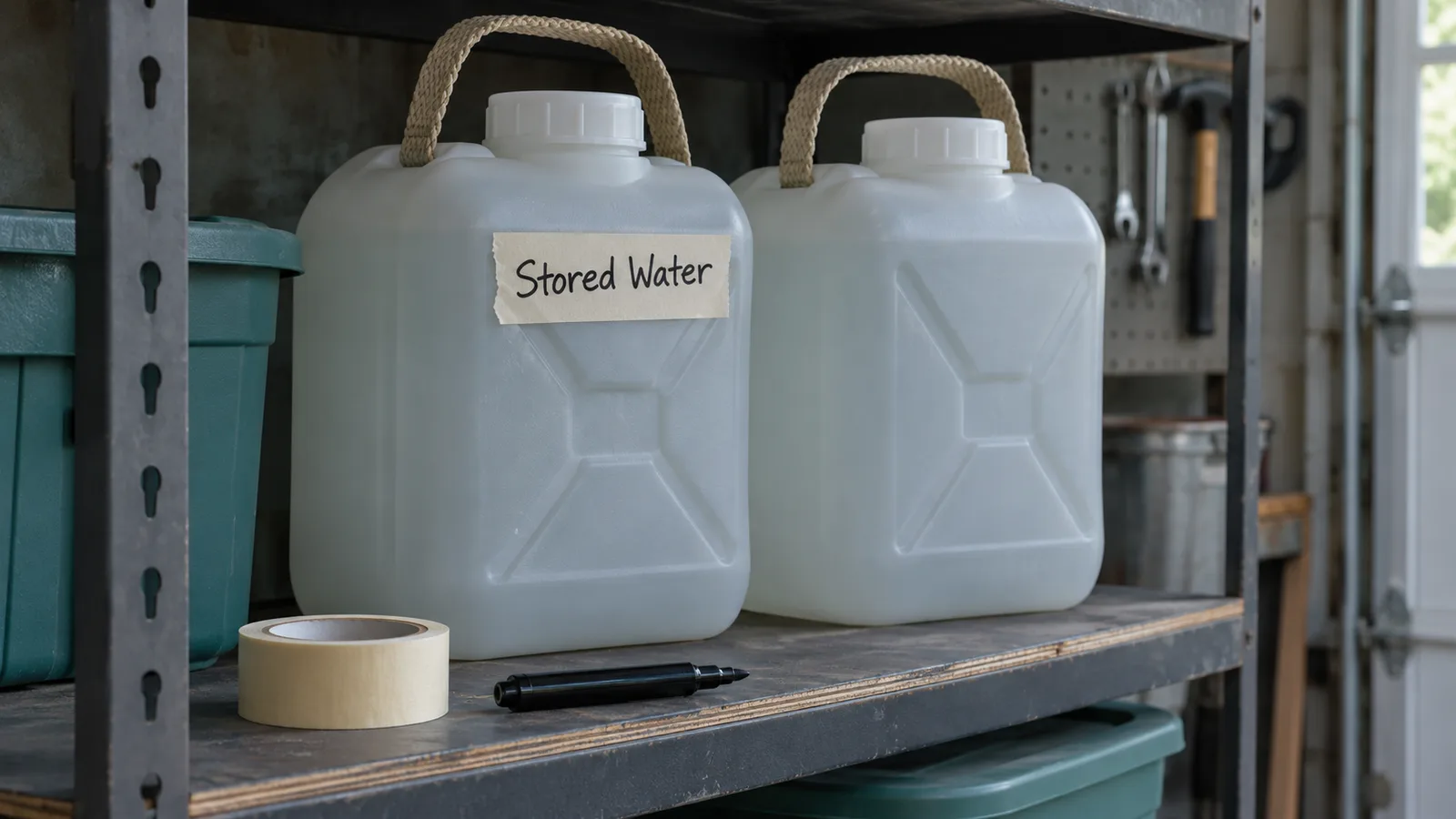
Never store plastic water jugs directly on bare concrete garage floors or next to gasoline cans, lawn fertilizers, or pool chlorine—polyethylene is semi-permeable to hydrocarbon vapors over multi-month periods, which permanently ruins drinking water taste.
Related Guides, Equipment & Planning Tools: Does Stored Water Expire? The 6-Month vs.
Use our browser-local Calculate Your Household Emergency Water Storage Volume to model your exact household numbers before purchasing hardware. Compare detailed manufacturer specifications in our British Berkefeld 8.5L Gravity Water Filter Equipment Guide and Katadyn Micropur MP1 Chlorine Dioxide Tablets Equipment Guide, and integrate this setup with our How to Calculate Emergency Water Storage for a Family of 4 and Emergency Water Purification Methods Compared.
BayTec Purogene Chlorine Dioxide Water Preserver (4 oz)
Why it fits Documented specification match for how often to rotate stored emergency water planning, verify exact model compatibility, dimensions, and household capacity before ordering.
Key trade-off Intended for keeping clean stored drinking water fresh and preventing slimy taste/odor buildup; it is not a rapid single-drop replacement for EPA micro-biological shock disinfection unless activated per label.
Specifications & research
Model alternative. Source records checked on 2026-11-12. Manufacturer research, not hands-on testing.
- Active ingredient
- 2% Stabilized Chlorine Dioxide aqueous solution · Source checked 2026-11-12
- Maintenance dosage
- 1 fl oz (2 tbsp) per 30 US gallons (~5 ppm maintenance dose, no activator needed) · Source checked 2026-11-12
- Sanitizing note
- Tank disinfection requires acid activation (16 fl oz + citric acid per 50 gal, 1 hr wait) · Source checked 2026-11-12
Manufacturer documentation. Confirm exact BayTec / Biocide International model specifications and household safety limits before buying.