In this guideJump to a section
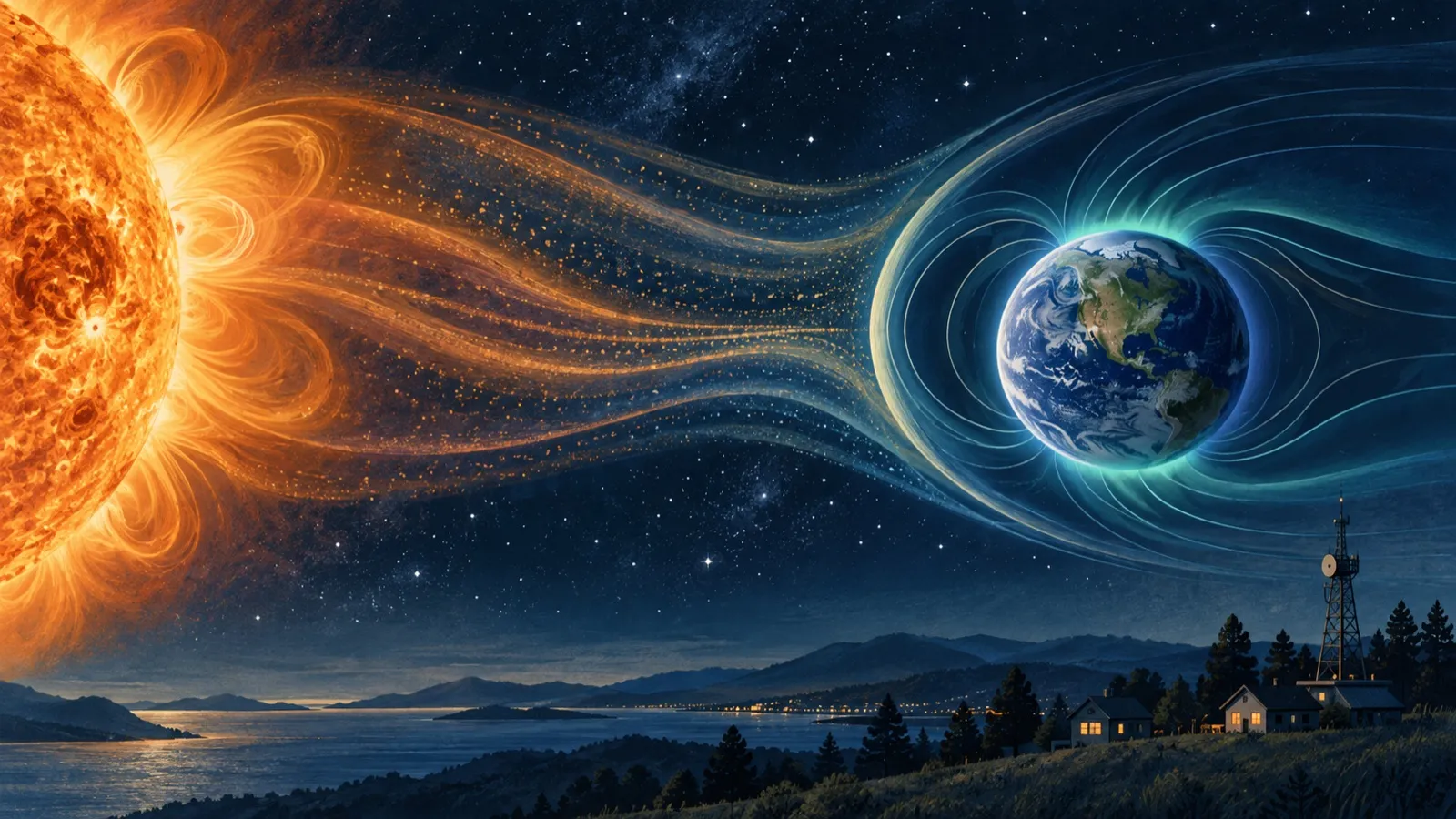
Solar activity is real, but a headline about a “solar storm” does not tell you whether your household will lose power. NOAA uses different scales for different phenomena, and each scale describes possible effects. It is not a forecast for a particular street, utility, or home.
The National Weather Service says space weather can affect power systems and communications, but the vast majority of NOAA G5 geomagnetic storms do not cause catastrophic grid damage. That context matters: the G5 category describes a severe physical event and possible system effects, not a guaranteed nationwide blackout.
Keep the three NOAA scales separate
| NOAA scale | Describes | Possible technology effects NOAA lists |
|---|---|---|
| G1–G5 geomagnetic storm | Disturbances in Earth’s magnetic environment associated with geomagnetic storms. | Power-system effects range from possible weak fluctuations at G1 to widespread voltage and protective-system problems, with possible grid collapse in some systems, at G5. These are possibilities, not a forecast that a home will lose service. |
| S1–S5 solar radiation storm | Solar energetic particles and their impacts. | Effects focus on spacecraft, high-latitude aviation exposure, radio, and navigation systems. It is not the G scale for grid impacts. |
| R1–R5 radio blackout | Solar-flare-related radio-frequency effects. | High-frequency radio and some navigation signals can be affected, especially on the sunlit side of Earth. It is not a geomagnetic-storm or household power-outage level. |
See the current NOAA Space Weather Scales for exact definitions and possible effects at each level. The NOAA impacts overview explains how the different phenomena affect grid, radio, satellite, and navigation technologies.
Read the scale with context
When a post or alert names a level, use this short check:
- Find the issuing source. Open NOAA’s Space Weather Prediction Center for space-weather products and your utility or local emergency office for service instructions.
- Identify the letter. G, S, and R do not describe the same event or impacts.
- Check the time and product. A watch, warning, observed level, forecast discussion, and retrospective report are different things.
- Read “possible” literally. A listed effect is not proof that it happened, a probability for your neighborhood, or a prediction of household impact.
- Check local service status separately. Follow your utility’s outage map, public-safety notices, and local emergency instructions for conditions where you live.
Aurora visibility is not a grid-outage gauge, and an international or national scale is not a household forecast. NOAA’s scale page itself separates G geomagnetic storms from S radiation storms and R radio blackouts; use the letter and source rather than a sensational headline.
Keep ordinary preparedness in proportion
There is no special household device action that follows automatically from a G, S, or R level. Do not unplug every appliance, modify wiring, or disable communications based on a generic post. Follow the manufacturer’s instructions for electronics and any specific direction from your utility or emergency officials.
The practical household work is the same preparation useful for many disruptions: keep local alerts enabled, know how to contact household members, maintain needed medication and accessibility plans, and know where your light and phone charging options are. The home emergency kit guide organizes those routine needs. The power-outage plan for the whole household covers what to do if a local outage actually occurs.
If an event is underway, use current NOAA updates for space-weather information and local utility or emergency-management instructions for decisions on the ground. This explainer does not predict a solar event, blackout, universal equipment failure, or local service interruption.