In post-fire structural forensic audits conducted by CAL FIRE and the Insurance Institute for Business & Home Safety (IBHS), property perimeter fencing emerges as one of the most common pathways of structural loss. A standard wood privacy fence attached to a house acts as an uninterrupted combustible fuse. When wind-driven embers ignite dry grass, leaf litter, or mulch along the base of the fence line hundreds of feet away, the fire crawls along the horizontal fence rails directly to the exterior wall of the home.
To prevent this catastrophic ignition path, both California’s AB-3074 (Zone 0) defensible space regulations and the IBHS Wildfire Prepared Home standard mandate that any fence or gate attached to a primary dwelling must be completely noncombustible for at least the first five feet extending away from the structure.
Scroll sideways to read the enlarged diagram.
Why vinyl and composite fencing fail in Zone 0
A widespread mistake among homeowners is replacing deteriorating cedar or redwood fencing with vinyl (PVC) or wood-plastic composite materials, assuming that non-wood materials are fireproof. In a wildfire, both materials fail catastrophically:
- Vinyl (PVC) Fencing: Polyvinyl chloride begins to deform and soften at temperatures as low as 140°F (60°C). When exposed to radiant heat from an approaching brush fire, vinyl fence posts and pickets melt, droop, and collapse within two to three minutes. Once ignited, burning plastic drips onto dry vegetation below and burns vigorously, producing intense toxic smoke and creating a liquid fuel path directly toward the building foundation.
- Wood-Plastic Composites (WPC): Most standard composite decking and fencing materials consist of 50 to 60 percent recycled wood flour bound with polyethylene plastic. While denser than raw wood, composite materials are classified as combustible. Under prolonged ember exposure, composites sustain smoldering combustion that is difficult to extinguish, continuing to burn until reaching the structure.
Under California AB-3074 regulations and IBHS standards, vinyl and composite materials are strictly prohibited within the 0-to-5-foot Zone 0 boundary unless the specific composite product has achieved a certified Class A flame-spread rating under ASTM E84 testing.
Noncombustible fencing materials matrix
When planning a 5-foot fence transition, homeowners have several compliant material options that satisfy both fire codes and neighborhood aesthetics:
| Fencing Material | Fire Performance | Durability & Maintenance | Average Material Cost (5-Ft Section) | Best Use Case |
|---|---|---|---|---|
| Tubular Steel (Wrought Iron) | Noncombustible (melts at 2,700°F) | Powder-coated steel resists rust; requires inspection every 3 years | 220 to 480 dollars | Side pedestrian walk gates; highly visible front setbacks |
| Powder-Coated Aluminum | Noncombustible (melts at 1,220°F) | Immune to rust; excellent in coastal salt air zones | 180 to 420 dollars | Lightweight side gates; coastal mountain properties |
| Corrugated Galvanized Metal | Noncombustible; zero flame spread | Highly durable; minimal maintenance over 20+ years | 90 to 190 dollars | Privacy transitions matching rustic modern home architecture |
| Welded Wire Mesh (Steel Hog Wire) | Noncombustible heavy-gauge steel | Excellent air flow; requires painted or galvanized steel frame | 110 to 240 dollars | Open hillside lots; low visual profile in garden settings |
| Concrete Masonry Unit (CMU) Pier | Completely fireproof; 2+ hour fire rating | Permanent structural barrier; zero ongoing maintenance | 350 to 750 dollars | Zero-lot-line townhomes; high-wind fire corridors |
| Standard Cedar / Redwood | Combustible; fuels flame spread | Requires regular staining; decays over time | Prohibited in Zone 0 | Permitted only starting 5 feet away from exterior wall |
For multi-unit properties and townhomes navigating common-area fencing regulations, review our dedicated guide on HOA Zone 0 defensible space compliance.
How to retrofit an existing wood fence in 4 steps
You do not need to replace your entire property fence line to achieve compliance. Homeowners can retain existing wooden perimeter fences by installing a dedicated 5-foot noncombustible transition where the fence meets the house:
Step 1: Cut existing wood fence 60 inches back
Measure 60 inches (5 feet) from the exterior corner stud of your home along the fence line. Using a reciprocating saw or circular saw, cut cleanly through the top, middle, and bottom wood horizontal rails. Remove the 5-foot section of wood pickets and rails completely, leaving the remaining perimeter fence structurally supported.
Step 2: Sink a structural steel terminal post
At the cut end of the remaining wooden fence (60 inches away from the house), dig a post hole 10 inches wide and 24 to 30 inches deep (extending below your local frost line). Set a 2-3/8-inch round or 2x2-inch square schedule 40 galvanized steel post in concrete. Fasten the remaining wooden fence rails to this new steel post using steel fence-to-post brackets.
Step 3: Install an all-metal walk gate or corrugated panel
Fill the 5-foot gap between the new steel terminal post and the house exterior:
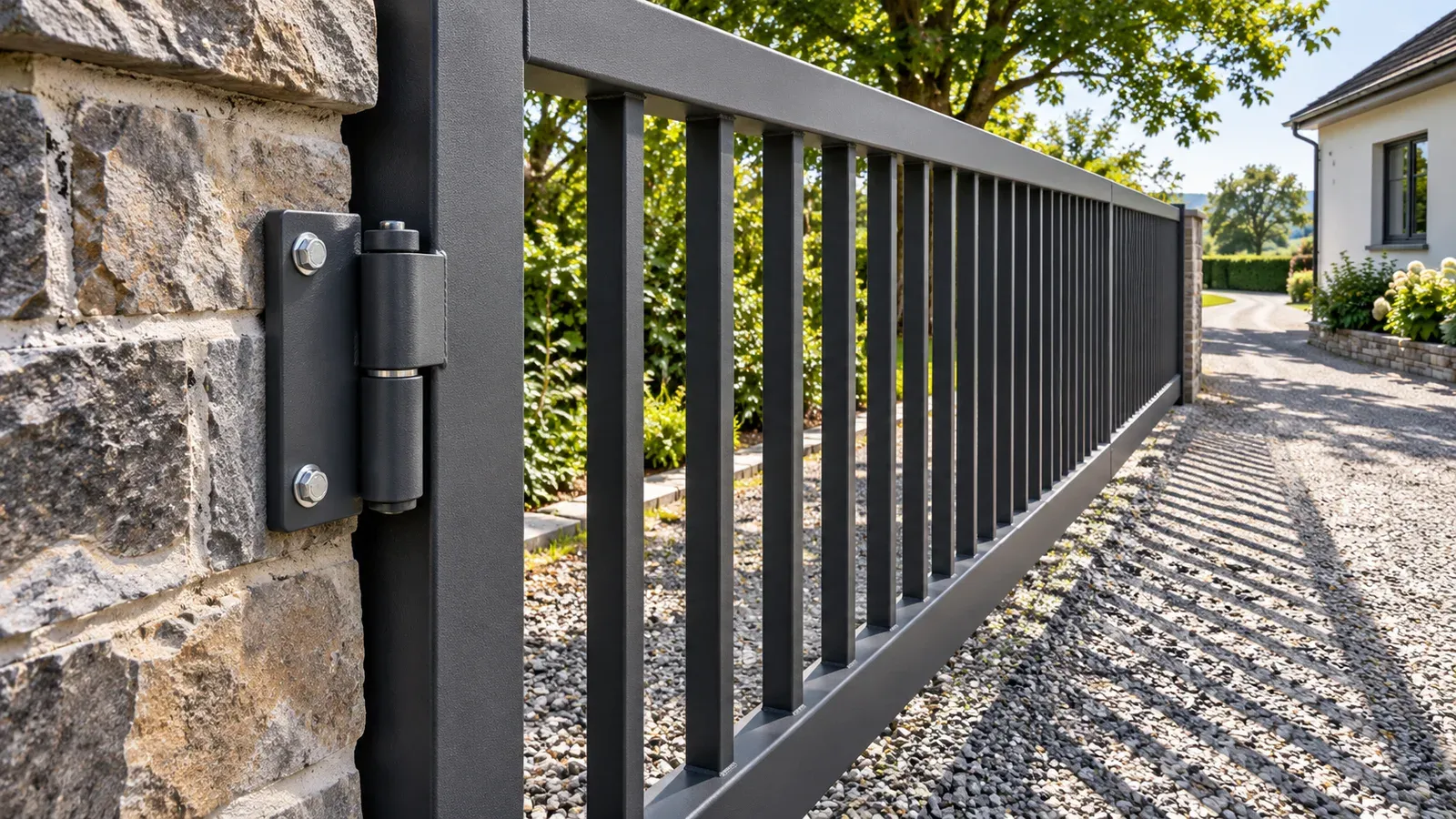
- Option A (Walk Gate): Install a prefabricated 5-foot powder-coated tubular steel or aluminum gate hung from the steel terminal post, latching toward the house.
- Option B (Solid Panel): Frame a 5-foot stationary panel using steel unistrut or galvanized angle iron, infilling the frame with 26-gauge corrugated galvanized sheet metal or Corten weathering steel.
Step 4: Isolate the house attachment point
Never nail or lag-bolt a wooden gate post directly into exterior wood siding or trim. If attaching a metal gate latch or hinge to the building, anchor directly into framing using stainless steel lag bolts with high-temperature silicone sealant. Maintain at least a 1-inch thermal air gap between any metal post and combustible wall siding to prevent heat conduction during prolonged fire exposure.
Retrofit cost breakdown
| Component | DIY Material Cost | Professional Contractor Cost | Expected Lifespan |
|---|---|---|---|
| Prefabricated Steel Gate (5 ft x 6 ft) | 220 to 380 dollars | 550 to 950 dollars installed | 25+ years |
| Corrugated Metal Panel DIY Assembly | 95 to 170 dollars | 350 to 600 dollars installed | 30+ years |
| Steel Posts, Concrete, & Hardware | 65 to 110 dollars | Included in contractor bid | 40+ years |
| Masonry Pier Wall (5 ft x 6 ft) | 180 to 320 dollars | 800 to 1,600 dollars installed | 50+ years |
Investing between 300 dollars and 900 dollars in a 5-foot metal transition delivers rapid return on investment by qualifying for property insurance mitigation credits under California’s Safer from Wildfires framework. When combined with ASTM E2886 ember vent upgrades, noncombustible fencing transitions eliminate the primary ember entry and flame transmission pathways on residential parcels.
Replacing the 5-foot wooden gate attachment satisfies one of the 12 underwriting criteria under California’s mitigation framework, though most carriers require multiple parcel and home-hardening items together before applying full rate credits. Check which remaining credits apply to your roof, eaves, and vents in the California Safer from Wildfires Insurance Mitigation Planner, follow our Zone 0 5-foot noncombustible perimeter guide, review the Safer from Wildfires 12-discount checklist, and inspect the Vulcan Vent ember-resistant gable vent.
Frequently asked questions
Is vinyl fencing considered noncombustible for Zone 0?
No. Vinyl (PVC) fencing is classified as a combustible plastic. When exposed to wildfire radiant heat, vinyl melts at approximately 140°F, collapses within minutes, and catches fire, creating a liquid burning fuel trail directly against exterior home siding. It is strictly banned within the first 5 feet of structures under California AB-3074 and IBHS standards.
How far must noncombustible fencing extend from a house?
Under both California state defensible space regulations and the IBHS Wildfire Prepared Home standard, noncombustible fencing must extend a minimum of 5 feet (60 inches) outward from the exterior finished wall or any attached combustible structure (such as an attached wooden deck, porch, or pergola).
Can I keep my wooden fence if I install a metal gate?
Yes. You do not need to replace your entire property fence line. Replacing the final 5 feet that touches your home with an all-metal gate or noncombustible panel severs the combustible fuse, satisfying both state defensible space laws and private insurance home-hardening requirements.
What is the cheapest way to retrofit a wood fence for Zone 0?
The most cost-effective method is removing the first 5 feet of wood pickets and rails, setting a galvanized steel post at the 5-foot mark, and installing a framed 26-gauge corrugated sheet metal panel between the post and the house. Materials typically cost between 90 dollars and 170 dollars for a complete DIY installation.