How Many Watts Does a Refrigerator Use? Running Power, Startup, and Daily Energy
Separate a refrigerator’s running watts, brief compressor-start demand, and daily watt-hours so a backup-power estimate uses the right number for each job.
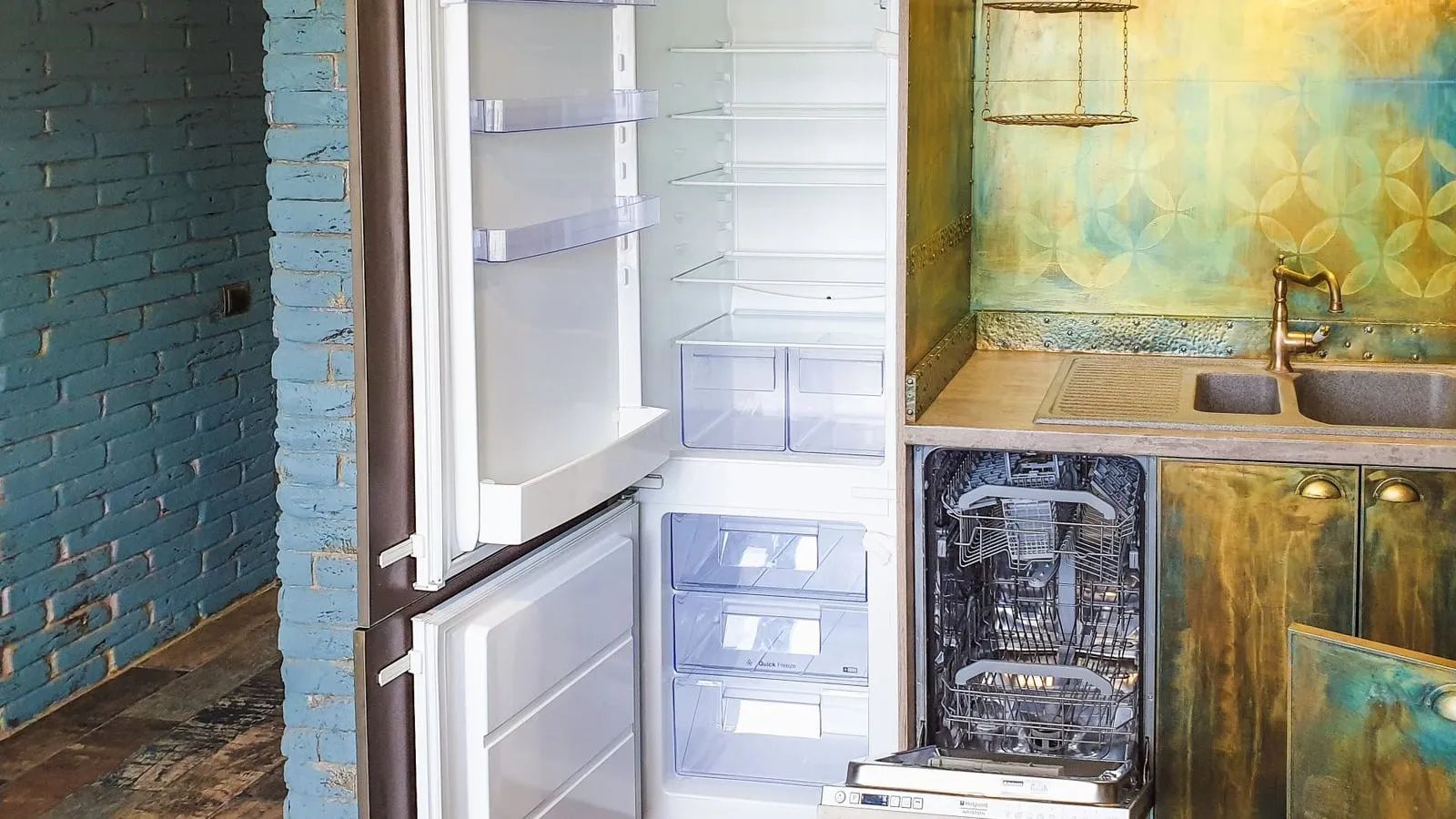
A refrigerator can show a low average draw across a day and still need a much higher brief burst when its compressor starts. If you are standing beside a portable battery with the fridge manual in hand, keep three entries separate: watts while running, verified startup watts, and watt-hours used over a representative day.
The Battery Runtime Planning Guide covers the broader battery calculation. This page is for obtaining the refrigerator values that belong in it; a fridge’s average energy use does not prove that a battery inverter can start or continuously run it.
Three numbers, three different checks
| Record | What it answers | Where to look |
|---|---|---|
| Running watts (W) | Can the inverter carry the refrigerator while it is operating, alongside other loads that may overlap? | Exact appliance manual or a suitable plug-in power meter during a compressor-on period. |
| Startup watts (W) | Can the inverter supply the brief compressor-start demand? | Exact-model manufacturer data, if published, or a meter designed to capture the start event. Do not substitute a generic multiplier. |
| Daily energy (Wh/day) | How much stored energy should the refrigerator consume over a day under the measured conditions? | A plug-in energy meter over a representative 24-hour period, or the EnergyGuide value as a rough comparison baseline. |
The Haier support table, reviewed October 14, 2026, lists 115 W running and 690 W at startup for its HC45SG42S compact refrigerator entry. Those are the manufacturer’s listed figures for that entry, not a refrigerator rule or a value to transfer to your appliance. The table has incomplete rows and the exact suffix matters, so use those figures only when the model on your appliance matches the entry.
Find the running and startup ratings safely
Start with the model number on the appliance label and the manufacturer’s current owner’s manual or specifications. Record the voltage and any current, running-watt, or locked-rotor information too. A current rating is not always equivalent to watts: power factor and the brief measurement interval matter. Do not turn an amp value into an assumed startup-watt figure unless the manufacturer provides the conversion or a qualified professional verifies it.
A plug-in meter that reports ordinary watts can help you see the compressor’s running draw. Many basic meters average over an interval and miss the short startup event. If the manual does not publish startup watts, leave that value unknown until you can obtain a suitable measurement or manufacturer answer. Do not use a guessed “two or three times running watts” as a battery fit check.
Use only a meter rated for the refrigerator’s voltage, current, plug, and continuous load, and follow both manuals. Do not open the refrigerator, compressor, outlet, or electrical panel to measure it. If the plug, cord, outlet, or appliance is warm, damaged, sparking, or smells burnt, stop and get qualified help. The refrigerator manual controls whether a meter, extension, or other connection is permitted.
Measure a representative day
Put a suitable plug-in energy meter between the wall outlet and refrigerator only if both manufacturers allow it. Record cumulative Wh over 24 hours; include normal door openings, ice-making, settings, and the room conditions you expect during the outage. A single compressor-on watt reading cannot represent the daily cycling pattern.
If you cannot meter it, the yellow EnergyGuide label gives a model-level annual energy estimate. Divide the printed kWh/year by 365 to estimate kWh/day, then multiply by 1,000 to get Wh/day. Divide that daily Wh by 24 for a rough average watt figure. This average is useful for an energy estimate only; it is not the running-watt rating or compressor startup demand.
Example using a model label
Haier lists 448 kWh/year for its HRQ16N3BGS refrigerator, as reviewed October 14, 2026. The official ENERGY STAR record for the HRQ16N3B** model family, checked October 15, corroborates that annual figure. Neither source supplies a measured household day or startup watts. The arithmetic is:
448 kWh/year ÷ 365 ≈ 1.23 kWh/day1.23 kWh/day × 1,000 ≈ 1,230 Wh/day1,230 Wh/day ÷ 24 ≈ 51 W average
That about 1,230 Wh/day and about 51 W average are conversions of the manufacturer’s annual label estimate, not a measured outage result. The FTC explains that EnergyGuide figures are estimates; actual use varies. A warm kitchen, older seals, heavy use, settings, defrost cycles, and a different model can change the result. Use a meter on your own refrigerator when the distinction matters.
Put the values into a backup plan
Before relying on battery power, check the exact refrigerator and battery manuals. Compare the refrigerator’s running watts plus other simultaneous loads with the battery’s continuous AC output. Separately compare verified compressor startup watts with the battery’s surge rating and stated surge duration. Even a matching peak number may not establish that the inverter can carry the combined load through startup.
Use measured 24-hour Wh as the refrigerator’s energy entry. In the calculator, use its measured-energy mode and include the matching load set’s measured daily energy. Enter the separate simultaneous running demand for the output check. Reserve and conversion-loss assumptions belong in the battery estimate, not in the meter’s Wh reading. The calculator does not model the brief motor start, food temperature, changing weather, or a guarantee of real runtime.
If you are estimating how long food remains safe after power fails, use the Food Safety During a Power Outage calculator and current food-safety guidance. A battery-runtime estimate cannot answer that question.
Keep a measurement card
Write down the information where the household can find it during an outage:
- Refrigerator brand, full model number, voltage, and manual location
- Running watts and how they were checked
- Startup watts, source or meter, and whether the exact model matched
- Measured Wh and measurement start/end times, or EnergyGuide kWh/year
- Room temperature, door-use pattern, ice-maker state, and unusual conditions
- Battery continuous output, surge watts, surge duration, and connection limits
- The loads to shed before connecting or starting the refrigerator
Repeat the daily-energy reading after a major change in season, settings, maintenance, or household use. Treat a number without a source and measurement condition as an open question, not a promise of outage runtime.