In this guide Jump to a section
- Compare output and fuel choices
- Top Dual-Fuel & Quiet Inverter Generators Compared
- The Hybrid Blackout Strategy: Pairing a Dual-Fuel Generator With a 2kWh Battery
- Propane Vaporization in Cold Weather
- Generator Readiness Checklist
- When a portable generator is unsuitable
- Size the rest of your generator backup plan
Compare output and fuel choices
Standard gasoline generators suffer from one universal disaster failure mode: stale fuel. Untreated pump gasoline absorbs moisture and turns into varnish inside carburetor jets within 4 to 6 months, leaving homeowners pulling a starter cord endlessly during a hurricane or ice storm.
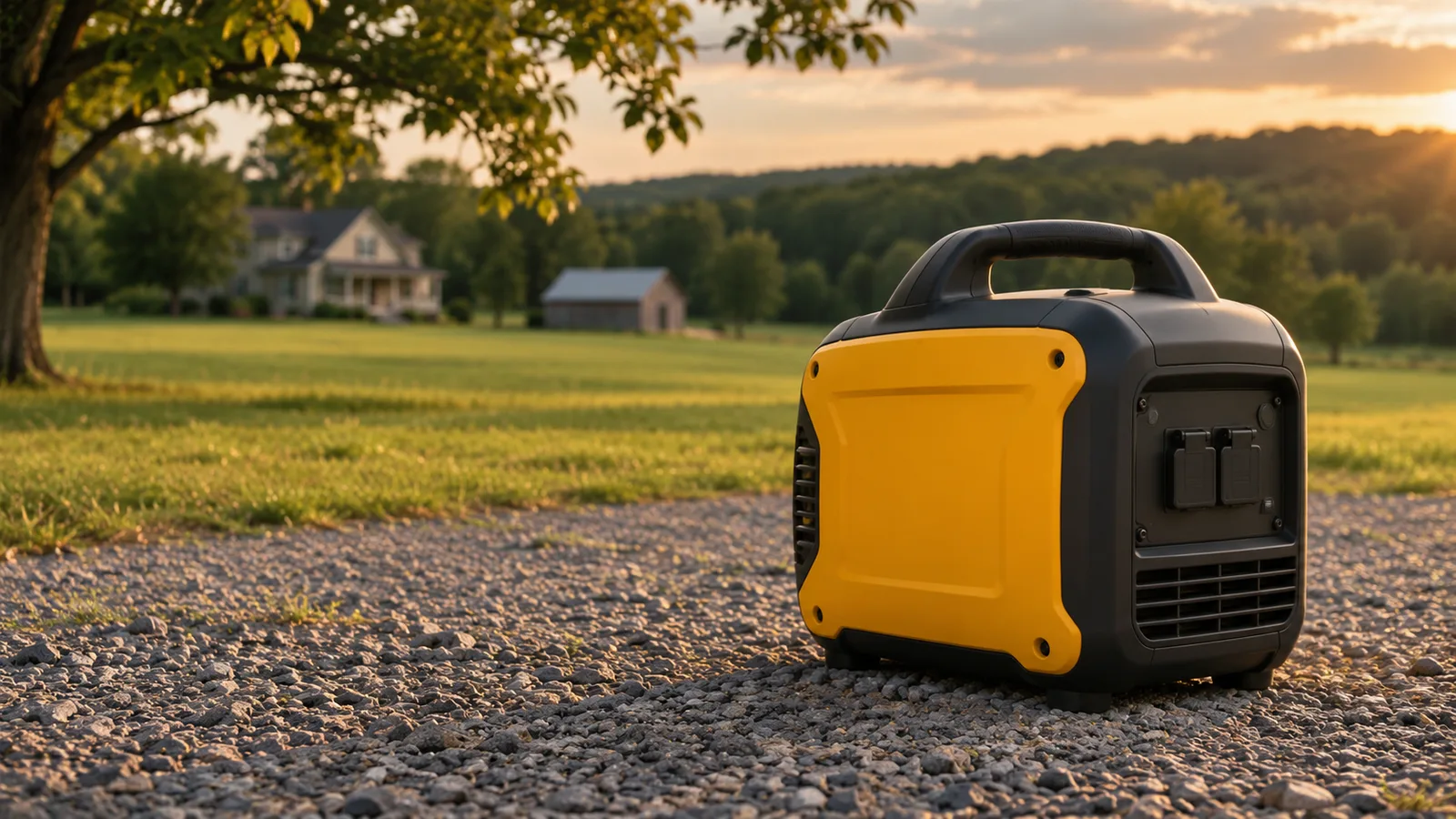
A Dual-Fuel Inverter Generator eliminates fuel spoilage by running on standard 20 lb or 40 lb liquid propane cylinders—which store indefinitely for 20+ years with zero carburetor gumming and vaporize cleanly down to -42°C (-44°F)—while generating clean, pure sine wave power (<3% THD) at quiet 52 to 64 dBA conversation volume. For whole-home transfer-switch or fast battery-recharging duty, the Westinghouse iGen4500DF is the top overall choice; for ultralight 21.5 kg (47.4 lb) reliability, choose the Honda EU2200i (paired with an aftermarket propane kit or ethanol-free fuel).
Top Dual-Fuel & Quiet Inverter Generators Compared
| Generator Model | Gasoline Watts (Peak / Running) | Propane Watts (Peak / Running) | Noise Level (25% Load) | Starting System | Weight | Key Outlets & Features |
|---|---|---|---|---|---|---|
| Westinghouse iGen4500DF | 4,500W / 3,700W | 4,050W / 3,330W | 52 dBA | Electric + Remote Fob + Recoil | 42.2 kg (93 lbs) | TT-30R 30A RV, Dual 5-20R, CO Sensor, 18-hr runtime |
| Champion 4250W Dual-Fuel (200914) | 4,250W / 3,500W | 3,825W / 3,150W | 64 dBA | Recoil Pull Start | 36.7 kg (81 lbs) | TT-30R 30A, Dual 5-20R, Cold-Start Tech, CO Shield |
| WEN DF475T (120V/240V) | 4,750W / 3,800W | 4,350W / 3,500W | 62 dBA | Electric Start + Recoil | 45.0 kg (99 lbs) | 240V L14-30R Locking + 120V TT-30R + Dual 5-20R |
| Honda EU2200i (Gas / Propane kit) | 2,200W / 1,800W | ~1,980W / 1,620W | 48 dBA | Recoil (1-pull Honda GXR120) | 21.5 kg (47.4 lbs) | Dual 20A 120V, CO-Minder, Parallel-capable |
| Firman WH03242 Dual-Fuel | 4,000W / 3,200W | 3,600W / 2,900W | 58 dBA | Electric Start + Recoil | 45.4 kg (100 lbs) | L5-30R, TT-30R, 5-20R, 14-hr runtime |
The Hybrid Blackout Strategy: Pairing a Dual-Fuel Generator With a 2kWh Battery
Running a gasoline or propane generator 24 hours a day wastes fuel overnight when household loads are tiny, attracts neighborhood noise attention, and burns through your fuel stash in 3 days. Instead, combine a dual-fuel inverter generator with a 2,048Wh LiFePO4 portable power station:
- Morning & Evening Recharge Windows (2 Hours Twice Daily): Start your dual-fuel generator outdoors on propane at 8:00 AM and 6:00 PM. Plug your 2kWh power station into the generator’s 20A/30A outlet—modern LFP stations charge at 1,400W to 1,800W, refilling from 20% to 100% in 75 minutes while simultaneously running your coffee maker, microwave, and refrigerator.
- Silent Indoor Battery Operation (20 Hours/Day): Shut the generator off at 7:30 PM. Your indoor LFP battery silently powers your fridge, Wi-Fi router, lights, and gas furnace blower all night with zero noise, zero exhaust, and 70% less total propane burned.
Propane Vaporization in Cold Weather
Liquid propane inside a tank must absorb heat from the outside air to boil into gas vapor. On a frigid -15°C (5°F) winter day, a small 20 lb BBQ cylinder running a 3,500W generator at heavy load can chill itself so rapidly that tank pressure drops and the generator sputters, even when the tank is still half full!
- The Fix: In freezing climates, keep 40 lb or 100 lb propane cylinders (which have double the surface area for heat absorption) or link two 20 lb cylinders together with a dual-tank brass manifold tee.
Generator Readiness Checklist
- Perform a 5-hour break-in oil change BEFORE storing: Small inverter engines shed microscopic metal machining shavings during their first 5 hours; run the generator for 5 hours under a 50% load, drain the factory oil while warm, and refill with full-synthetic 10W-30 (or 5W-30 for sub-zero winters) + a magnetic dipstick.
- Maintain a strict 6-meter (20-foot) outdoor clearance: Never run any generator, even a clean-burning propane inverter, inside a garage, carport, breezeway, or within 6 meters (20 feet) of open windows or attic vents.
When a portable generator is unsuitable
Inverter generators are outdoor combustion machines, apartment and condo dwellers with no ground-level yard or driveway cannot legally or safely operate any gas/propane generator on a balcony. Rely exclusively on high-capacity LFP batteries and balcony solar panels in multi-family buildings.
Size the rest of your generator backup plan
Use our browser-local Estimate Generator Fuel Consumption & Runtime to model your exact household numbers before purchasing hardware. Compare 4,500-watt models side by side in our Westinghouse iGen4500DF vs. Champion 4500W Dual-Fuel comparison, check detailed manufacturer specifications in our Westinghouse iGen4500DF Dual-Fuel Generator Equipment Guide and Reliance Pro/Tran 2 306A Transfer Switch Equipment Guide, and integrate this setup with our Complete Backup Power Systems Guide and Portable Generator Safety & CO Clearance Guide.
Champion 4500W Dual Fuel Inverter Generator
- Running watts
- 3,500W (Gasoline) / 3,150W (Propane)
Why it fits Documented specification match for best dual fuel inverter generators planning, verify exact model compatibility, dimensions, and household capacity before ordering.
Key trade-off Never run a generator indoors, in a garage, or near open windows/vents; carbon monoxide from exhaust is fatal within minutes. Maintain at least 20 feet clearance from the home.
Specifications & research
Model alternative. Source records checked on 2026-11-04. Manufacturer research, not hands-on testing.
- Starting watts
- 4,500W (Gasoline) / 4,500W (Propane) · Source checked 2026-11-04
- Running watts
- 3,500W (Gasoline) / 3,150W (Propane) · Source checked 2026-11-04
- Start type
- Electric and manual recoil start · Source checked 2026-11-04
Manufacturer documentation. Confirm exact Champion Power Equipment model specifications and household safety limits before buying.