In this guideJump to a section
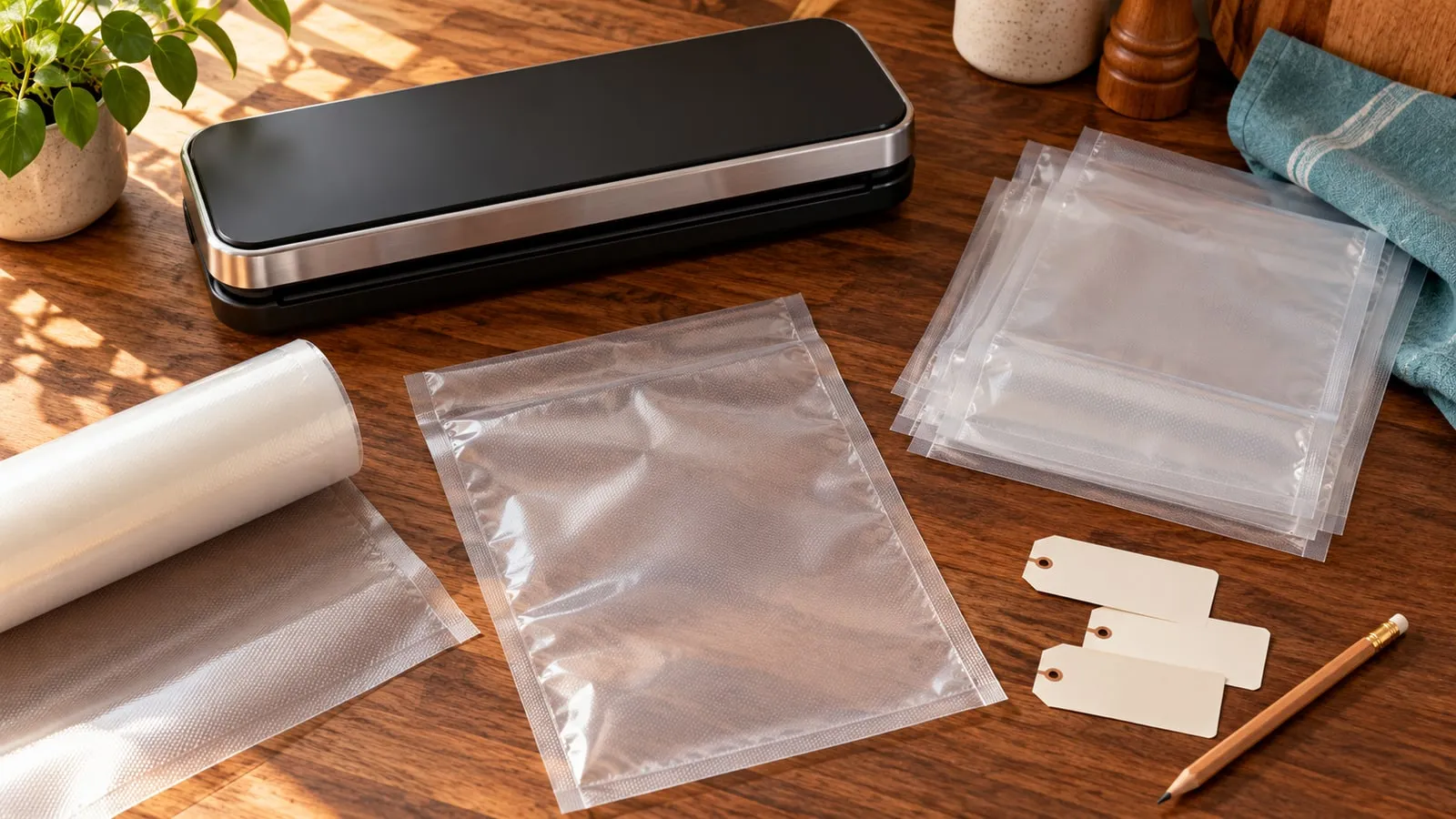
A vacuum sealer can make a frozen package neater and help protect quality. It can also make a bag look more permanent than it is. The next decision is where the food goes after sealing, not how long the seal might extend a clock.
A vacuum seal does not preserve perishable food by itself
University of Maine Cooperative Extension says vacuum sealing can reduce dehydration and freezer burn, helping preserve color, texture, and flavor during frozen storage. The same guide is clear that vacuum sealing alone does not make food shelf-stable and does not kill pathogens already in the food. In a reduced-oxygen package, organisms that grow without oxygen can still be a concern. Read the University of Maine guidance.
So do not use an intact vacuum seal as permission to leave meat, fish, cooked food, or another perishable item at room temperature. Keep it refrigerated or frozen according to the product and food-specific instructions. Sealing is one packaging step; it does not replace preservation or cold storage.
Route the package by the food inside
| Food and package state | Where it goes next | What to remember |
|---|---|---|
| A dry, low-moisture item that is already shelf-stable | Pantry only if the food itself is shelf-stable and its label or a tested method supports that storage. | The vacuum bag does not create shelf stability. Keep dry food dry and follow its own package directions. |
| Moist or otherwise perishable food, freshly vacuum-sealed | Refrigerator or freezer, as required for that food. | The seal does not make it safe at room temperature or extend the food-specific safe-storage time. |
| Food already frozen and vacuum packaged | Keep frozen until you are ready to thaw it. | The packaging may help limit freezer dehydration; it does not reset the product’s storage history. |
| Frozen fish in a vacuum package | Before thawing, remove it from the vacuum packaging; thaw in the refrigerator. | University of Maine specifically warns to remove frozen fish from the vacuum package before thawing. Illinois Extension also says to thaw vacuum-sealed foods in the refrigerator, including store-bought fish or chicken. |
Illinois Extension’s FAQ says vacuum-sealed foods should be kept refrigerated or frozen and that sealing is not a substitute for home canning. Its room-temperature allowance is limited to dry foods such as nuts or crackers; that statement does not allow moist or perishable food to sit on a pantry shelf. Read the Extension FAQ.
Before you put the bag away
- Check which food is inside and whether it was already safely handled before sealing.
- Write the food name and date on the package so the seal does not hide what it is or how long it has been stored.
- Move perishable food to the refrigerator or freezer right away, using its food-specific guidance.
- If frozen fish is vacuum packaged, remove the packaging before refrigerator thawing.
- Use a tested canning or dehydration process when you need shelf-stable preservation; vacuum sealing is not that process.
A tight seal is useful packaging, but it is not a safety check. Illinois Extension warns that harmful bacteria may not cause noticeable changes in food, so appearance and smell cannot establish that storage was safe. When the storage history is uncertain, use the food-specific safety guidance rather than guessing from how the bag looks. See its vacuum-sealing safety FAQ.
For refrigerator and freezer temperature settings, see the refrigerator/freezer temperature check.