In this guideJump to a section
A large bottle can be good value and still be the wrong size for a household that uses oil slowly. The date on the bottle, the kind of oil, and how long it will take to use matter more than one all-purpose “opened oil” number.
Check the oil and label before comparing dates
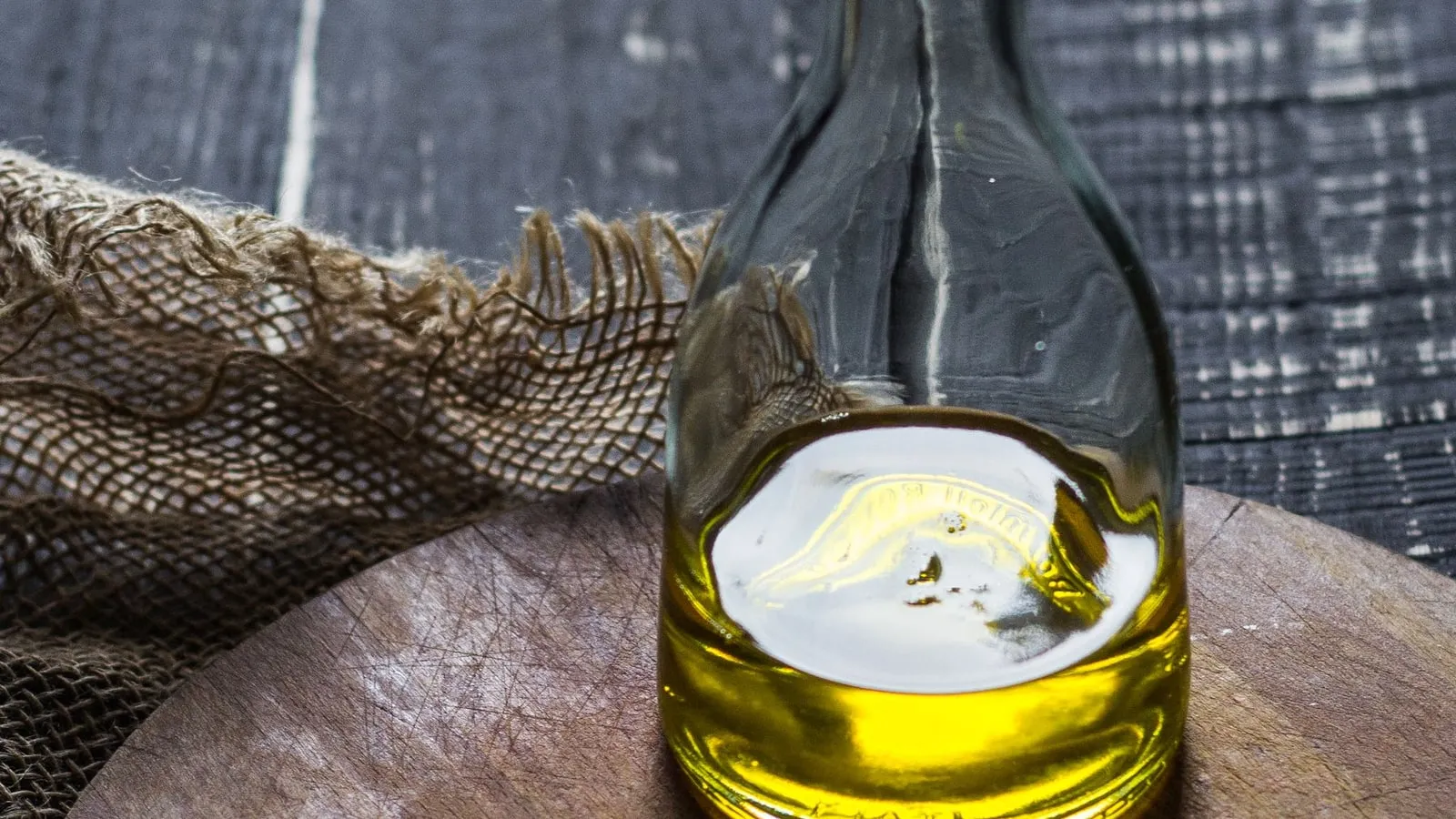
First identify the oil: olive, canola, or another type. Keep the best-before date and manufacturer storage directions visible. If you opened it earlier, write that date on the cap or bottle. Close the cap after each use and keep the bottle away from the stove, oven, and direct sun.
Light, heat, oxygen, and time can change oil quality. The North American Olive Oil Association summarizes olive-oil storage with “HOLA”—heat, oxygen, light, and age—and advises using olive oil within a few months after opening. Its separate “no more than two years” statement is measured from bottling, not from opening. Read the association’s olive-oil guidance.
For canola, the Canola Council of Canada says shelf life at room temperature is about one year. It does not give a separate opened-bottle interval. This example is specific to canola and should not be transferred to other oils. Read the Council’s canola oil page.
Compare bottle size with your actual use
The time to finish a bottle is simple arithmetic, not a fresh-use recommendation or a shelf-life claim. It can help you see whether a large bottle fits the pace at which your household uses that oil.
An illustrative bottle-size calculation
Suppose a household uses about 60 mL of one oil each week in recipes. At that assumed pace:
- A 250 mL bottle takes about 4 weeks to use: 250 ÷ 60 = 4.2 weeks.
- A 500 mL bottle takes about 8 weeks: 500 ÷ 60 = 8.3 weeks.
- A 1,000 mL bottle takes about 17 weeks: 1,000 ÷ 60 = 16.7 weeks.
These amounts are hypothetical inputs to show the calculation; they are not nutrition advice or recommended consumption. The result only estimates time to empty the bottle at that rate. It does not predict freshness or guarantee that oil remains good until then. Your recipes, bottle size, and storage conditions change the result.
If the larger container would stay open longer than the source guidance for that particular oil, consider whether the price-per-volume saving is worth the chance of losing flavor before you finish it. For olive oil, “a few months after opening” is the trade-association guidance, not a precise universal cutoff. For canola, the Council’s approximate year is not an opened-bottle estimate. Follow your own product label and maker instructions.
Store for quality and rotate thoughtfully
Keep the cap closed and put the bottle in a cool, dark cupboard away from heat sources. UC Davis explains that packaging affects olive-oil oxidation: opaque or dark packaging reduces light exposure, and limiting oxygen in the container can help protect quality. That research explains the factors; it does not set a household countdown for every cooking oil. See UC Davis’s packaging review.
When you open a replacement bottle, move older bottles forward so you use them first when their product directions still apply. Keep oils in their original labeled containers when possible. UC Davis explains that olive oil gradually loses freshness and that oxidation can produce rancid flavors and aromas. Cloudiness or sediment alone does not mean it has gone bad. These are olive-oil quality observations, not universal safety tests. See the Olive Center’s explanation.
This guide does not set rules for oil that has already been heated for frying or for homemade garlic/herb oils. Those have different use and safety questions; do not apply the unopened retail bottle calculation to them.